

China set to become world’s biggest oil refiner
OIL & GAS

China set to become world’s biggest oil refiner

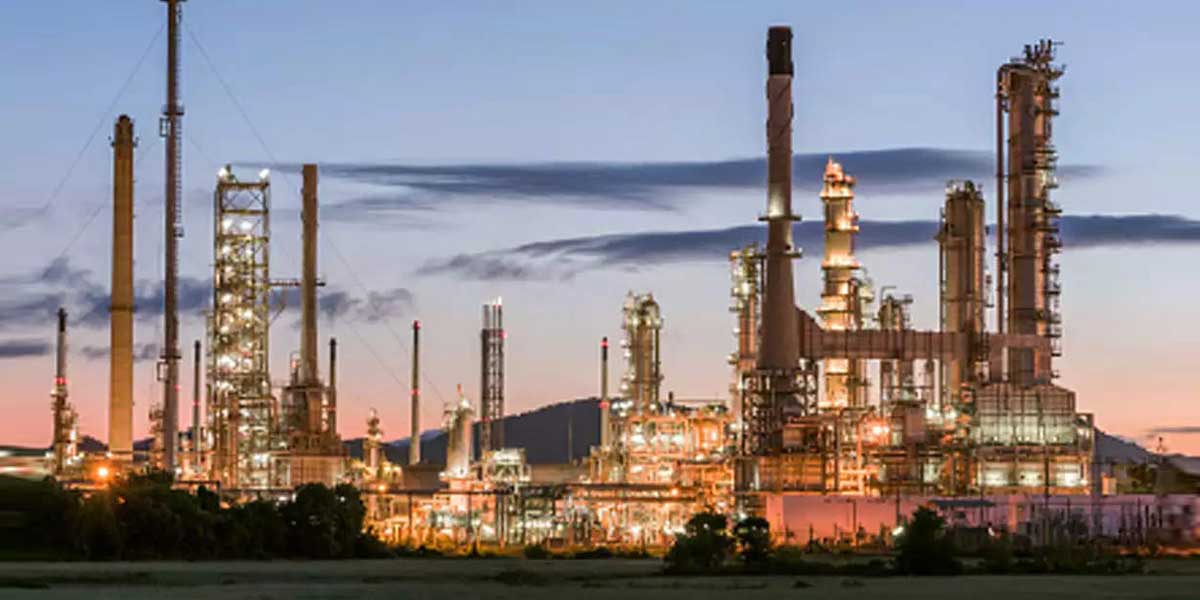
China is set to dethrone America, which has been the biggest refining country in the world since the beginning of the oil age. Oil exporters are supplying more crude to Asia and its constituent countries than to Europe and North America. This additional capacity has enabled China to turn into a growing force for fuels like gasoline and diesel in the international market. This upset is seen as one more Covid-19-related global shifts.

The growth of China’s oil refining industry draws significant parallels with the increasing dominance that the country exhibited across the global steel industry in the early years of this century. Along with meeting an ever-increasing domestic demand, the series of huge and modern mills that it built also made the country a force to reckon with in the export market. Even though the oil refining capacity in regions such as the Middle East, India, and China is projected to witness a hike, the global oil demand is still expected to be years away from recovering completely from the damage that was dealt by the coronavirus.

Among the key factors that have led to the emergence of new projects is an increasing demand for the petrochemicals used to produce plastics. As per industry consultant Wood Mackenzie, 70%- 80% of the refining capacities that are all set to be added in Asia between 2019 and 2027 are going to be plastics-focused. The comparatively rapid economic growth of the region is lending further steam to the popularity of Asia’s integrated refineries. It is also aided largely by the fact that the region continues to be a net importer of feedstocks such as propylene, naphtha, ethylene, and liquified gas, all of which are utilised to fashion different varieties of plastic.

China’s demand growth is expected to peak by 2025. As the country will head towards carbon neutrality, it is expected that the demand may slow down.

China is set to dethrone America, which has been the biggest refining country in the world since the beginning of the oil age. Oil exporters are supplying more crude to Asia and its constituent countries than to Europe and North America. This additional capacity has enabled China to turn into a growing force for fuels like gasoline and diesel in the international market. This upset is seen as one more Covid-19-related global shifts.The growth of China’s oil refining industry draws significant parallels with the increasing dominance that the country exhibited across the global steel industry in the early years of this century. Along with meeting an ever-increasing domestic demand, the series of huge and modern mills that it built also made the country a force to reckon with in the export market. Even though the oil refining capacity in regions such as the Middle East, India, and China is projected to witness a hike, the global oil demand is still expected to be years away from recovering completely from the damage that was dealt by the coronavirus. Among the key factors that have led to the emergence of new projects is an increasing demand for the petrochemicals used to produce plastics. As per industry consultant Wood Mackenzie, 70%- 80% of the refining capacities that are all set to be added in Asia between 2019 and 2027 are going to be plastics-focused. The comparatively rapid economic growth of the region is lending further steam to the popularity of Asia’s integrated refineries. It is also aided largely by the fact that the region continues to be a net importer of feedstocks such as propylene, naphtha, ethylene, and liquified gas, all of which are utilised to fashion different varieties of plastic. China’s demand growth is expected to peak by 2025. As the country will head towards carbon neutrality, it is expected that the demand may slow down.

Related Stories

Gold Stories

Next Story
Real Estate

LML Realty Sells Out Jhirka Valley Industrial Park in Haryana

LML Realty, the real estate arm of LML Group, recently announced the complete sell-out of its Jhirka Valley Industrial Park in Haryana, with over 1.17 million sq ft of industrial space acquired by more than 50 companies. With utilities and internal infrastructure in place, the company has commenced plot handovers, enabling buyers to begin construction and establish their operations.The industrial park has attracted companies across diverse sectors, including chemicals, metals and alloys, textiles, electrical equipment, energy, logistics, construction, polymers and engineering. Key buyers inclu..

Next Story
Real Estate

WSB Real Estate Partners Exits Six Housing Investments

WSB Real Estate Partners recently announced the successful exit of six residential investments across Bengaluru, Mumbai Metropolitan Region (MMR) and National Capital Region (NCR), delivering an average internal rate of return (IRR) of 19–21 per cent and an overall investment return of 1.4 times.The real estate-focused investment firm invested approximately Rs 7 billion across six mid-affordable housing projects over the past four years. All six investments were fully repaid between April and November 2026, several months ahead of their original investment tenures.WSB collaborated with sever..

Next Story
Infrastructure Transport

Aluminium Industry Seeks Policy Support for Rs 4 Trillion Investment

The Aluminium Association of India (AAI) has recently urged the government to introduce supportive policy measures to safeguard the sector’s proposed Rs 4 trillion investment pipeline. The association highlighted the need for a predictable policy framework to strengthen domestic manufacturing, expand production capacity and reduce import dependence.AAI submitted its recommendations for the Union Budget 2027-28 to the Ministries of Finance, Commerce and Industry, and Mines, along with the Department for Promotion of Industry and Internal Trade (DPIIT).India’s aluminium demand is projected t..

Subscribe to Our Newsletter

Get daily newsletters around different themes from Construction world.

STAY CONNECTED

Advertisement

SPECIAL OFFER
QR Code











