


Delhi-NCR EV Mandate Opens Battle over Fuel Strategy
OIL & GAS

Delhi-NCR EV Mandate Opens Battle over Fuel Strategy

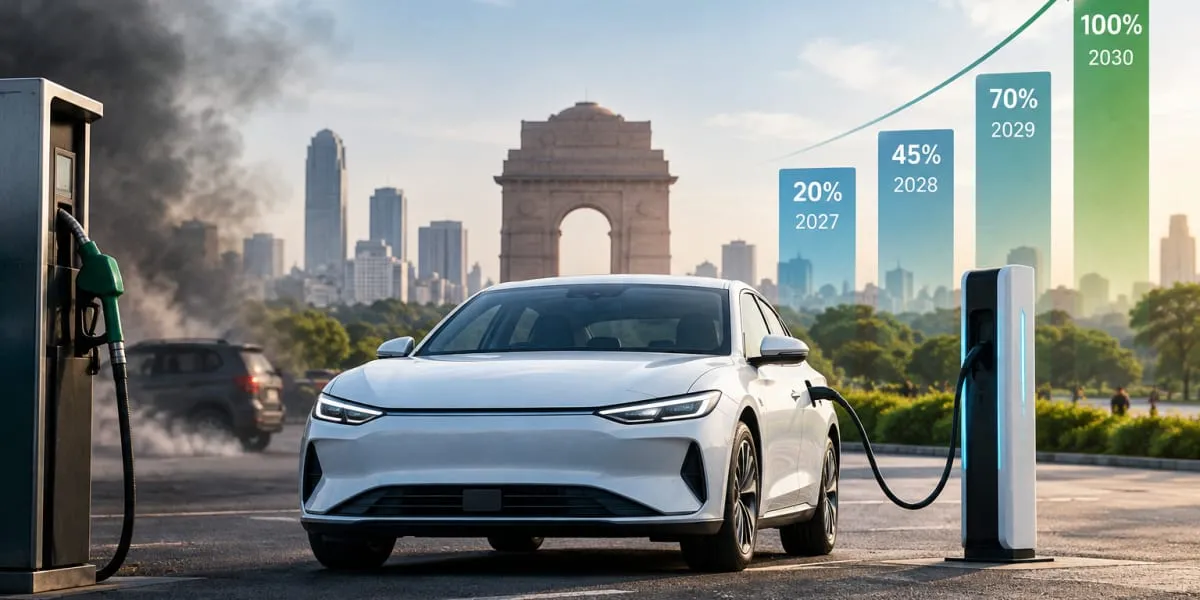
A panel formed by the Commission for Air Quality Management (CAQM) has proposed that all new private passenger vehicles sold in Delhi-NCR should be zero-tailpipe-emission models by 2030. The recommendation sets interim targets of 20% of new sales in 2027, 45% in 2028 and 70% in 2029 before reaching 100% in 2030.

Led by IIT Madras professor Ashok Jhunjhunwala, the Expert Committee on Vehicular Emission submitted its recommendations to CAQM, which will decide whether the measures can be implemented. The proposal has intensified a debate between supporters of battery-electric vehicles and industries representing compressed natural gas, ethanol and compressed biogas.

The 15-member committee included former AIIMS director Randeep Guleria as co-chair, along with representatives from IITs, government ministries, NITI Aayog and research organisations. It said Delhi-NCR’s air pollution affects people across age groups, with the air quality index crossing 460 and winter PM2.5 concentrations reaching nearly 35 times the World Health Organization’s guideline level.

The panel has also recommended timelines for taxis, light commercial vehicles, buses and trucks. Its proposals include an immediate phase-out of BS-I to BS-III vehicles, followed by BS-IV vehicles by 2030, BS-VI two-wheelers by 2035 and BS-VI four-wheelers by 2040. The recommendations come as Delhi’s electric-vehicle policy 2.0 already provides for passenger-vehicle mandates.

Seven industry bodies representing the ethanol, biogas and city-gas sectors have opposed the proposed approach, arguing that the policy should remain technology-neutral. They said ageing vehicles, particularly those manufactured before BS-VI standards, account for more than 95% of Delhi’s vehicular pollution load, citing data submitted by CAQM to the Supreme Court in December 2025.

Maruti Suzuki, Tata Motors Passenger Vehicles and Hyundai Motor India have advocated a multi-fuel transition in recent years. The industry bodies also raised concerns about the consultation process and said alternative fuels had not received a fair hearing. The panel, however, has maintained that successive emission-standard upgrades have not stopped the growth in vehicle numbers or resolved Delhi’s pollution crisis.

A panel formed by the Commission for Air Quality Management (CAQM) has proposed that all new private passenger vehicles sold in Delhi-NCR should be zero-tailpipe-emission models by 2030. The recommendation sets interim targets of 20% of new sales in 2027, 45% in 2028 and 70% in 2029 before reaching 100% in 2030. Led by IIT Madras professor Ashok Jhunjhunwala, the Expert Committee on Vehicular Emission submitted its recommendations to CAQM, which will decide whether the measures can be implemented. The proposal has intensified a debate between supporters of battery-electric vehicles and industries representing compressed natural gas, ethanol and compressed biogas. The 15-member committee included former AIIMS director Randeep Guleria as co-chair, along with representatives from IITs, government ministries, NITI Aayog and research organisations. It said Delhi-NCR’s air pollution affects people across age groups, with the air quality index crossing 460 and winter PM2.5 concentrations reaching nearly 35 times the World Health Organization’s guideline level. The panel has also recommended timelines for taxis, light commercial vehicles, buses and trucks. Its proposals include an immediate phase-out of BS-I to BS-III vehicles, followed by BS-IV vehicles by 2030, BS-VI two-wheelers by 2035 and BS-VI four-wheelers by 2040. The recommendations come as Delhi’s electric-vehicle policy 2.0 already provides for passenger-vehicle mandates. Seven industry bodies representing the ethanol, biogas and city-gas sectors have opposed the proposed approach, arguing that the policy should remain technology-neutral. They said ageing vehicles, particularly those manufactured before BS-VI standards, account for more than 95% of Delhi’s vehicular pollution load, citing data submitted by CAQM to the Supreme Court in December 2025. Maruti Suzuki, Tata Motors Passenger Vehicles and Hyundai Motor India have advocated a multi-fuel transition in recent years. The industry bodies also raised concerns about the consultation process and said alternative fuels had not received a fair hearing. The panel, however, has maintained that successive emission-standard upgrades have not stopped the growth in vehicle numbers or resolved Delhi’s pollution crisis.

Related Stories

Gold Stories
Next Story
Infrastructure Transport

Thiruvananthapuram Airport to Get Rs. 25 bn Terminal Expansion

Thiruvananthapuram International Airport, managed by Adani Airports, will undergo a Rs. 25 bn terminal expansion under Project Anantha. The project is intended to increase international passenger-handling capacity and improve operational efficiency at the Kerala airport. The groundbreaking ceremony is scheduled for October 15, coinciding with the airport completing five years under its current management. The development will cover approximately 92,552 square metres and raise annual international passenger capacity from 3.5 mn to around 11.5 mn. Project Anantha forms part of a wider transforma..
Next Story
Infrastructure Transport

PM Modi Inaugurates Leh Airport Terminal Costing Rs. 6.4 bn

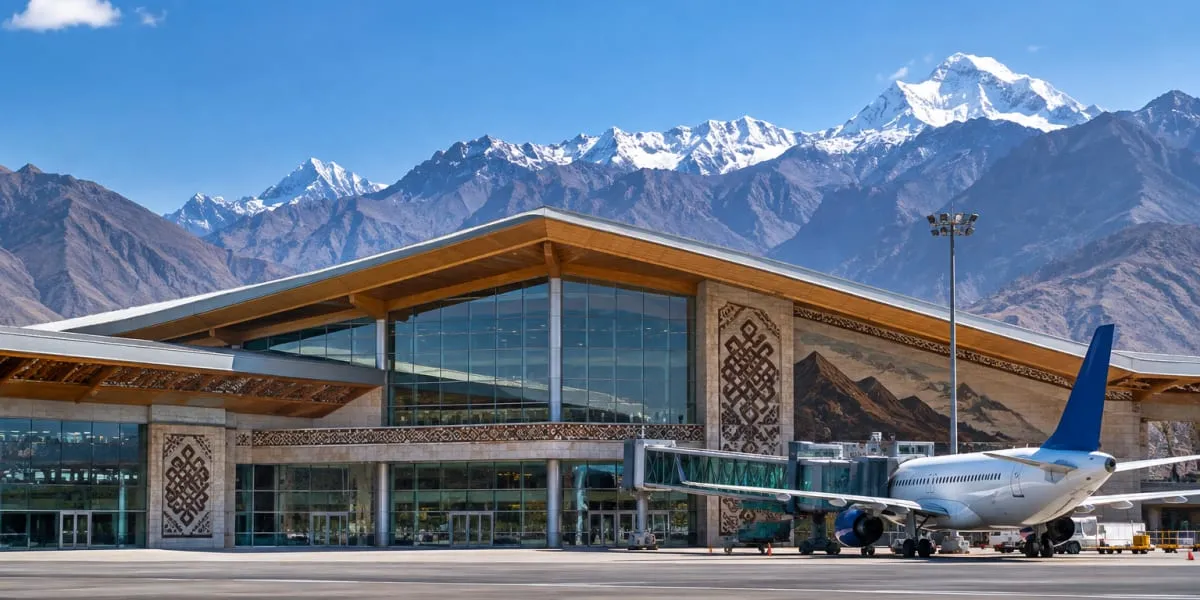
Prime Minister Narendra Modi inaugurated the new passenger terminal at Leh Airport on October 15, 2026, adding capacity at one of the world’s highest commercial airports. The facility, built at a cost of Rs. 6.4 bn, has been designed to handle 3.5 mn passengers annually and support rising air travel demand in Ladakh. The terminal covers 23,810 square metres and combines modern airport infrastructure with design elements inspired by Ladakh’s local art and cultural heritage. A video shared by Union Civil Aviation Minister Ram Mohan Naidu Kinjarapu showed the check-in area, airline counters, ..

Next Story
Infrastructure Transport

Kerala Examines Land Acquisition for Kannur Airport Expansion

The Kerala government is examining the land acquisition process for the proposed expansion of Kannur International Airport and plans to take an early decision on difficulties faced by affected families, Chief Minister V D Satheesan told the state Assembly on Thursday. He was responding to a submission by MLA T K Govindan. The proposed project involves extending the airport runway from 3,050 metres to 4,000 metres. The government granted administrative sanction on December 27, 2016, to acquire 99.92 hectares, but the process remains incomplete despite a notification issued in 2017. The governme..

Advertisement

Subscribe to Our Newsletter

Get daily newsletters around different themes from Construction world.

STAY CONNECTED

Advertisement

SPECIAL OFFER
QR Code