India to Roll Out Data Centre Policy amid Power Use Concerns
POWER & RENEWABLE ENERGY

India to Roll Out Data Centre Policy amid Power Use Concerns

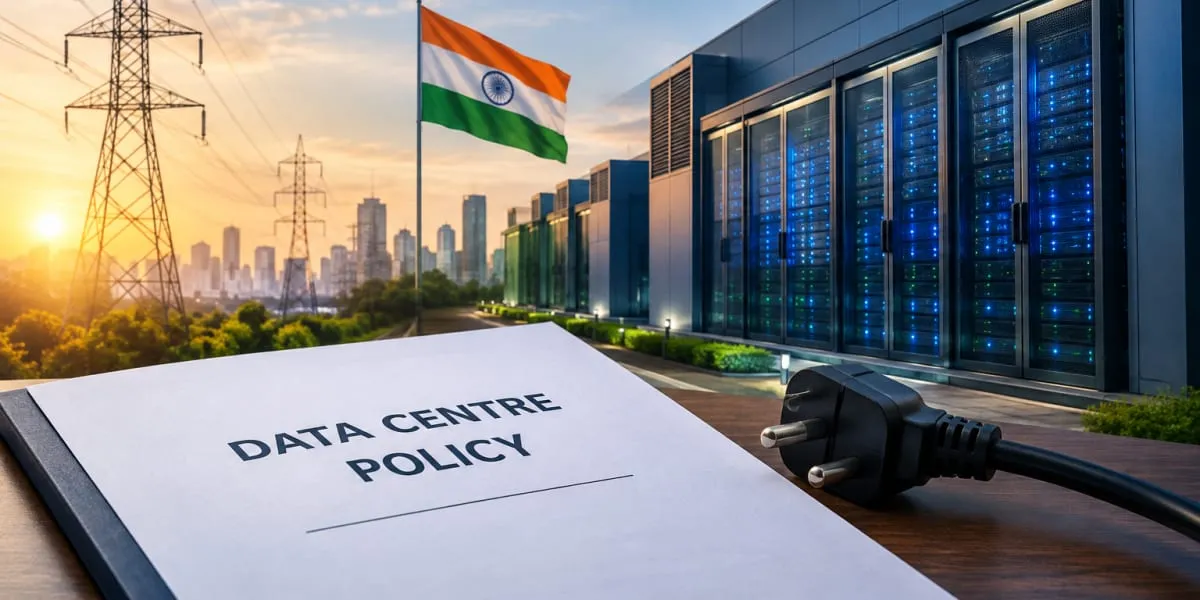
India is preparing to introduce a dedicated policy for data centres as the government seeks to limit the effect of their rising electricity demand on consumers. Junior IT minister Jitin Prasada said the framework was intended to prevent the sector from pushing up household power bills, although he did not provide details on its provisions or publication date.

The move follows protests by residents in Mumbai and Visakhapatnam against data centres planned by Amazon and Google. The objections include concerns over water and electricity consumption, as well as noise and the possible impact of large facilities on local communities and the environment.

India currently has no dedicated national policy for data centres. The facilities operate under existing environmental and building regulations, while some states have introduced their own incentives to attract investment and develop the sector.

Prasada made the announcement at an event in New Delhi organised by the Central Electricity Authority. He said the government wanted to ensure that increased demand from data centres did not reduce the power available to other consumers or cause electricity costs to rise.

Data centres are a central part of Prime Minister Narendra Modi’s investment strategy, with the government promoting India as a location for global digital infrastructure. The sector is viewed by the government as a US$200 bn opportunity. Environmentalists have raised objections to Google’s US$15 bn project in Visakhapatnam, alleging risks to wildlife and improper use of temple land, while residents near Amazon’s proposed facility outside Mumbai have cited pressure on power and water resources. Both companies have denied wrongdoing and said advanced technologies would help reduce resource consumption.

India is preparing to introduce a dedicated policy for data centres as the government seeks to limit the effect of their rising electricity demand on consumers. Junior IT minister Jitin Prasada said the framework was intended to prevent the sector from pushing up household power bills, although he did not provide details on its provisions or publication date. The move follows protests by residents in Mumbai and Visakhapatnam against data centres planned by Amazon and Google. The objections include concerns over water and electricity consumption, as well as noise and the possible impact of large facilities on local communities and the environment. India currently has no dedicated national policy for data centres. The facilities operate under existing environmental and building regulations, while some states have introduced their own incentives to attract investment and develop the sector. Prasada made the announcement at an event in New Delhi organised by the Central Electricity Authority. He said the government wanted to ensure that increased demand from data centres did not reduce the power available to other consumers or cause electricity costs to rise. Data centres are a central part of Prime Minister Narendra Modi’s investment strategy, with the government promoting India as a location for global digital infrastructure. The sector is viewed by the government as a US$200 bn opportunity. Environmentalists have raised objections to Google’s US$15 bn project in Visakhapatnam, alleging risks to wildlife and improper use of temple land, while residents near Amazon’s proposed facility outside Mumbai have cited pressure on power and water resources. Both companies have denied wrongdoing and said advanced technologies would help reduce resource consumption.

Related Stories

Gold Stories

Next Story
Infrastructure Energy

GEON Commissions 10 MW/20 MWh BESS in Jaisalmer

GEON, the future technologies division of Kabra Extrusiontechnik, has commissioned a 10 MW/20 MWh battery energy storage system (BESS) in Jaisalmer, Rajasthan, on an engineering, procurement and construction (EPC) basis.Executed in accordance with the Rajasthan Integrated Clean Energy Policy, 2024, the project covered detailed engineering and design, equipment procurement and supply, installation, testing and commissioning.The system has a power capacity of 10 MW and an energy storage capacity of 20 MWh. It is designed to improve energy management, support grid stability and facilitate the int..
Next Story
Infrastructure Urban

Tembo Lists on BSE, Expands Defence Manufacturing Plans

Tembo Global Industries has listed its equity shares on the Main Board of BSE while expanding its focus on defence manufacturing and unmanned aerial vehicle (UAV) technologies alongside its existing engineering and industrial businesses.Through its subsidiary, Tembo Classic Engineering, the company is developing manufacturing capabilities in small arms and ammunition. Its defence facility in Amravati, Maharashtra, is under development, with commercial production targeted for Q1 FY2028. The subsidiary has obtained government licences for ammunition and small-arms manufacturing.The company is co..

Next Story
Infrastructure Urban

Bondada Gets NSE In-Principle Nod for Main Board Migration

Bondada Engineering has received in-principle approval from the National Stock Exchange of India (NSE) to migrate its equity shares from the BSE SME Platform to NSE’s Capital Market Segment, or Main Board.The approval, conveyed through a letter dated 14 October 2026, follows BSE’s in-principle approval on 9 September 2026 for migration to its Main Board. The company now holds preliminary approvals to establish a presence on the Main Boards of both exchanges.Bondada Engineering will complete the subsequent formalities required under applicable regulatory and stock exchange requirements. The..

Advertisement

Subscribe to Our Newsletter

Get daily newsletters around different themes from Construction world.

STAY CONNECTED

Advertisement

SPECIAL OFFER
QR Code