Maharashtra Clears New Policy For Iconic City Development
Real Estate

Maharashtra Clears New Policy For Iconic City Development

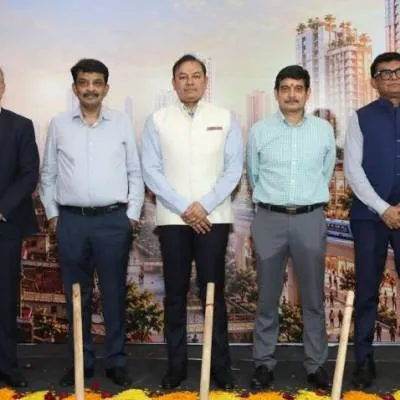
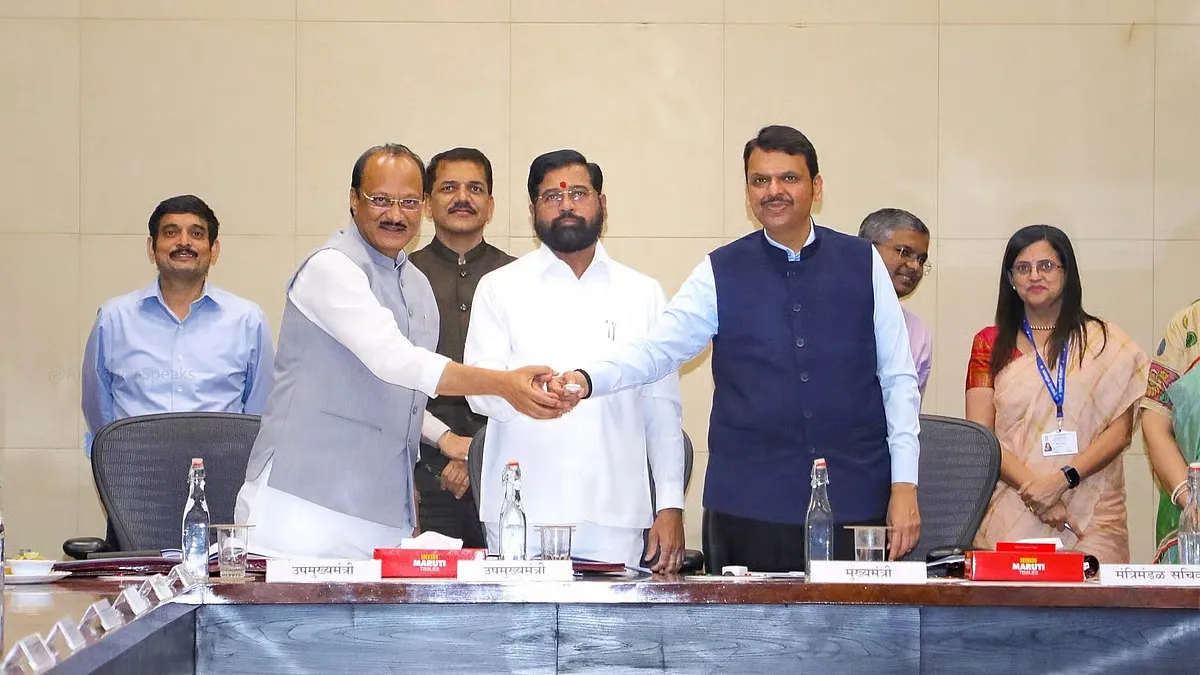
The Maharashtra cabinet has approved a policy for concept-based iconic city development to ensure more efficient use of land held by CIDCO and other authorities. It has also cleared a comprehensive redevelopment policy for several MHADA colonies. The decisions were taken at a meeting chaired by Chief Minister Devendra Fadnavis, an official release said.

CIDCO currently allots land parcels on a lease basis through auctions, enabling projects to be constructed in line with lease conditions and the Development Control and Promotion Regulation 2020. However, the state noted that in several areas where multiple construction and development operators hold land, integrated township-style planning is not feasible.

To address this, CIDCO drafted a policy for concept-based iconic city development, which has now received cabinet approval. The policy prioritises optimal utilisation of land parcels held by CIDCO and various authorities, allowing them to appoint City Development Operators (CDOs) through a tendering process. These operators will be empowered to develop integrated residential townships or international commercial districts, with corresponding development rights and the ability to sell residential and commercial units.

The cabinet also approved a new policy for integrated group redevelopment of MHADA colonies measuring 20 acres or more in Mumbai and its suburbs. MHADA built 56 colonies for Middle-Income Group and Low-Income Group families between 1950 and 1960, covering around 5,000 cooperative housing societies. Many of these buildings are now dilapidated or structurally weak, necessitating redevelopment.

Under the new policy, MHADA will redevelop large layouts into modern housing complexes equipped with lifts, adequate parking, parks, community halls, playgrounds, gyms, swimming pools and CCTV systems. Supporting infrastructure—such as water supply, sewage networks, electricity and internal roads—will also be upgraded with emphasis on environmental sustainability. Residents will receive larger homes than their existing tenements.

The policy permits the highest allowable rehabilitation FSI without requiring occupant consent. However, developers appointed through the tendering process must secure resolutions of support from housing societies. A high-powered committee headed by the Additional Chief Secretary will oversee implementation.

The Maharashtra cabinet has approved a policy for concept-based iconic city development to ensure more efficient use of land held by CIDCO and other authorities. It has also cleared a comprehensive redevelopment policy for several MHADA colonies. The decisions were taken at a meeting chaired by Chief Minister Devendra Fadnavis, an official release said. CIDCO currently allots land parcels on a lease basis through auctions, enabling projects to be constructed in line with lease conditions and the Development Control and Promotion Regulation 2020. However, the state noted that in several areas where multiple construction and development operators hold land, integrated township-style planning is not feasible. To address this, CIDCO drafted a policy for concept-based iconic city development, which has now received cabinet approval. The policy prioritises optimal utilisation of land parcels held by CIDCO and various authorities, allowing them to appoint City Development Operators (CDOs) through a tendering process. These operators will be empowered to develop integrated residential townships or international commercial districts, with corresponding development rights and the ability to sell residential and commercial units. The cabinet also approved a new policy for integrated group redevelopment of MHADA colonies measuring 20 acres or more in Mumbai and its suburbs. MHADA built 56 colonies for Middle-Income Group and Low-Income Group families between 1950 and 1960, covering around 5,000 cooperative housing societies. Many of these buildings are now dilapidated or structurally weak, necessitating redevelopment. Under the new policy, MHADA will redevelop large layouts into modern housing complexes equipped with lifts, adequate parking, parks, community halls, playgrounds, gyms, swimming pools and CCTV systems. Supporting infrastructure—such as water supply, sewage networks, electricity and internal roads—will also be upgraded with emphasis on environmental sustainability. Residents will receive larger homes than their existing tenements. The policy permits the highest allowable rehabilitation FSI without requiring occupant consent. However, developers appointed through the tendering process must secure resolutions of support from housing societies. A high-powered committee headed by the Additional Chief Secretary will oversee implementation.

Next Story
Equipment

Schwing Stetter India Unveils New Innovations at Excon 2025

Schwing Stetter India unveiled more than 20 new machines at Excon 2025, marking one of its most significant showcases and introducing several India-first technologies to the construction equipment sector. The company launched the country’s first 56-metre boom pump designed and manufactured in India, the first fully electric truck mixer, the first CNG mixer variant and the first hybrid boom pump. Executives said the launch portfolio was engineered to support India’s move toward faster, greener and more vertically oriented infrastructure through advanced engineering, clean-energy solutions a..

Next Story
Infrastructure Energy

SEPC Resolves Hindustan Copper Dispute, Wins Rs 725 Mn Order

Engineering, procurement and construction firm SEPC Ltd has recently settled a dispute with Hindustan Copper Ltd (HCL) and secured a mining infrastructure order valued at Rs 725 million from the state-owned company. SEPC informed the stock exchanges that it has executed a settlement deed with HCL, bringing closure to all inter-se claims and counterclaims arising from arbitration proceedings. As part of the settlement, SEPC will receive Rs 304.5 million as full and final payment, marking the resolution of all pending disputes between the two entities. The company also stated that Hindustan Co..

Next Story
Infrastructure Energy

20% Ethanol Blending Cuts India’s CO2 Emissions by 73.6 Mn Tonnes

Union Road Transport and Highways Minister Nitin Gadkari recently said that India has reduced carbon dioxide emissions by 73.6 million metric tonnes due to the adoption of 20 per cent ethanol blending in petrol. He made the statement while replying to supplementary questions during the Question Hour in the Lok Sabha. Describing ethanol as a green fuel, the minister said it plays a key role in reducing pollution while also supporting higher incomes for farmers. He underlined that ethanol blending contributes both to environmental sustainability and rural economic growth. Nitin Gadkari also po..

Advertisement

Subscribe to Our Newsletter

Get daily newsletters around different themes from Construction world.

STAY CONNECTED

Advertisement

Advertisement

Advertisement

Advertisement

Open In App