



Philippines' $3-billion airport project
AVIATION & AIRPORTS

Philippines' $3-billion airport project

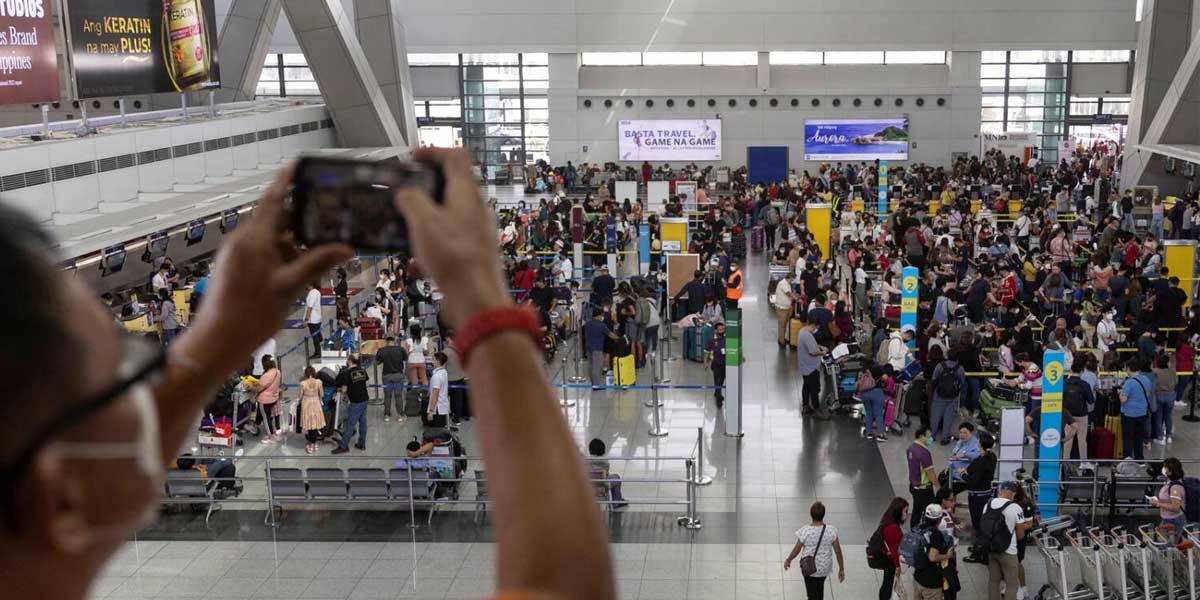
In a bid to address chronic flight delays, congestion, and outdated facilities at the Ninoy Aquino International Airport (NAIA), the Philippine government has attracted three potential bidders for its ambitious $3 billion modernization project. The project aims to transform NAIA, currently ranked among the world's worst international airports, into a world-class aviation gateway. The prospective bidders include India's GMR Group, conglomerate San Miguel Corporation, and a Manila consortium, which had previously submitted an unsolicited proposal valued at $4.9 billion for the airport's overhaul. However, this initial proposal was rejected by authorities.

Secretary Jaime Bautista, the Philippine transportation secretary, emphasized the importance of selecting a bidder with extensive experience in airport operations and a strong financial background. He made these remarks during an interview on the sidelines of an Association of Southeast Asian Nations (ASEAN) summit in Indonesia.

To attract overseas investors, the Philippine government is planning two roadshows. The first will be held in Singapore next week, followed by another in Paris in the third week of September. The bidding process is scheduled to open in the last week of December, with the announcement of the winning bidder expected in January.

The selected bidder will not only undertake the airport's modernization but will also be responsible for its operation and maintenance. The modernization project aims to double the airport's capacity, increasing it to approximately 60 million passengers annually. The concession period offered for this colossal project is 25 years.

This development signifies a significant step forward in addressing the long-standing issues plaguing NAIA, with the government's commitment to enhancing the airport's infrastructure and services in line with international standards.

In a bid to address chronic flight delays, congestion, and outdated facilities at the Ninoy Aquino International Airport (NAIA), the Philippine government has attracted three potential bidders for its ambitious $3 billion modernization project. The project aims to transform NAIA, currently ranked among the world's worst international airports, into a world-class aviation gateway. The prospective bidders include India's GMR Group, conglomerate San Miguel Corporation, and a Manila consortium, which had previously submitted an unsolicited proposal valued at $4.9 billion for the airport's overhaul. However, this initial proposal was rejected by authorities. Secretary Jaime Bautista, the Philippine transportation secretary, emphasized the importance of selecting a bidder with extensive experience in airport operations and a strong financial background. He made these remarks during an interview on the sidelines of an Association of Southeast Asian Nations (ASEAN) summit in Indonesia. To attract overseas investors, the Philippine government is planning two roadshows. The first will be held in Singapore next week, followed by another in Paris in the third week of September. The bidding process is scheduled to open in the last week of December, with the announcement of the winning bidder expected in January. The selected bidder will not only undertake the airport's modernization but will also be responsible for its operation and maintenance. The modernization project aims to double the airport's capacity, increasing it to approximately 60 million passengers annually. The concession period offered for this colossal project is 25 years. This development signifies a significant step forward in addressing the long-standing issues plaguing NAIA, with the government's commitment to enhancing the airport's infrastructure and services in line with international standards.

Next Story
Infrastructure Transport

MMRDA advances 250 m on Orange Gate–Marine Drive tunnel

The Mumbai Metropolitan Region Development Authority (MMRDA) has completed 250 m of underground tunnelling for the Orange Gate–Marine Drive Urban Road Tunnel using India’s largest slurry shield tunnel boring machine (TBM) deployed for an urban road project.The project involves twin tunnels extending over 7 km beneath critical transport corridors, including Central Railway, Western Railway and Metro Line 3. The work requires high-precision engineering to navigate densely developed urban infrastructure.Once completed, the tunnel is expected to reduce travel time between Orange Gate and Marin..

Next Story
Infrastructure Urban

Hindustan Zinc Pays Rs 188.46 Billion in FY26

Hindustan Zinc contributed Rs 188.46 billion to the public exchequer in FY 2025-26, according to its 9th Tax Transparency Report. The contribution, equivalent to 46 per cent of the company’s revenue, included direct and indirect taxes, government royalties, dividends to the Government of India, withholding taxes and other statutory levies.The company’s five-year cumulative contribution to the exchequer stood at Rs 915.72 billion. In FY26, Hindustan Zinc reported revenue of Rs 408.44 billion, EBITDA of Rs 221.62 billion and profit after tax of Rs 138.32 billion. It also achieved its highest..

Next Story
Infrastructure Urban

World of Concrete India 2026 Opens in Mumbai

Informa Markets in India will host the 12th edition of World of Concrete India 2026 from 3–5 June 2026 at the Bombay Exhibition Centre, Mumbai. The specialised B2B exhibition will bring together manufacturers, suppliers, contractors, developers, architects, consultants, infrastructure companies, project leaders and government stakeholders.The event is expected to feature over 350 brands and more than 18,000 trade professionals. It will cover concrete and cement, dry mortar, precast technologies, formwork, construction chemicals, industrial and commercial flooring, scaffolding, safety solutio..

Advertisement

Subscribe to Our Newsletter

Get daily newsletters around different themes from Construction world.

STAY CONNECTED

Advertisement

Advertisement

Advertisement