+
Trichy Airport becomes busiest non-metro gateway to Southeast Asia
AVIATION & AIRPORTS

Trichy Airport becomes busiest non-metro gateway to Southeast Asia

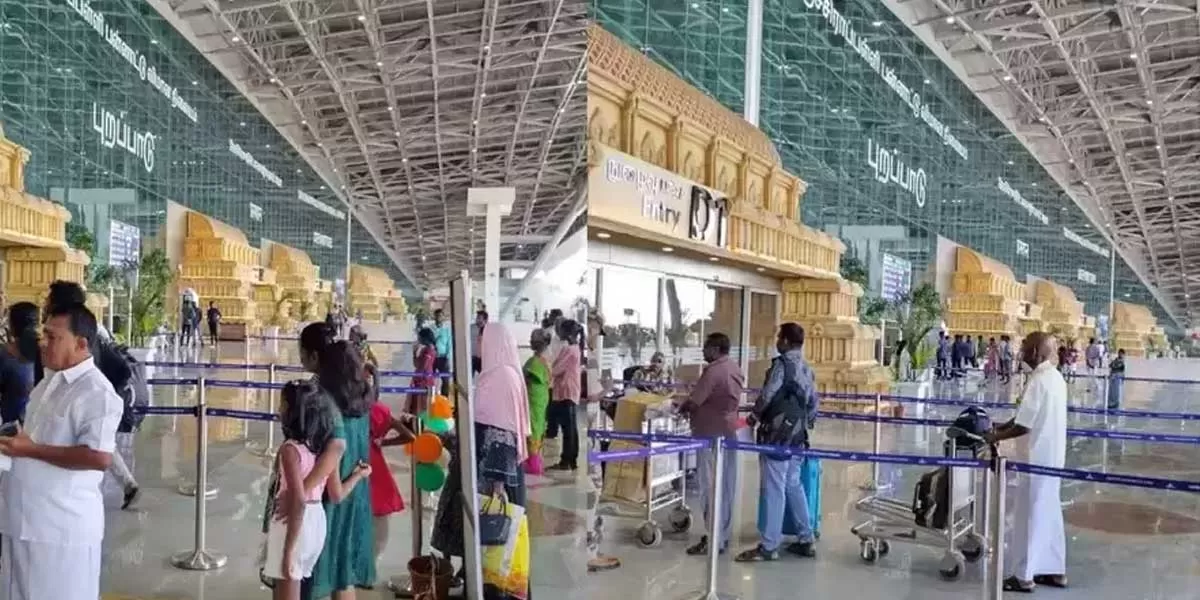
Trichy Airport has ranked as the sixth busiest airport in India for passenger traffic to Southeast Asian countries in the 2023-24 financial year, with over 900,000 passengers handled. It now stands out as the busiest non-metro airport for this traffic, outperforming other similar airports.

Aviation enthusiasts and tourism stakeholders are urging airlines to designate Trichy as a connecting hub to Southeast Asia and to expand services, citing data from the Director General of Civil Aviation (DGCA). The airport currently operates 62 weekly flights to Malaysia, Singapore, and Thailand.

Despite having limited services and a shorter runway that restricts wide-body aircraft, Trichy's impressive passenger numbers highlight the potential of routes to Southeast Asia. The high traffic volume is largely driven by a combination of migrant workers, trade, tourism, and strong cultural ties, especially among the Tamil diaspora from central regions, including the Cauvery Delta districts.

In the 2023-24 financial year, Trichy was the fourth busiest Indian airport for passenger traffic to Singapore (550,000 passengers) and third for Kuala Lumpur (340,000 passengers), outpacing several major international airports. Five metro airports—Delhi, Mumbai, Chennai, Bengaluru, and Kolkata—handled more passenger traffic than Trichy to Southeast Asia.

The anticipated introduction of a new service to Bangkok from Trichy, following the discontinuation of the Trichy-Vietnam (Ho Chi Minh City) route, is expected to further enhance traffic. Given these passenger statistics, demand for new services from Trichy, especially from premium air carriers, is growing.

"It is high time Trichy airport is designated as a connecting hub to Southeast Asia. Air carriers can consider operating connecting flights from other non-metro airports like Kochi and Pune to support services to Malaysia and Singapore from Trichy. However, to achieve this, the frequency of services must be increased," said H Ubaidullah, an independent aviation analyst.

Frequent flyers, such as A R Yoagendran, have highlighted the urgent need for runway expansion to accommodate wide-body aircraft and address the rising demand for flights to Southeast Asia. "Current services to both Malaysia and Singapore from Trichy are insufficient," he noted. Stakeholders also propose that airlines explore a route connecting Trichy to Penang International Airport, Malaysia, which has a notable Tamil diaspora.

Trichy Airport has ranked as the sixth busiest airport in India for passenger traffic to Southeast Asian countries in the 2023-24 financial year, with over 900,000 passengers handled. It now stands out as the busiest non-metro airport for this traffic, outperforming other similar airports. Aviation enthusiasts and tourism stakeholders are urging airlines to designate Trichy as a connecting hub to Southeast Asia and to expand services, citing data from the Director General of Civil Aviation (DGCA). The airport currently operates 62 weekly flights to Malaysia, Singapore, and Thailand. Despite having limited services and a shorter runway that restricts wide-body aircraft, Trichy's impressive passenger numbers highlight the potential of routes to Southeast Asia. The high traffic volume is largely driven by a combination of migrant workers, trade, tourism, and strong cultural ties, especially among the Tamil diaspora from central regions, including the Cauvery Delta districts. In the 2023-24 financial year, Trichy was the fourth busiest Indian airport for passenger traffic to Singapore (550,000 passengers) and third for Kuala Lumpur (340,000 passengers), outpacing several major international airports. Five metro airports—Delhi, Mumbai, Chennai, Bengaluru, and Kolkata—handled more passenger traffic than Trichy to Southeast Asia. The anticipated introduction of a new service to Bangkok from Trichy, following the discontinuation of the Trichy-Vietnam (Ho Chi Minh City) route, is expected to further enhance traffic. Given these passenger statistics, demand for new services from Trichy, especially from premium air carriers, is growing. It is high time Trichy airport is designated as a connecting hub to Southeast Asia. Air carriers can consider operating connecting flights from other non-metro airports like Kochi and Pune to support services to Malaysia and Singapore from Trichy. However, to achieve this, the frequency of services must be increased, said H Ubaidullah, an independent aviation analyst. Frequent flyers, such as A R Yoagendran, have highlighted the urgent need for runway expansion to accommodate wide-body aircraft and address the rising demand for flights to Southeast Asia. Current services to both Malaysia and Singapore from Trichy are insufficient, he noted. Stakeholders also propose that airlines explore a route connecting Trichy to Penang International Airport, Malaysia, which has a notable Tamil diaspora.

Related Stories

Gold Stories

Next Story
Infrastructure Urban

KONE Opens India's First Digital Experience Centre in Pune

KONE, a global elevator and escalator manufacturer, has inaugurated its first Digital Experience Centre (DEC) in India, located in Pune. The facility aims to showcase how artificial intelligence (AI), connectivity and data-driven technologies can enhance customer experiences and improve building operations.The centre was inaugurated by Jussi Herlin, Executive Vice Chair, KONE Corporation; Philippe Delorme, President and CEO, KONE; and Nandan Nilekani, Co-founder and Chairman of the Board, Infosys.Designed as an interactive customer environment, the facility demonstrates digital solutions cover..

Next Story
Infrastructure Urban

CII GreenCo Launches Circularity Guidelines for Indian Industry

The Confederation of Indian Industry (CII) GreenCo Council has launched the CII GreenCo Circularity Guidelines – Pilot Version at the 17th CII GreenCo Waste & Resource Management Summit 2026 in Chennai. The initiative aims to strengthen resource efficiency, waste reduction and circular economy practices across Indian manufacturing and process industries.The guidelines introduce a structured framework with circularity indices covering raw materials, consumables, packaging and other resource inputs. These indicators will help industries assess existing practices, identify opportunities to ..

Next Story
Infrastructure Energy

Global Electronics Association Launches IPC-1783-CO2E Standard

The Global Electronics Association has introduced IPC-1783-CO2E, a new international standard aimed at improving consistency, transparency and comparability in product carbon footprint reporting across the electronics manufacturing industry.The standard, titled International Standard for Data Collection and Reporting of CO2 Equivalent (CO2e) Emissions for the Electronics Manufacturing Supply Chain, provides industry-specific guidance for collecting, estimating and reporting carbon emissions data.With increasing regulatory requirements and customer expectations, electronics manufacturers face c..

Advertisement

Subscribe to Our Newsletter

Get daily newsletters around different themes from Construction world.

STAY CONNECTED

Advertisement

SPECIAL OFFER
QR Code