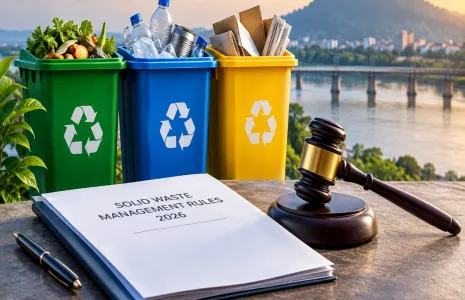
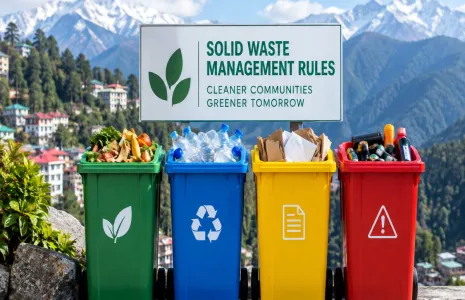


Rs.110 mn invested to tackle solid waste with Panaji
SMART CITIES

Rs.110 mn invested to tackle solid waste with Panaji

Imagine Panaji Smart City Development (IPSCDL) has given about Rs.110 million to Corporation of the City of Panaji (CCP) for equipment and machinery. The funding covers installation of bio-methanation plants valued at Rs.59 million and composter machines costing Rs.1.83 million. A static aeration system for composting ( Rs.3.29 million) and two vehicles for tree pruning, specifically sky lifts ( Rs.6.82 million) were also bought. Besides, the purchases included one night-soil tanker worth Rs.5.07 million, a hopper tipper dumper truck worth Rs.3.24 million, three compactors for solid waste management worth Rs.7.23 million and a multi-deck vibratory screening machine worth Rs.4.72 million.
Contact: Panaji Smart City
Tel: (832) 222 0440
Email: office@imaginepanaji.com
Website: www.imaginepanaji.com

Smart Cities Mission period has been extended upto 31st March 2025
The Government of India, taking cognizance of requests from some states and government representatives to grant more time to complete the balance 10 percent of on-going projects in smart cities, has extended the Smart Cities Mission period up to 31 March 2025, the Union Ministry of Housing and Urban Affairs (MoHUA) said. This extension has been informed to the cities that it would be without any additional cost, beyond the already approved financial allocation under the Mission. All ongoing projects are now expected to be completed before 31 March 2025. The Smart Cities Mission is a novel experiment in India’s urban development. Over 8,000 multi-sectoral projects are being developed by 100 cities amounting to around Rs.1.6 trillion. As on July 2024 the 100 smart cities completed 7,188 projects (90 per cent of total projects) amounting to Rs.1442.37 billion as part of the mission.

Jammu Smart City plans green buildings along Tawi river
Jammu Smart City (JSCL), in a move towards enhancing urban sustainability, is considering establishing green buildings on reclaimed land and adjoining areas of the Tawi riverfront development project. These green buildings are expected to incorporate energy-efficient designs, renewable energy sources and sustainable construction materials, contributing to a reduced carbon footprint and enhanced quality of life for residents. The project is being developed on the lines of Gujarat's Sabarmati riverfront to enhance the aesthetic value of the water body by improving natural purifying capabilities and promoting sustainability. Contact: Jammu Smart City
Tel: 0191 – 2542192
Email: ceo@jammusmartcity.in
Website: www.jammusmartcity.in

BMC to set up flower waste recycling units
The Bhubaneswar Municipal Corporation (BMC) has decided to set up flower waste processing units to make incense sticks and gulal from the flower waste generated by temples across the city. Around two quintals of flower waste are generated from around 700 temples in the city daily. The flowers used during puja in various temples will not be littered and thrown in water bodies but collected in specialised vehicles from temples and brought to the processing units. The processing of flower waste will help check littering and keep water bodies and drains clean.
Contact: Bhubaneswar Municipal Corporation
Tel: 0674-2431403
Email: info@bmc.gov.in
Website: www.bmc.gov.in

This Bengaluru community is transforming waste into manure
In a remarkable initiative aimed at sustainable living, residents of Mantri Paradise on Bannerghatta Main Road, near Arekere Gate signal, have turned their everyday waste into 1.5-2 kg of organic manure, resulting in almost 60 kg of manure every month.
Led by Shanold Lobo and Raj Kumar of the Mantri Paradise community, the project has transformed waste management through creative composting, helping them save around `15,000 solely on manure purchase. The first phase, which lasted 45 days, had been successful in producing 64 kgs of compost. The recent harvest yielded 64 kg of nutrient-rich manure.

Imagine Panaji Smart City Development (IPSCDL) has given about Rs.110 million to Corporation of the City of Panaji (CCP) for equipment and machinery. The funding covers installation of bio-methanation plants valued at Rs.59 million and composter machines costing Rs.1.83 million. A static aeration system for composting ( Rs.3.29 million) and two vehicles for tree pruning, specifically sky lifts ( Rs.6.82 million) were also bought. Besides, the purchases included one night-soil tanker worth Rs.5.07 million, a hopper tipper dumper truck worth Rs.3.24 million, three compactors for solid waste management worth Rs.7.23 million and a multi-deck vibratory screening machine worth Rs.4.72 million. Contact: Panaji Smart City Tel: (832) 222 0440 Email: office@imaginepanaji.com Website: www.imaginepanaji.com Smart Cities Mission period has been extended upto 31st March 2025 The Government of India, taking cognizance of requests from some states and government representatives to grant more time to complete the balance 10 percent of on-going projects in smart cities, has extended the Smart Cities Mission period up to 31 March 2025, the Union Ministry of Housing and Urban Affairs (MoHUA) said. This extension has been informed to the cities that it would be without any additional cost, beyond the already approved financial allocation under the Mission. All ongoing projects are now expected to be completed before 31 March 2025. The Smart Cities Mission is a novel experiment in India’s urban development. Over 8,000 multi-sectoral projects are being developed by 100 cities amounting to around Rs.1.6 trillion. As on July 2024 the 100 smart cities completed 7,188 projects (90 per cent of total projects) amounting to Rs.1442.37 billion as part of the mission.Jammu Smart City plans green buildings along Tawi river Jammu Smart City (JSCL), in a move towards enhancing urban sustainability, is considering establishing green buildings on reclaimed land and adjoining areas of the Tawi riverfront development project. These green buildings are expected to incorporate energy-efficient designs, renewable energy sources and sustainable construction materials, contributing to a reduced carbon footprint and enhanced quality of life for residents. The project is being developed on the lines of Gujarat's Sabarmati riverfront to enhance the aesthetic value of the water body by improving natural purifying capabilities and promoting sustainability. Contact: Jammu Smart City Tel: 0191 – 2542192 Email: ceo@jammusmartcity.in Website: www.jammusmartcity.inBMC to set up flower waste recycling units The Bhubaneswar Municipal Corporation (BMC) has decided to set up flower waste processing units to make incense sticks and gulal from the flower waste generated by temples across the city. Around two quintals of flower waste are generated from around 700 temples in the city daily. The flowers used during puja in various temples will not be littered and thrown in water bodies but collected in specialised vehicles from temples and brought to the processing units. The processing of flower waste will help check littering and keep water bodies and drains clean. Contact: Bhubaneswar Municipal Corporation Tel: 0674-2431403 Email: info@bmc.gov.in Website: www.bmc.gov.inThis Bengaluru community is transforming waste into manure In a remarkable initiative aimed at sustainable living, residents of Mantri Paradise on Bannerghatta Main Road, near Arekere Gate signal, have turned their everyday waste into 1.5-2 kg of organic manure, resulting in almost 60 kg of manure every month. Led by Shanold Lobo and Raj Kumar of the Mantri Paradise community, the project has transformed waste management through creative composting, helping them save around `15,000 solely on manure purchase. The first phase, which lasted 45 days, had been successful in producing 64 kgs of compost. The recent harvest yielded 64 kg of nutrient-rich manure.

Next Story
Infrastructure Transport

MMRDA advances 250 m on Orange Gate–Marine Drive tunnel

The Mumbai Metropolitan Region Development Authority (MMRDA) has completed 250 m of underground tunnelling for the Orange Gate–Marine Drive Urban Road Tunnel using India’s largest slurry shield tunnel boring machine (TBM) deployed for an urban road project.The project involves twin tunnels extending over 7 km beneath critical transport corridors, including Central Railway, Western Railway and Metro Line 3. The work requires high-precision engineering to navigate densely developed urban infrastructure.Once completed, the tunnel is expected to reduce travel time between Orange Gate and Marin..

Next Story
Infrastructure Urban

Hindustan Zinc Pays Rs 188.46 Billion in FY26

Hindustan Zinc contributed Rs 188.46 billion to the public exchequer in FY 2025-26, according to its 9th Tax Transparency Report. The contribution, equivalent to 46 per cent of the company’s revenue, included direct and indirect taxes, government royalties, dividends to the Government of India, withholding taxes and other statutory levies.The company’s five-year cumulative contribution to the exchequer stood at Rs 915.72 billion. In FY26, Hindustan Zinc reported revenue of Rs 408.44 billion, EBITDA of Rs 221.62 billion and profit after tax of Rs 138.32 billion. It also achieved its highest..

Next Story
Infrastructure Urban

World of Concrete India 2026 Opens in Mumbai

Informa Markets in India will host the 12th edition of World of Concrete India 2026 from 3–5 June 2026 at the Bombay Exhibition Centre, Mumbai. The specialised B2B exhibition will bring together manufacturers, suppliers, contractors, developers, architects, consultants, infrastructure companies, project leaders and government stakeholders.The event is expected to feature over 350 brands and more than 18,000 trade professionals. It will cover concrete and cement, dry mortar, precast technologies, formwork, construction chemicals, industrial and commercial flooring, scaffolding, safety solutio..

Advertisement

Subscribe to Our Newsletter

Get daily newsletters around different themes from Construction world.

STAY CONNECTED

Advertisement

Advertisement

Advertisement