Coal Gasification Could Help India Avoid Rs. 1.96 tn Imports
COAL & MINING

Coal Gasification Could Help India Avoid Rs. 1.96 tn Imports

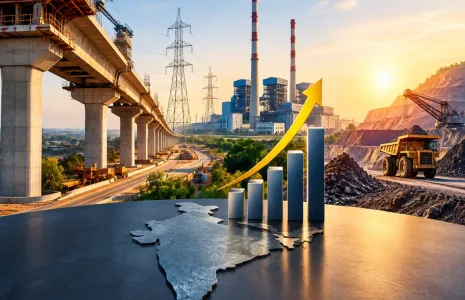
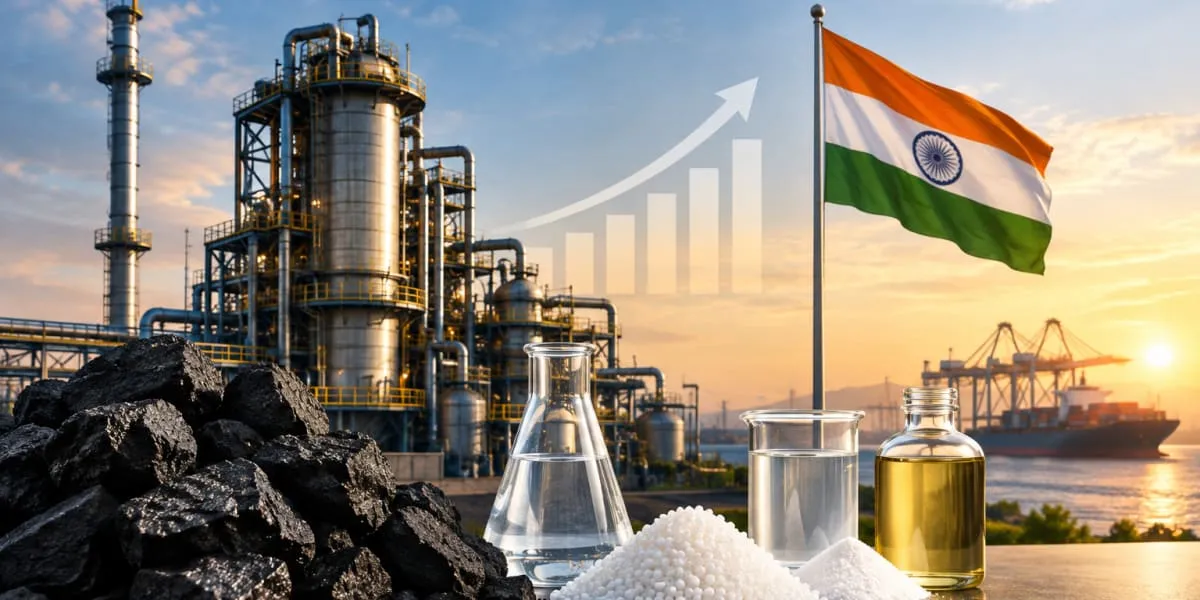
India could avoid annual imports worth Rs. 1.96 tn by developing a domestic coal gasification ecosystem, according to a report by accounting and consultancy firm Alvarez & Marsal. The ecosystem could convert raw coal into value-added products such as natural gas, urea, ammonia, methanol and acetic acid.

India imported gasification-relevant products worth substantial sums in the last financial year, including Rs. 1.18 tn of natural gas, Rs. 460 bn of urea and Rs. 96 bn of ammonia and methanol, among other products. Domestic production could partially replace these imports, reduce exposure to global price volatility and improve foreign exchange resilience, subject to competitive production costs and imported input requirements.

The report, released at the Gasification India 2026 event, said integrated projects would require gasification equipment, air-separation units, syngas-cleaning systems, pipelines and utilities. Downstream chemical manufacturing facilities could share infrastructure and help create industrial clusters beyond coal-mining operations.

The Ministry of Coal has projected investment of Rs. 2.5-3 tn and 50,000 direct and indirect jobs across around 25 projects under its gasification development ambitions. India has the world’s fifth-largest coal resource base, with 400 bn t of geological resources. At least 175 bn t, or around 44 per cent, are located at depths exceeding 300 metres and some could be difficult or uneconomic to extract through conventional mining.

Underground coal gasification could convert suitable deep-seated coal into syngas in situ, potentially expanding the economically usable portion of domestic resources. The report said products made through gasification could have a value between five and 20 times that of coal sold without processing. It called for single-window clearances, time-bound land, environmental and water approvals, viability-gap or capital support, long-term offtake commitments, indigenous technology development, pilot plants and demonstration units to support first-of-a-kind projects and adapt gasifiers to high-ash Indian coal.

India could avoid annual imports worth Rs. 1.96 tn by developing a domestic coal gasification ecosystem, according to a report by accounting and consultancy firm Alvarez & Marsal. The ecosystem could convert raw coal into value-added products such as natural gas, urea, ammonia, methanol and acetic acid. India imported gasification-relevant products worth substantial sums in the last financial year, including Rs. 1.18 tn of natural gas, Rs. 460 bn of urea and Rs. 96 bn of ammonia and methanol, among other products. Domestic production could partially replace these imports, reduce exposure to global price volatility and improve foreign exchange resilience, subject to competitive production costs and imported input requirements. The report, released at the Gasification India 2026 event, said integrated projects would require gasification equipment, air-separation units, syngas-cleaning systems, pipelines and utilities. Downstream chemical manufacturing facilities could share infrastructure and help create industrial clusters beyond coal-mining operations. The Ministry of Coal has projected investment of Rs. 2.5-3 tn and 50,000 direct and indirect jobs across around 25 projects under its gasification development ambitions. India has the world’s fifth-largest coal resource base, with 400 bn t of geological resources. At least 175 bn t, or around 44 per cent, are located at depths exceeding 300 metres and some could be difficult or uneconomic to extract through conventional mining. Underground coal gasification could convert suitable deep-seated coal into syngas in situ, potentially expanding the economically usable portion of domestic resources. The report said products made through gasification could have a value between five and 20 times that of coal sold without processing. It called for single-window clearances, time-bound land, environmental and water approvals, viability-gap or capital support, long-term offtake commitments, indigenous technology development, pilot plants and demonstration units to support first-of-a-kind projects and adapt gasifiers to high-ash Indian coal.

Related Stories

Gold Stories

Next Story
Real Estate

Shree Naman Group acquires JW Marriott Bengaluru, Crowne Plaza Pune

Shree Naman Group has completed the acquisition of JW Marriott Bengaluru for Rs 16.11 billion and Crowne Plaza Pune for Rs 1.89 billion, taking its hospitality portfolio beyond Mumbai into two key business and hospitality markets.The Rs 18 billion transaction was completed on 1 October 2026, within 30 days of approval by the National Company Law Tribunal (NCLT) on 3 September 2026, following a competitive bidding process.The two hotels join the Group’s existing properties in Mumbai: Sofitel Mumbai BKC, Lemon Tree Hotel, Kalina BKC, and ibis Mumbai BKC. The portfolio now comprises five operat..

Next Story
Real Estate

Sobha Realty marks fourth year of IIFA partnership

Sobha Realty has reaffirmed its association with the International Indian Film Academy (IIFA) for the fourth consecutive year, returning as Title Sponsor of IIFA Weekend and Co-Presenting Sponsor of the IIFA Awards 2027. At a press conference in Mumbai, the UAE-based developer also highlighted its expansion into Abu Dhabi and its growing international presence.The upcoming IIFA Weekend and Awards will be held on 22 and 23 January 2027 at Etihad Arena, Yas Island, Abu Dhabi. The partnership, which began in Abu Dhabi in 2023, provides the developer with a platform to engage with Indian audiences..

Next Story
Technology

Powerplay Records 4X Growth in Platform Spend with AI Adoption

Construction technology platform Powerplay has reported up to fourfold growth in platform spending among customers adopting its artificial intelligence (AI) agents over approximately 18 months. The growth reflects increased adoption of AI-driven procurement and financing solutions among contractors and builders across India.The Bengaluru-based company has introduced an AI workforce designed to automate procurement coordination, supplier comparisons, material tracking and financing documentation. Its AI Purchase Executive enables contractors to compare supplier prices, monitor material requirem..

Advertisement

Subscribe to Our Newsletter

Get daily newsletters around different themes from Construction world.

STAY CONNECTED

Advertisement

SPECIAL OFFER
QR Code