GSI Estimates Nearly One Billion Tonnes Of Limestone In J&K
COAL & MINING

GSI Estimates Nearly One Billion Tonnes Of Limestone In J&K

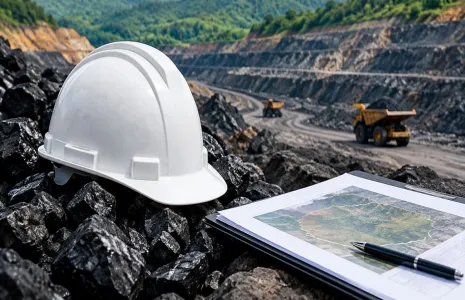
Jammu and Kashmir holds nearly one billion tonnes of limestone reserves, according to the Geological Survey of India (GSI), signalling significant potential for expanding the Union Territory’s mineral-based industries. Additional Secretary in the Union Ministry of Mines, Sanjay Lohiya, said the UT also possesses notable reserves of other key minerals that the government aims to explore for regional benefit.

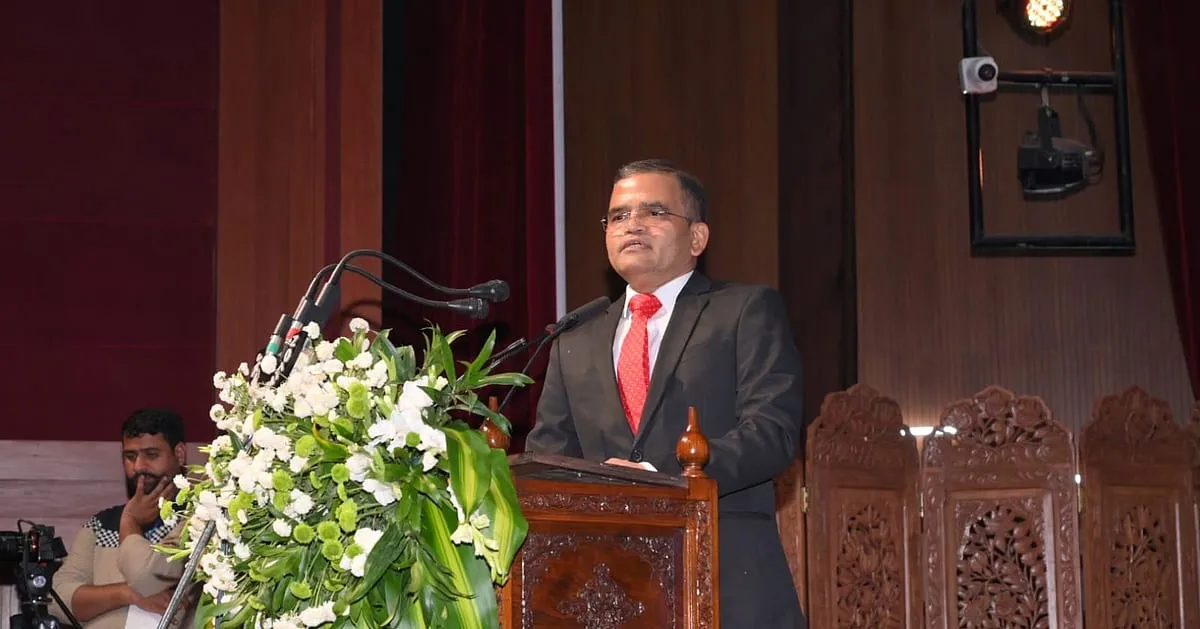
Lohiya was speaking at the launch of J&K’s first-ever limestone block e-auction and roadshow in Jammu, marking the UT’s entry into India’s mineral block auction ecosystem. Union Minister G Kishan Reddy, Chief Minister Omar Abdullah and Deputy Chief Minister Surinder Choudhary jointly launched the e-auction process for seven limestone blocks spanning 314 hectares across Anantnag, Rajouri and Poonch districts.

He noted that while other states have successfully auctioned nearly 600 mineral blocks since the Mines and Minerals (Development and Regulation) Act was amended in 2015, J&K had lagged behind due to inexperience. The Centre is therefore assisting with the first round of auctions.

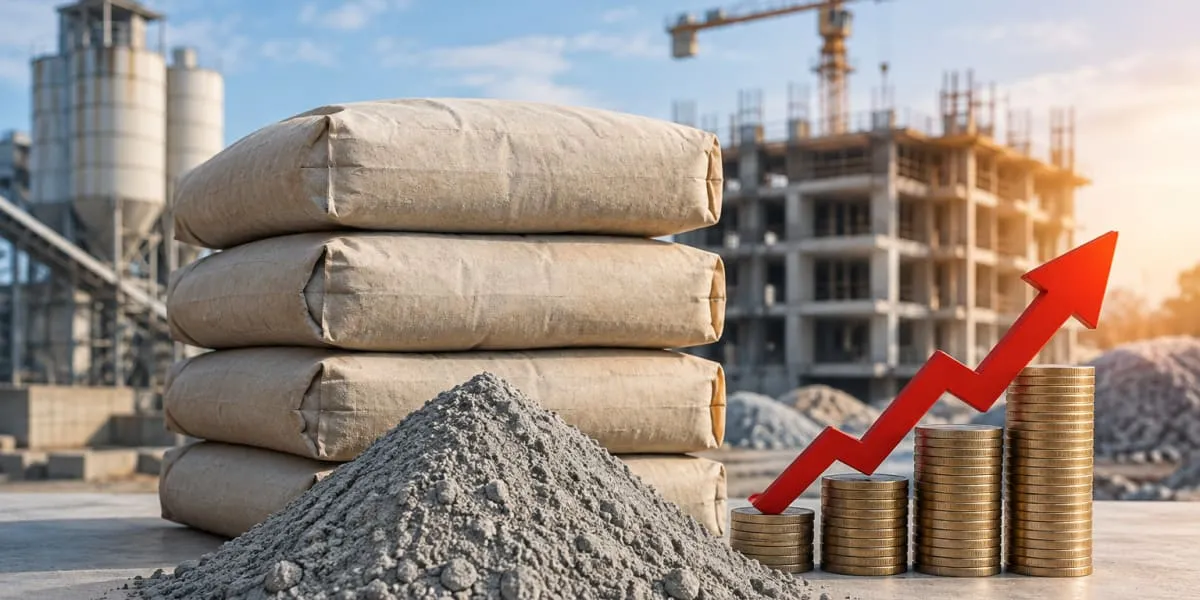
Lohiya emphasised that local cement production would help address high transport costs. “The GSI has estimated almost one billion tonnes of limestone reserves in J&K. More blocks will be auctioned in the second round, leading to a drastic change in the mining scenario,” he said. He added that mining boosts employment, industrial growth and government revenue.

The GSI has also identified deposits of lithium, copper, titanium, iron, coal and gold in J&K, though the economic viability of these resources is still being assessed.

Additional Chief Secretary of the J&K Mining Department, Anil Kumar Singh, said the e-auction of seven limestone blocks is expected to generate around Rs 5 billion for the UT. He said 24 more landform blocks are being prepared for auction by March next year, with an estimated revenue potential of Rs 15 billion.

Singh highlighted new reforms including the Integrated Mining Surveillance System (IMSS), which uses satellite imaging to curb illegal mining. Advanced technologies are also undergoing trial runs, with full implementation expected by January 2026. A mobile app will soon allow citizens to report violations directly.

The mining department is also progressing on exploration of critical minerals such as lithium and sapphire, which are slated for pre-auction in the next financial year. Scientific studies are under way for graphite, granite, copper, metals and shallow gas extraction.

He thanked the Ministry of Mines for recommending financial support of Rs 1 billion for command-and-control centres, rapid response systems and measures to ensure safe, scientific and sustainable mining. Singh added that a Mineral Exploration Trust is in the final stages of formation, aimed at promoting environmentally responsible mineral development.

Jammu and Kashmir holds nearly one billion tonnes of limestone reserves, according to the Geological Survey of India (GSI), signalling significant potential for expanding the Union Territory’s mineral-based industries. Additional Secretary in the Union Ministry of Mines, Sanjay Lohiya, said the UT also possesses notable reserves of other key minerals that the government aims to explore for regional benefit. Lohiya was speaking at the launch of J&K’s first-ever limestone block e-auction and roadshow in Jammu, marking the UT’s entry into India’s mineral block auction ecosystem. Union Minister G Kishan Reddy, Chief Minister Omar Abdullah and Deputy Chief Minister Surinder Choudhary jointly launched the e-auction process for seven limestone blocks spanning 314 hectares across Anantnag, Rajouri and Poonch districts. He noted that while other states have successfully auctioned nearly 600 mineral blocks since the Mines and Minerals (Development and Regulation) Act was amended in 2015, J&K had lagged behind due to inexperience. The Centre is therefore assisting with the first round of auctions. Lohiya emphasised that local cement production would help address high transport costs. “The GSI has estimated almost one billion tonnes of limestone reserves in J&K. More blocks will be auctioned in the second round, leading to a drastic change in the mining scenario,” he said. He added that mining boosts employment, industrial growth and government revenue. The GSI has also identified deposits of lithium, copper, titanium, iron, coal and gold in J&K, though the economic viability of these resources is still being assessed. Additional Chief Secretary of the J&K Mining Department, Anil Kumar Singh, said the e-auction of seven limestone blocks is expected to generate around Rs 5 billion for the UT. He said 24 more landform blocks are being prepared for auction by March next year, with an estimated revenue potential of Rs 15 billion. Singh highlighted new reforms including the Integrated Mining Surveillance System (IMSS), which uses satellite imaging to curb illegal mining. Advanced technologies are also undergoing trial runs, with full implementation expected by January 2026. A mobile app will soon allow citizens to report violations directly. The mining department is also progressing on exploration of critical minerals such as lithium and sapphire, which are slated for pre-auction in the next financial year. Scientific studies are under way for graphite, granite, copper, metals and shallow gas extraction. He thanked the Ministry of Mines for recommending financial support of Rs 1 billion for command-and-control centres, rapid response systems and measures to ensure safe, scientific and sustainable mining. Singh added that a Mineral Exploration Trust is in the final stages of formation, aimed at promoting environmentally responsible mineral development.

Next Story
Infrastructure Urban

ABB to Invest Rs 6.25 Billion to Expand India Manufacturing

ABB recently announced plans to invest approximately Rs 6.25 billion ($75 million) in India during 2026 to expand its manufacturing footprint and research and development capabilities. The investment follows more than $35 million spent in 2025 and reflects the company’s continued focus on strengthening its ‘local-for-local’ strategy in the country.The investment will support ABB’s Electrification, Motion and Automation businesses and expand manufacturing capacity for infrastructure sectors such as renewable energy, metro rail, data centres and industrial applications. Approximately 300..

Next Story
Equipment

Six WOLFF Cranes Handle 60,000 m³ Concrete for German Hospital

Six WOLFF tower cranes are playing a key role in constructing a new hospital complex in Memmingen, Germany, supporting large-scale material handling for the project. The facility is being built on a 7.7-hectare site and will feature six floors, around 480 beds and a gross floor area exceeding 75,000 sq m.Building shell works began recently in February 2025. One WOLFF 6531.12 Cross crane supported early site preparation before being dismantled in autumn 2025, while five remaining cranes continue operations. Over an average deployment period of 16 months, the cranes are expected to move approxim..

Next Story
Equipment

REC Funds Rs 115.6 Million CSR Support for Bihar Eye Hospital

REC recently committed Rs 115.6 million under its Corporate Social Responsibility (CSR) programme for the procurement of clinical and non-clinical equipment at Sankara Eye Hospital in Saharsa, Bihar. The initiative aims to strengthen healthcare infrastructure and improve access to specialised eye care services in the region.A Memorandum of Agreement (MoA) was recently signed between Pradeep Fellows, Executive Director (CSR), REC Limited, and Wg Cdr V. Shankar (Retd), Trustee and Executive Director of Sankara Eye Hospital, at the REC office in the SCOPE Complex, New Delhi.The support is expecte..

Advertisement

Subscribe to Our Newsletter

Get daily newsletters around different themes from Construction world.

STAY CONNECTED

Advertisement

Advertisement

Advertisement