Two Rajasthan Limestone Mines Get Clearance Near Bustard Priority Area
COAL & MINING

Two Rajasthan Limestone Mines Get Clearance Near Bustard Priority Area

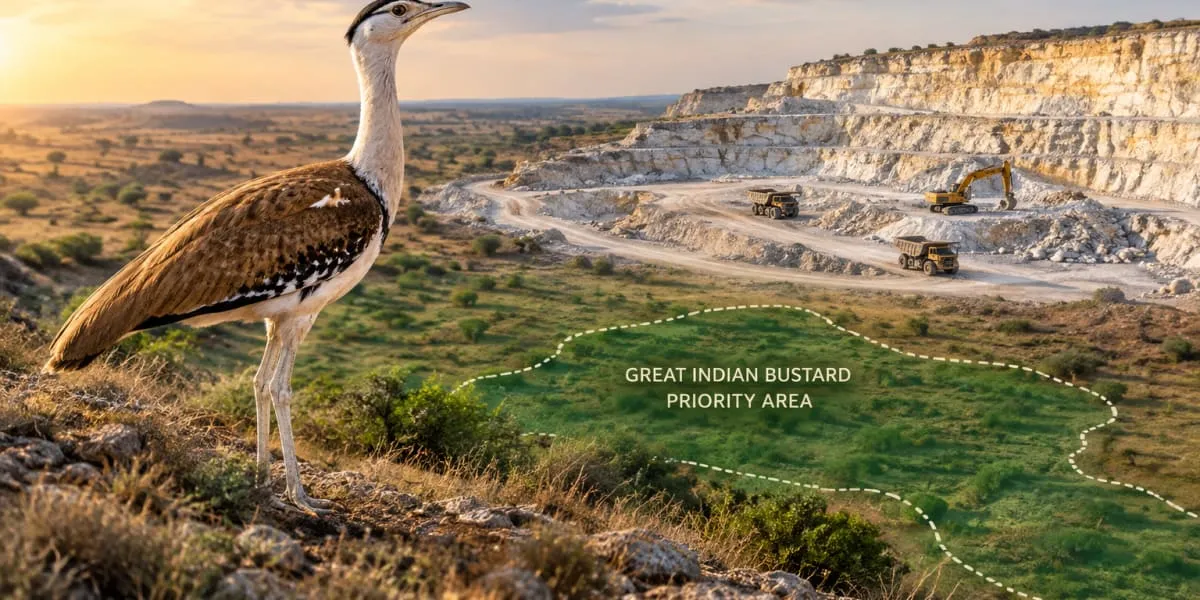
Environmental clearance has been granted to two limestone mining projects in Rajasthan’s Jaisalmer district, although one partly overlaps a designated Great Indian Bustard (GIB) priority area and the other is located 1.77 km from such a zone. The priority areas serve as important refuges and breeding grounds for the critically endangered bird.

The approved projects involve the Parewar SN1 Limestone Block in Parewar village, operated by Wonder Cement, and the Ramgarh Auctioned Block in Ramgarh village, operated by Dalmia Bharat Green Vision. The Union Environment Ministry’s Expert Appraisal Committee (EAC) recommended both projects during its meeting on October 8.

The Parewar project covers a mining lease area of 960 ha, including 0.29 ha within GIB habitat, and is 7.34 km from the Mokla Parewar Conservation Reserve. The EAC recommended that no mining should occur on the habitat portion and that Wonder Cement surrender the area after the clearance and execution of the mining lease deed. The project’s environmental impact assessment said mining could disturb birds’ feeding, resting and movement, while describing the impact as minor and outlining mitigation measures.

The Ramgarh project covers more than 250 ha and lies 1.77 km from a GIB priority area. An assessment by the Wildlife Institute of India divided its potential impact area into a direct zone, comprising the mine, associated cement plant and a 1-km buffer, and an indirect zone extending to 10 km. Surveys recorded no GIBs in the direct zone, but grasslands in the indirect zone supported chinkara, foxes, spiny-tailed lizards, desert gerbils, raptors, vultures and other open-habitat birds.

The assessment warned that mining, vehicle movement, dust and machinery could reduce grassland productivity and habitat suitability. It also identified collision and electrocution risks for raptors and possible future GIB reintroductions if overhead transmission lines are installed. The study said habitat restoration would be essential to preserve the wider Ramgarh landscape’s ecological functions.

The decisions follow other clearances in Jaisalmer. An UltraTech Cement project in Joga, covering more than 400 ha and located 5.8 km from a GIB priority area, received terms of reference in September. In July, Star Cement North East received similar approval for a 960-ha project, 280 ha of which lies within GIB habitat.

Environmental clearance has been granted to two limestone mining projects in Rajasthan’s Jaisalmer district, although one partly overlaps a designated Great Indian Bustard (GIB) priority area and the other is located 1.77 km from such a zone. The priority areas serve as important refuges and breeding grounds for the critically endangered bird. The approved projects involve the Parewar SN1 Limestone Block in Parewar village, operated by Wonder Cement, and the Ramgarh Auctioned Block in Ramgarh village, operated by Dalmia Bharat Green Vision. The Union Environment Ministry’s Expert Appraisal Committee (EAC) recommended both projects during its meeting on October 8. The Parewar project covers a mining lease area of 960 ha, including 0.29 ha within GIB habitat, and is 7.34 km from the Mokla Parewar Conservation Reserve. The EAC recommended that no mining should occur on the habitat portion and that Wonder Cement surrender the area after the clearance and execution of the mining lease deed. The project’s environmental impact assessment said mining could disturb birds’ feeding, resting and movement, while describing the impact as minor and outlining mitigation measures. The Ramgarh project covers more than 250 ha and lies 1.77 km from a GIB priority area. An assessment by the Wildlife Institute of India divided its potential impact area into a direct zone, comprising the mine, associated cement plant and a 1-km buffer, and an indirect zone extending to 10 km. Surveys recorded no GIBs in the direct zone, but grasslands in the indirect zone supported chinkara, foxes, spiny-tailed lizards, desert gerbils, raptors, vultures and other open-habitat birds. The assessment warned that mining, vehicle movement, dust and machinery could reduce grassland productivity and habitat suitability. It also identified collision and electrocution risks for raptors and possible future GIB reintroductions if overhead transmission lines are installed. The study said habitat restoration would be essential to preserve the wider Ramgarh landscape’s ecological functions. The decisions follow other clearances in Jaisalmer. An UltraTech Cement project in Joga, covering more than 400 ha and located 5.8 km from a GIB priority area, received terms of reference in September. In July, Star Cement North East received similar approval for a 960-ha project, 280 ha of which lies within GIB habitat.

Related Stories

Gold Stories

Next Story
Infrastructure Urban

Welspun One unveils Diwali campaign for World Trade Center Thane

Welspun One has unveiled A Dream Diwali, a festive brand film promoting World Trade Center Thane, its proposed mixed-use development in the Mumbai Metropolitan Region (MMR). The campaign uses individual interpretations of an ideal Diwali to introduce the experiences and offerings planned at the development.The film follows different characters as they share their festive wishes and go about activities such as shopping, meeting friends, playing games and spending time with family. Through these everyday moments, the campaign presents the idea that celebrations are personal and that different ge..
Next Story
Equipment

BorgWarner secures three turbocharger contracts with global powertrain leader

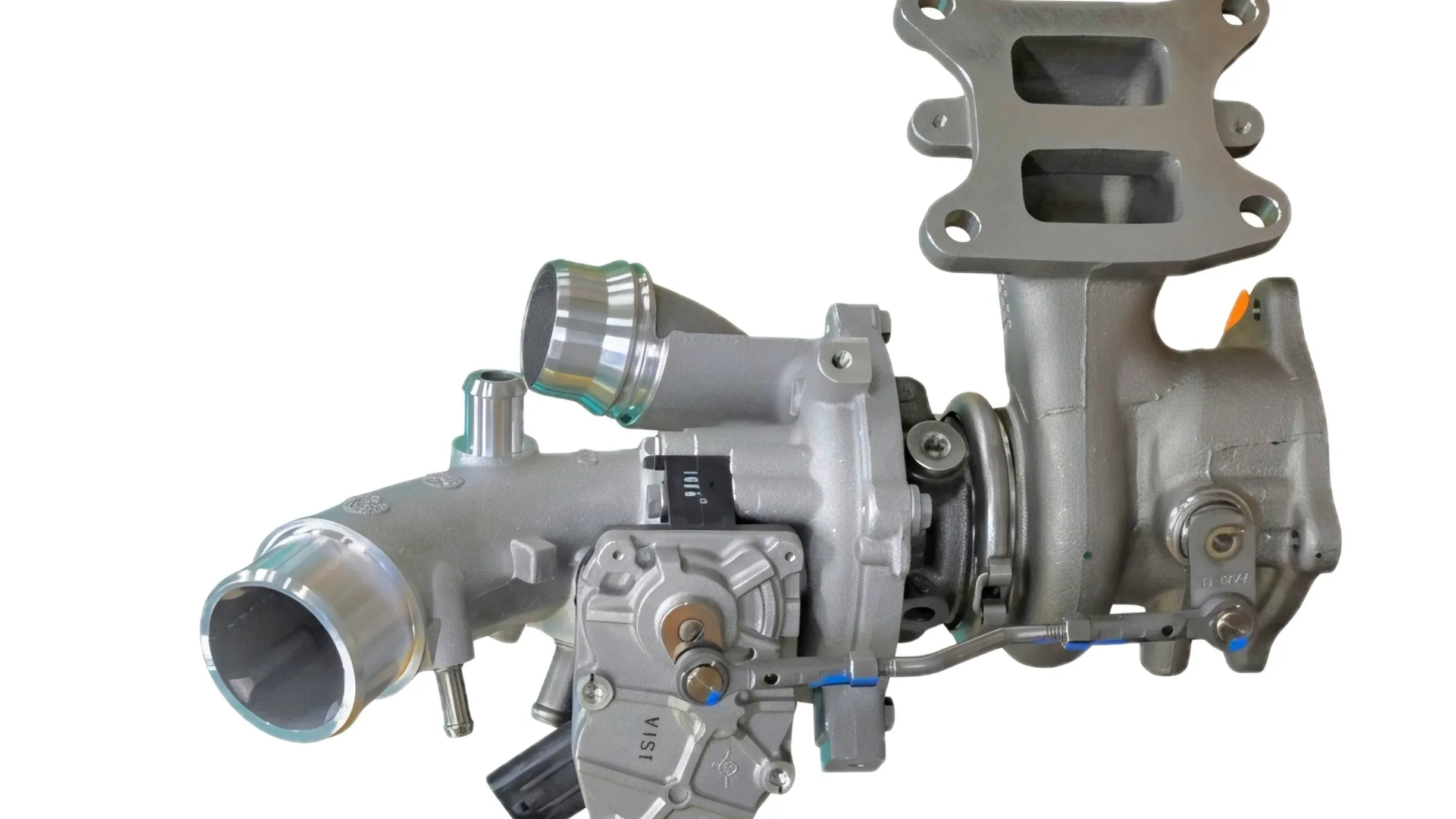
BorgWarner has secured three new turbocharger contracts with a global powertrain technology company. The wins comprise one contract for its variable turbine geometry (VTG) turbocharger and two for its wastegate turbocharger. The technologies will be deployed in the customer's light-vehicle gasoline platforms in South America and Europe, with production scheduled to begin in 2027.The VTG turbochargers are designed for gasoline engines operating under demanding conditions and high-boost pressure requirements. They are engineered to support Miller-cycle engines and withstand exhaust temperatures ..

Next Story
Infrastructure Transport

International Digi Yatra Trials Begin at Seven Airports

India has begun trials of Digi Yatra for international passengers at seven airports, allowing eligible Indian passport holders to use facial recognition at selected airport checkpoints. The facility is currently limited to Indian nationals with e-passports travelling on selected international flights operated by Air India and IndiGo. The Civil Aviation Ministry announced the trials on 1 November, with testing scheduled through December 2026. A wider rollout is expected in 2027 after the ministry assesses passenger feedback gathered during the trial period, according to PTI. The system is inten..

Advertisement

Subscribe to Our Newsletter

Get daily newsletters around different themes from Construction world.

STAY CONNECTED

Advertisement

SPECIAL OFFER
QR Code