World Bank to Expand Critical Minerals Business Fivefold in Five Years
COAL & MINING

World Bank to Expand Critical Minerals Business Fivefold in Five Years

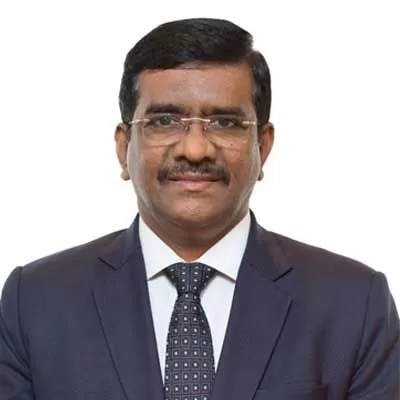
The World Bank Group plans to expand its critical minerals business fivefold over the next five years and has identified 20 countries for potential partnerships to develop local industries, World Bank President Ajay Banga said. Addressing a plenary session of the institution’s Annual Meetings in Bangkok, Banga said the group had launched its first country compacts with other multilateral development banks (MDBs) to retain more jobs and economic value in developing economies.

The group is also increasing its focus on economic corridors, which combine infrastructure development with investment opportunities. It launched 52 new economic corridor projects last year, compared with 23 a year earlier. Banga cited a corridor initially designed mainly to transport minerals that was increasingly being used by farmers to move crops to markets, supporting the growth of towns and cities along the route.

The World Bank Group mobilised USD 112 bn in private capital last year, up from around USD 35 bn in FY22 and representing an increase of more than three times. Total financing, including the institution’s own funding, exceeded USD 230 bn. Private capital mobilisation nearly tripled in lower-middle-income countries and quadrupled in upper-middle-income countries, while it more than doubled across Africa.

Mobilisation remained flat in low-income, fragile and conflict-affected economies, where attracting commercial investment remains difficult. Banga said the institution was addressing barriers including currency risks and limited access to finance through guarantees, equity and local currency financing. It is also working with other MDBs on mechanisms to transfer investments to other investors, releasing capital for additional development projects.

The broader objective is to increase investment in infrastructure, energy, agribusiness, healthcare, tourism and value-added manufacturing to improve productivity and create jobs. Banga highlighted a projected global gap of around 800 mn jobs and said the World Bank’s development model combines public financing, private capital, philanthropy and technology. He called for development initiatives to be implemented at greater scale and pace so young people can access opportunities and build their futures.

The World Bank Group plans to expand its critical minerals business fivefold over the next five years and has identified 20 countries for potential partnerships to develop local industries, World Bank President Ajay Banga said. Addressing a plenary session of the institution’s Annual Meetings in Bangkok, Banga said the group had launched its first country compacts with other multilateral development banks (MDBs) to retain more jobs and economic value in developing economies. The group is also increasing its focus on economic corridors, which combine infrastructure development with investment opportunities. It launched 52 new economic corridor projects last year, compared with 23 a year earlier. Banga cited a corridor initially designed mainly to transport minerals that was increasingly being used by farmers to move crops to markets, supporting the growth of towns and cities along the route. The World Bank Group mobilised USD 112 bn in private capital last year, up from around USD 35 bn in FY22 and representing an increase of more than three times. Total financing, including the institution’s own funding, exceeded USD 230 bn. Private capital mobilisation nearly tripled in lower-middle-income countries and quadrupled in upper-middle-income countries, while it more than doubled across Africa. Mobilisation remained flat in low-income, fragile and conflict-affected economies, where attracting commercial investment remains difficult. Banga said the institution was addressing barriers including currency risks and limited access to finance through guarantees, equity and local currency financing. It is also working with other MDBs on mechanisms to transfer investments to other investors, releasing capital for additional development projects. The broader objective is to increase investment in infrastructure, energy, agribusiness, healthcare, tourism and value-added manufacturing to improve productivity and create jobs. Banga highlighted a projected global gap of around 800 mn jobs and said the World Bank’s development model combines public financing, private capital, philanthropy and technology. He called for development initiatives to be implemented at greater scale and pace so young people can access opportunities and build their futures.

Related Stories

Gold Stories
Next Story
Real Estate

Landmark Group plans Rs 150 billion NCR expansion

Landmark Group has announced expansion plans across two real estate projects in the National Capital Region (NCR), with a combined estimated sales potential of Rs 150 billion. The projects include Landmark One, a 2.1 million sq ft corporate office development on Golf Course Extension Road in Gurugram, and a proposed integrated hospitality, commercial and residential development on Dwarka Expressway.Landmark One has an estimated sales value of Rs 40 billion. The project involves an estimated construction investment of Rs 10 billion, apart from the underlying land, currently valued at around Rs ..
Next Story
Real Estate

RMZ entities secure 5-Star ratings in GRESB 2026

RMZ has been recognised as a Global and Regional Sector Leader in the 2026 Global Real Estate Sustainability Benchmark (GRESB) Real Estate Development Assessment, with three of its entities scoring 99.6 out of 100. RMZ Nexus LLP, Millenia Realtors Private Limited and Infralogix LLP secured 5-Star ratings in their respective categories across the Office and Industrial sectors.In the 2026 Development Benchmark, RMZ Nexus LLP and Millenia Realtors Private Limited were named Sector Leaders in the Office and Office Non-Listed categories in Asia. Infralogix LLP received the distinction in the Indust..

Next Story
Products

Schneider Electric deploys smart building systems at Jupiter Hospitals

Schneider Electric has partnered with Jupiter Hospitals to deploy connected building technologies aimed at improving energy efficiency, patient comfort and operational performance across its hospital campus. The deployment of its EcoStruxure Building Operation platform and SpaceLogic thermostats is helping the hospital achieve energy savings of up to 28 per cent, according to the company.With heating, ventilation and air-conditioning (HVAC) systems accounting for nearly 60 per cent of the hospital's total energy consumption, improving efficiency while maintaining the conditions required for pa..

Advertisement

Subscribe to Our Newsletter

Get daily newsletters around different themes from Construction world.

STAY CONNECTED

Advertisement

SPECIAL OFFER
QR Code