+
LPG Consumption Falls 9 Per Cent in September
OIL & GAS

LPG Consumption Falls 9 Per Cent in September

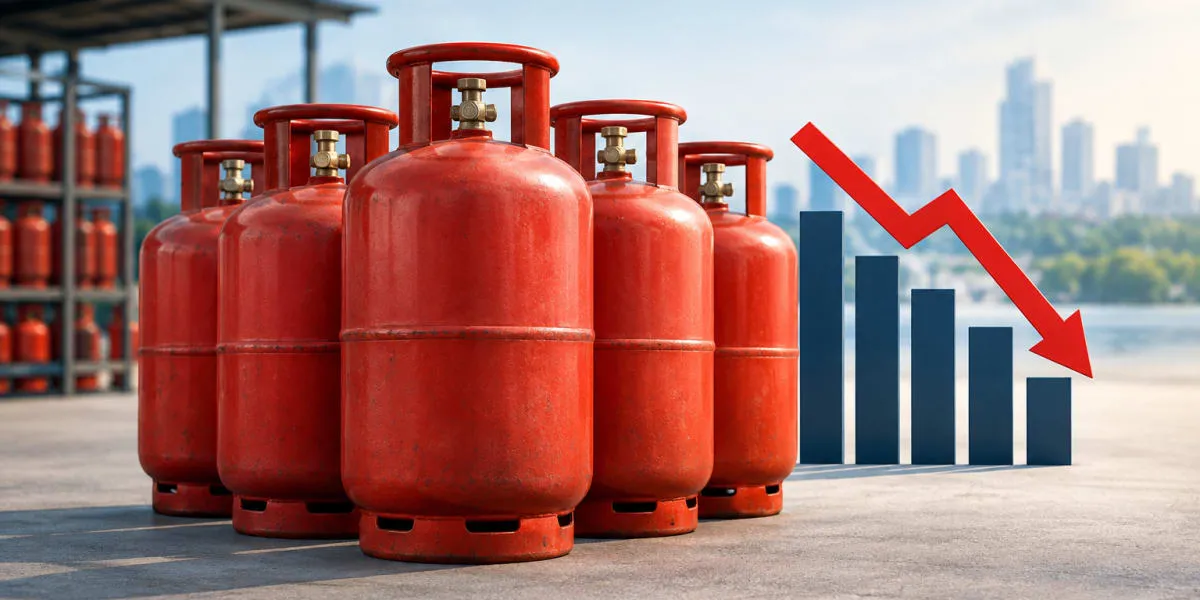
India’s liquefied petroleum gas (LPG) consumption fell 9.15 per cent year-on-year to 2,636 thousand metric tonnes (TMT) in September 2026, remaining below pre-war levels, according to data from the Petroleum Planning and Analysis Cell (PPAC). Consumption stood at 2,902 TMT in September 2025 and 2,725 TMT in September 2024.

The decline was sharper during the first six months of the financial year. LPG consumption between April and September fell 14.93 per cent to 13,797 TMT from 16,218 TMT in the corresponding period of 2025-26, leaving usage about 2.42 mn tonnes below the year-ago level.

The reduction came as supplies through the Strait of Hormuz remained disrupted amid the conflict involving Iran, Israel and the US. The route is a major channel for global energy supplies, and the disruption has prompted India to diversify its sources of LPG, crude oil and liquefied natural gas (LNG).

Greater adoption of piped natural gas (PNG) by households and industries may also have contributed to the decline. During a government drive from January to June 2026, about 1.21 mn new PNG connections and 1.53 mn domestic PNG registrations were added, while daily additions of billed consumers increased from about 2,781 to approximately 7,500.

India has also raised domestic LPG output through public sector, joint venture and private refineries, along with upstream oil companies, to reduce exposure to import disruptions. Production has reached 63.81 thousand metric tonnes a day. In contrast, transport fuel demand increased in September, with petrol consumption rising 7.95 per cent to 3,644 TMT and diesel consumption climbing 6.55 per cent to 7,116 TMT.

The United Arab Emirates was India’s largest LPG supplier in September, providing 529,211 tonnes, or nearly 40 per cent of imports, according to maritime intelligence firm Kpler. The US supplied 337,401 tonnes, followed by Kuwait with 132,544 tonnes, Qatar with 115,340 tonnes and Iran with 66,231 tonnes. The US had led India’s LPG supply over the previous six months.

India’s liquefied petroleum gas (LPG) consumption fell 9.15 per cent year-on-year to 2,636 thousand metric tonnes (TMT) in September 2026, remaining below pre-war levels, according to data from the Petroleum Planning and Analysis Cell (PPAC). Consumption stood at 2,902 TMT in September 2025 and 2,725 TMT in September 2024. The decline was sharper during the first six months of the financial year. LPG consumption between April and September fell 14.93 per cent to 13,797 TMT from 16,218 TMT in the corresponding period of 2025-26, leaving usage about 2.42 mn tonnes below the year-ago level. The reduction came as supplies through the Strait of Hormuz remained disrupted amid the conflict involving Iran, Israel and the US. The route is a major channel for global energy supplies, and the disruption has prompted India to diversify its sources of LPG, crude oil and liquefied natural gas (LNG). Greater adoption of piped natural gas (PNG) by households and industries may also have contributed to the decline. During a government drive from January to June 2026, about 1.21 mn new PNG connections and 1.53 mn domestic PNG registrations were added, while daily additions of billed consumers increased from about 2,781 to approximately 7,500. India has also raised domestic LPG output through public sector, joint venture and private refineries, along with upstream oil companies, to reduce exposure to import disruptions. Production has reached 63.81 thousand metric tonnes a day. In contrast, transport fuel demand increased in September, with petrol consumption rising 7.95 per cent to 3,644 TMT and diesel consumption climbing 6.55 per cent to 7,116 TMT. The United Arab Emirates was India’s largest LPG supplier in September, providing 529,211 tonnes, or nearly 40 per cent of imports, according to maritime intelligence firm Kpler. The US supplied 337,401 tonnes, followed by Kuwait with 132,544 tonnes, Qatar with 115,340 tonnes and Iran with 66,231 tonnes. The US had led India’s LPG supply over the previous six months.

Related Stories

Gold Stories

Next Story
Technology

Bentley Systems announces 2026 Year in Infrastructure winners

Bentley Systems has announced the winners of its 2026 Year in Infrastructure Awards, recognising projects that use digital technologies and Bentley software across the infrastructure lifecycle. The awards were presented during the Bentley Systems 2026 Year in Infrastructure Event, held in Singapore on October 6 and 7.More than 300 projects from organisations in 53 countries were nominated this year. Winners were selected across 12 categories by an independent judging panel.The 2026 winners included AYESA Engineering’s Porto Metro 3.0 project in the Bridges and Tunnels category; Pinnacle Futu..

Next Story
Technology

We want to bring a real system of intelligence to construction

For EPC and infrastructure companies, fragmented project data can delay critical decisions. Srikar Chintalagiri, Co-Founder & CEO, AlfredWorks, explains how AlfredWorks connects contracts with project information to identify risks, improve traceability and support faster decision-making across complex construction projects.Where does AlfredWorks fit within the technology ecosystem of EPC and infrastructure companies, and what gap does it address beyond existing ERP, scheduling and document-management systems?AlfredWorks is a system of intelligence that sits on top of existing systems of re..

Next Story
Technology

We aim to become the single source of truth for project information

Every construction project depends on one critical element: the right drawing reaching the right person at the right time. But fragmented workflows often create costly delays. Rikunj Moradia, Founder, SyncDrawings, explains how digital drawing management can transform project execution.What gap in the construction ecosystem led to the creation of SyncDrawings?I come from a construction background and also run a BIM services firm. During our work, one recurring challenge was drawing accessibility. Construction is completely dependent on drawings, but the way they are managed remains fragmented ..

Advertisement

Subscribe to Our Newsletter

Get daily newsletters around different themes from Construction world.

STAY CONNECTED

Advertisement

SPECIAL OFFER
QR Code