Data Centres to Drive Need for 26.3 GW More Power by 2031-32
POWER & RENEWABLE ENERGY

Data Centres to Drive Need for 26.3 GW More Power by 2031-32

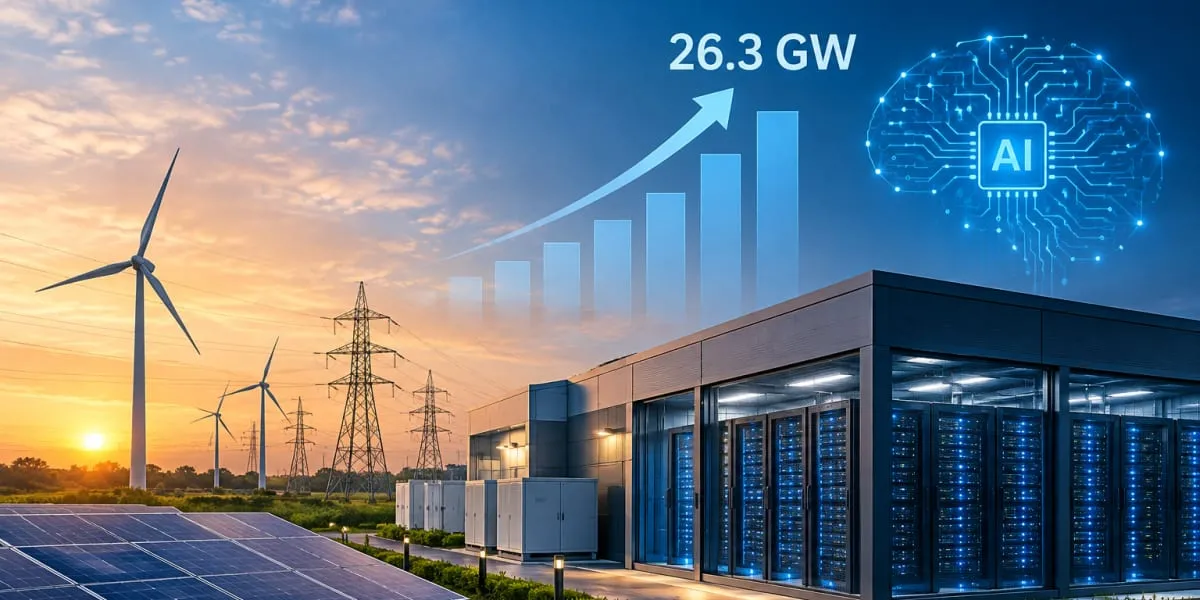
India will need an additional 26.3 GW of power capacity by 2031-32 to meet rising demand from data centres, Union Minister for New and Renewable Energy Pralhad Joshi said at the Bharat Renewable Energy Summit in New Delhi. He described Artificial Intelligence (AI) as important for predictive maintenance, energy management and improved forecasting of electricity systems.

Joshi said India had attracted $116 bn in green-energy investment over the past decade, including $63 bn in recent years. The government is seeking total investment of $220 bn by 2030 to add 190 GW of capacity and reach its target of 500 GW from non-fossil sources.

Ministry of New and Renewable Energy Secretary Santosh Kumar Sarangi said 310 GW of non-fossil power capacity was already contributing 29 per cent of the country’s electricity mix. Joshi also said the expansion of green energy had helped India save $100 bn in fossil-fuel imports, while the country had set a new target of 800 GW of green-energy capacity by 2035-36.

The minister said 10 memoranda of understanding had been signed during the summit following discussions with France, Denmark, Canadian pension funds and countries from the Global South. These included an agreement between the European Union and the Solar Energy Corporation of India (SECI) to supply 300,000 t of green methanol annually. India has also secured offtake commitments for 550,000 t of green hydrogen.

Investments worth $400 bn were committed to renewable energy during the summit, Joshi said, adding that solar plants could continue to create jobs after installation, with seven to eight skilled workers required for every 1 MW of capacity. Sarangi said domestic wind-turbine manufacturing capacity had reached 24 GW annually and that the Approved List of Model Manufacturers (ALMM) framework was supporting greater self-reliance in solar-module and wind-turbine production. International Solar Alliance Director General Ashish Khanna said India would develop as a hub for training centres focused on AI and grid digitisation, with five countries having already sought participation.

India will need an additional 26.3 GW of power capacity by 2031-32 to meet rising demand from data centres, Union Minister for New and Renewable Energy Pralhad Joshi said at the Bharat Renewable Energy Summit in New Delhi. He described Artificial Intelligence (AI) as important for predictive maintenance, energy management and improved forecasting of electricity systems. Joshi said India had attracted $116 bn in green-energy investment over the past decade, including $63 bn in recent years. The government is seeking total investment of $220 bn by 2030 to add 190 GW of capacity and reach its target of 500 GW from non-fossil sources. Ministry of New and Renewable Energy Secretary Santosh Kumar Sarangi said 310 GW of non-fossil power capacity was already contributing 29 per cent of the country’s electricity mix. Joshi also said the expansion of green energy had helped India save $100 bn in fossil-fuel imports, while the country had set a new target of 800 GW of green-energy capacity by 2035-36. The minister said 10 memoranda of understanding had been signed during the summit following discussions with France, Denmark, Canadian pension funds and countries from the Global South. These included an agreement between the European Union and the Solar Energy Corporation of India (SECI) to supply 300,000 t of green methanol annually. India has also secured offtake commitments for 550,000 t of green hydrogen. Investments worth $400 bn were committed to renewable energy during the summit, Joshi said, adding that solar plants could continue to create jobs after installation, with seven to eight skilled workers required for every 1 MW of capacity. Sarangi said domestic wind-turbine manufacturing capacity had reached 24 GW annually and that the Approved List of Model Manufacturers (ALMM) framework was supporting greater self-reliance in solar-module and wind-turbine production. International Solar Alliance Director General Ashish Khanna said India would develop as a hub for training centres focused on AI and grid digitisation, with five countries having already sought participation.

Related Stories

Gold Stories

Next Story
Resources

Prateek Foundation Aakaar celebrates Diwali with children in Noida

Prateek Foundation Aakaar, the community initiative of Prateek Group, organised a Diwali celebration for children at Saikripa, Noida, on 4 November 2026. The one-hour programme brought together members of the foundation and children for an afternoon of creative and recreational activities.The celebration included diya painting, games and interactive sessions, with children designing and decorating diyas. The activities were aimed at encouraging creativity and providing an opportunity for the children to participate in the festive celebrations.Prateek Tiwari, Managing Director, Prateek Group, s..
Next Story
Equipment

Shakti Pumps signs MoU with ISA to expand solar water pumping

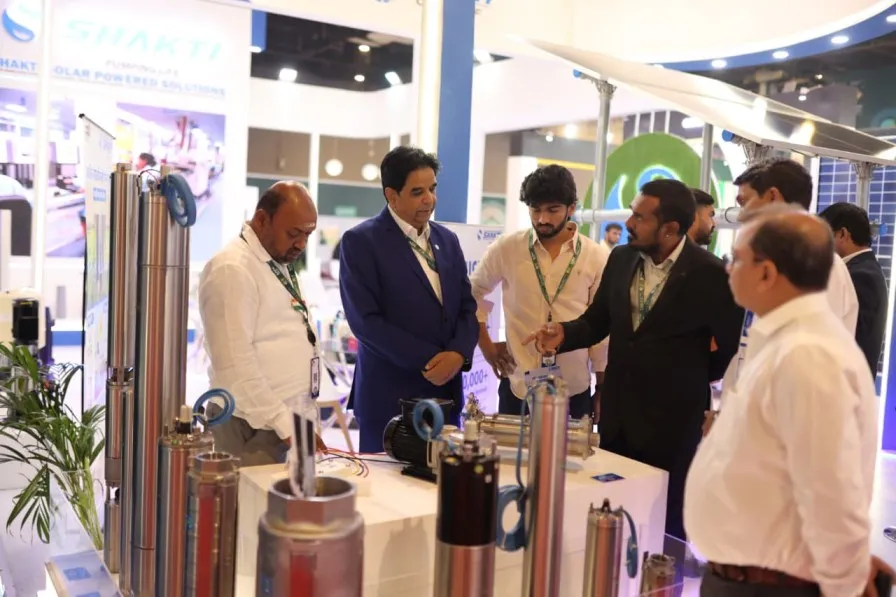
Shakti Pumps (India) signed a Memorandum of Understanding (MoU) with the International Solar Alliance (ISA) to strengthen international collaboration and accelerate the adoption of solar water pumping solutions. The agreement was signed by Ashish Khanna, Director General, ISA, and Ramesh Patidar, Managing Director, Shakti Pumps, alongside the ninth ISA Session at the Bharat Renewable Energy Summit and Expo (BRES) 2026, held at Bharat Mandapam, New Delhi.At the summit, Shakti Pumps showcased its integrated renewable energy portfolio, including solar pumping systems, rooftop solar solutions unde..
Next Story
Real Estate

Worli-Lower Parel gains ground as Mumbai’s commercial hub

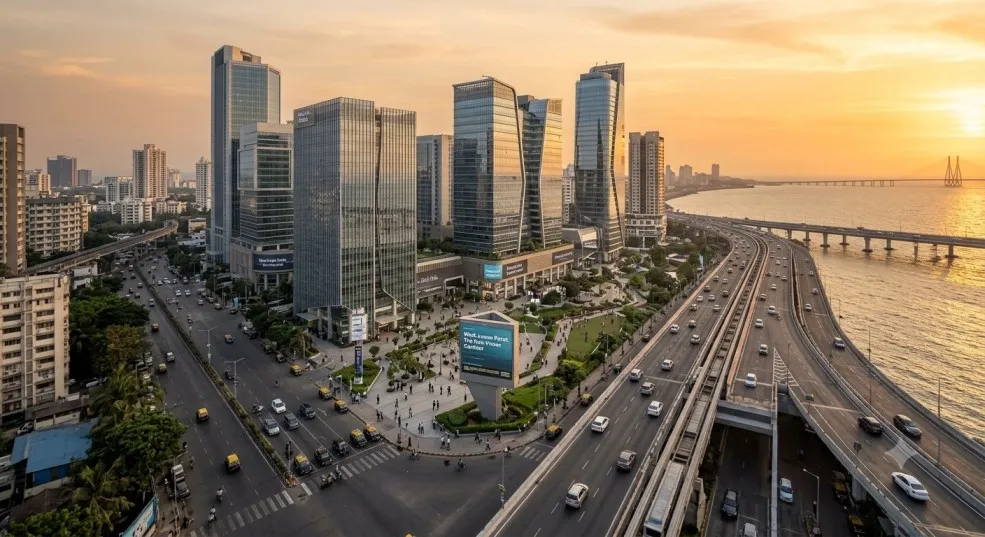
Mumbai’s Worli-Lower Parel corridor is gaining prominence as a commercial and luxury residential destination, attracting financial institutions, technology companies and high-net-worth individuals. Infrastructure upgrades, including the Coastal Road and improved transit connectivity, are contributing to the shift in occupier interest from established business districts such as Bandra-Kurla Complex (BKC) and Nariman Point.Recent leasing transactions underline the corridor’s growing commercial appeal. At Marathon Futurex in Lower Parel, three financial firms leased a combined 28,976 sq ft at..

Advertisement

Subscribe to Our Newsletter

Get daily newsletters around different themes from Construction world.

STAY CONNECTED

Advertisement

SPECIAL OFFER
QR Code