India Reaffirms Solar Support For Island Nations At ISA Meet
POWER & RENEWABLE ENERGY

India Reaffirms Solar Support For Island Nations At ISA Meet

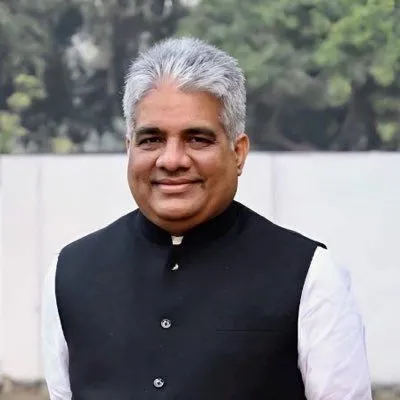
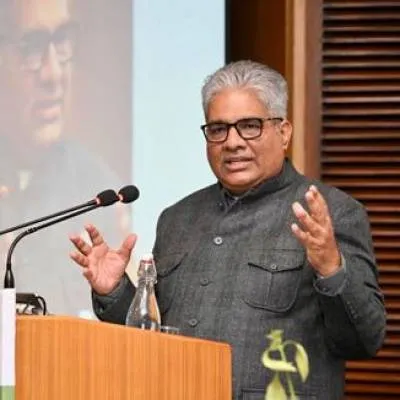
Union Minister for Environment, Forest and Climate Change, Bhupender Yadav, addressed the High-Level Ministerial Leadership Session of the ISA SIDS Platform on the sidelines of UNFCCC CoP30 in Belém, Brazil, the Ministry announced on Wednesday (local time). Held under the theme “Uniting Islands, Inspiring Action – Leadership for Energy Security”, the event brought together Ministers and senior representatives from Small Island Developing States (SIDS), International Solar Alliance (ISA) members and partner organisations to advance energy security, affordability and climate resilience.

The session highlighted the unique vulnerabilities faced by SIDS, including dependence on imported fossil fuels, climate-linked disruptions and fragile infrastructure. The Ministry noted that the ISA SIDS Platform aims to build a transformative digital and financial ecosystem to accelerate solar deployment through standardised procurement, blended finance, local capacity-building and easier access to solar technologies.

Yadav reaffirmed India’s commitment to supporting SIDS in advancing clean energy pathways through the ISA. He opened with optimism, citing India’s rapid progress in renewable energy. “India has crossed 500 gigawatts of installed electricity capacity — and more than half of it is clean energy. India has already reached 50 per cent non-fossil energy capacity, five years ahead of its NDC target,” he said. India is now the fourth-largest renewable energy producer and third in solar power globally, he added.

The Minister credited this progress to Prime Minister Narendra Modi’s emphasis on scale, speed and public participation. Sharing grassroots experiences, he highlighted the PM Surya Ghar Rooftop Solar Programme, including the story of a schoolteacher whose life transformed from fearing monthly electricity bills to welcoming sunshine as a source of income. More than 20 lakh families have adopted rooftop solar, which he described as “freedom for every household — a mini power plant on every roof”.

Speaking on solar-powered agriculture, Yadav said solar pumps and solarised feeders are helping farmers receive assured daytime power, eliminating diesel use and reducing stress. He also noted initiatives lighting up remote and forest regions through the PM JANMAN scheme, as well as India’s major drive in energy storage, including one of the world’s largest solar-and-battery projects in Ladakh.

He stressed that such models could help SIDS cut diesel imports, lower energy costs and strengthen climate resilience.

Reaffirming India’s commitment to ISA, Yadav said the Alliance has become a “global solar family”, now comprising more than 124 countries. ISA, he noted, is accelerating project design, mobilising finance, generating jobs and making solar the preferred source of affordable, reliable clean energy across developing regions.

Concluding his address, Yadav called for shared global action, stating: “Solar energy is spreading its light in more than technological ways. It is Hope. It is Empowerment. It is Independence. It is Dignity. It is Peace.”

Union Minister for Environment, Forest and Climate Change, Bhupender Yadav, addressed the High-Level Ministerial Leadership Session of the ISA SIDS Platform on the sidelines of UNFCCC CoP30 in Belém, Brazil, the Ministry announced on Wednesday (local time). Held under the theme “Uniting Islands, Inspiring Action – Leadership for Energy Security”, the event brought together Ministers and senior representatives from Small Island Developing States (SIDS), International Solar Alliance (ISA) members and partner organisations to advance energy security, affordability and climate resilience. The session highlighted the unique vulnerabilities faced by SIDS, including dependence on imported fossil fuels, climate-linked disruptions and fragile infrastructure. The Ministry noted that the ISA SIDS Platform aims to build a transformative digital and financial ecosystem to accelerate solar deployment through standardised procurement, blended finance, local capacity-building and easier access to solar technologies. Yadav reaffirmed India’s commitment to supporting SIDS in advancing clean energy pathways through the ISA. He opened with optimism, citing India’s rapid progress in renewable energy. “India has crossed 500 gigawatts of installed electricity capacity — and more than half of it is clean energy. India has already reached 50 per cent non-fossil energy capacity, five years ahead of its NDC target,” he said. India is now the fourth-largest renewable energy producer and third in solar power globally, he added. The Minister credited this progress to Prime Minister Narendra Modi’s emphasis on scale, speed and public participation. Sharing grassroots experiences, he highlighted the PM Surya Ghar Rooftop Solar Programme, including the story of a schoolteacher whose life transformed from fearing monthly electricity bills to welcoming sunshine as a source of income. More than 20 lakh families have adopted rooftop solar, which he described as “freedom for every household — a mini power plant on every roof”. Speaking on solar-powered agriculture, Yadav said solar pumps and solarised feeders are helping farmers receive assured daytime power, eliminating diesel use and reducing stress. He also noted initiatives lighting up remote and forest regions through the PM JANMAN scheme, as well as India’s major drive in energy storage, including one of the world’s largest solar-and-battery projects in Ladakh. He stressed that such models could help SIDS cut diesel imports, lower energy costs and strengthen climate resilience. Reaffirming India’s commitment to ISA, Yadav said the Alliance has become a “global solar family”, now comprising more than 124 countries. ISA, he noted, is accelerating project design, mobilising finance, generating jobs and making solar the preferred source of affordable, reliable clean energy across developing regions. Concluding his address, Yadav called for shared global action, stating: “Solar energy is spreading its light in more than technological ways. It is Hope. It is Empowerment. It is Independence. It is Dignity. It is Peace.”

Next Story
Infrastructure Transport

Dhalbhumgarh Airport Faces 150-km Rule Hurdle

The issue has resurfaced following a recent statement by Union Civil Aviation Minister Ram Mohan Naidu, who said that under existing aviation policy, a new greenfield airport is generally not permitted within an aerial distance of 150 kilometres of an operational civilian airport. He added, however, that if a formal proposal is submitted, its impact on the existing airport can be examined and relaxations may be considered on a case-by-case basis. While the clarification has revived some hope for Dhalbhumgarh, it has also underlined the scale of the technical challenge facing the project. Unde..

Next Story
Infrastructure Transport

Stakeholders Seek Parallel Ops For Vizag Airports

With road and metro rail links to Bhogapuram still several years away, stakeholders in north Andhra Pradesh have renewed demands to continue civil operations at INS Dega even after the commissioning of Bhogapuram International Airport. The new airport is expected to begin commercial operations from June. Officials said close to 80 per cent of the airport infrastructure at Bhogapuram, including the terminal building and internal approach roads, has already been completed. However, inadequate external connectivity remains a key concern. Making a case for parallel operations, Andhra Pradesh Air ..

Next Story
Infrastructure Transport

Govt To Roll Out V2V Tech To Cut Road Crashes

In an effort to curb road accidents, particularly in low-visibility conditions such as dense fog, the government is set to roll out vehicle-to-vehicle (V2V) communication technology that will allow cars to exchange real-time data and alert drivers to potential dangers. The announcement was made by Union Road Transport and Highways Minister Nitin Gadkari after the 43rd meeting of the Transport Development Council. The technology involves installing an on-board unit (OBU) in vehicles, enabling wireless data exchange between nearby cars. This will allow vehicles to share information such as spee..

Advertisement

Subscribe to Our Newsletter

Get daily newsletters around different themes from Construction world.

STAY CONNECTED

Advertisement

Advertisement

Advertisement

Advertisement

Open In App