Rivexa Launches New Cross-Border Payment Solution for Exporters
ECONOMY & POLICY

Rivexa Launches New Cross-Border Payment Solution for Exporters

rivexa by mjunction Services Limited has introduced a new cross-border trade payment solution designed to streamline global transactions for Indian exporters registered on its platform. Developed within the regulatory framework of the International Financial Services Centres Authority (IFSCA), the system aims to reduce settlement delays, improve traceability and simplify compliance for MSMEs engaged in international trade.
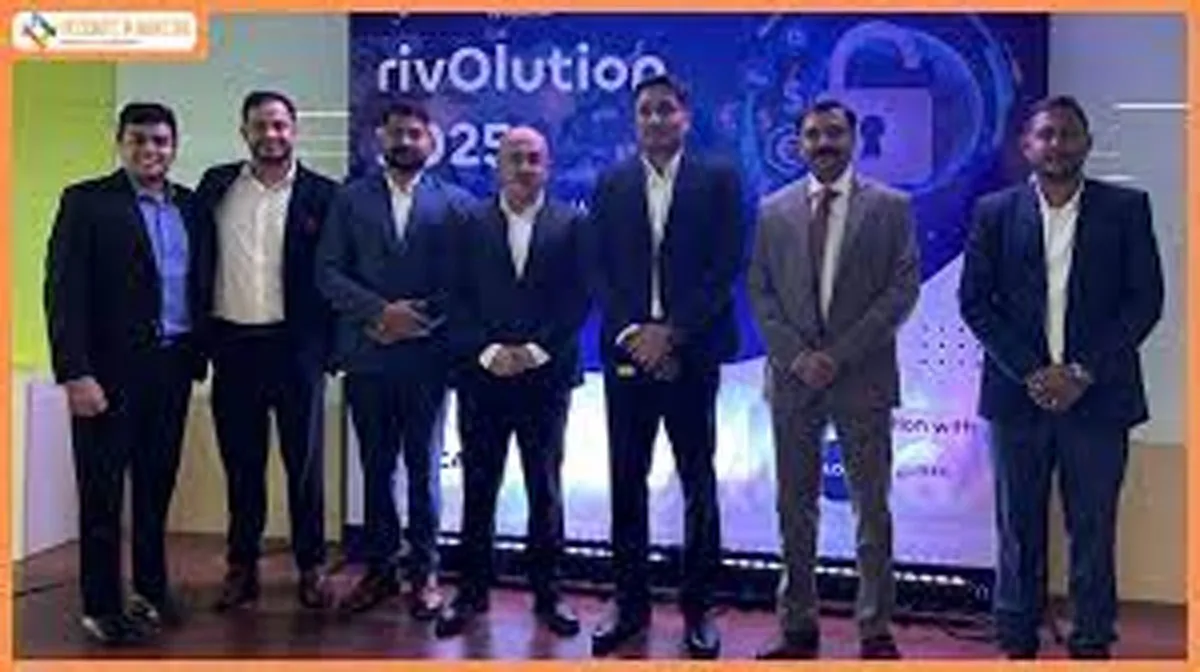
The announcement was made during ‘rivOlution 2025: Demystifying the World of Export and Finance’, the platform’s flagship outreach event held last week. Organised in collaboration with IFSCA, RXIL Global IFSC Limited and Glomopay Private Limited, the event drew senior officials from partner organisations and members of rivexa’s exporter community.
Vinaya Varma, Managing Director of mjunction Services Limited, said the initiative reflects rivexa’s continued effort to simplify the export journey. By strengthening the platform’s payment infrastructure under the IFSCA framework, he said, exporters—particularly MSMEs—can operate with greater clarity and confidence.
IFSCA serves as the unified regulator for financial products, services and institutions within International Financial Services Centres. RXIL Global provides cross-border receivables financing, enabling exporters to discount invoices and access international liquidity, while Glomopay offers compliant multi-currency payment solutions tailored for business needs.
The rivOlution 2025 conference highlighted how India’s regulatory and financial ecosystem is evolving to support exporters, with a particular focus on opportunities within the Gujarat International Finance Tec-City (GIFT City), the country’s international financial hub. Speakers discussed the expanding role of digital platforms such as the International Trade Financing Services (ITFS) platform, which provides access to global trade finance, invoice discounting and factoring.
IFSCA representatives outlined recent reforms aimed at strengthening the global financing framework for Indian businesses, including the role of IFSC Banking Units in facilitating foreign currency accounts and easing settlement processes. Delegates were also briefed on how ITFS platforms help MSMEs secure competitive financing and maintain predictable cash flows.
The event additionally marked the formal announcement of rivexa’s partnership with Glomopay Private Limited. The integration now enables exporters using rivexa to receive payments in multiple foreign currencies and repatriate funds into their authorised dealer (AD1) bank accounts in India. Exporters benefit from standardised bank charges, shorter settlement cycles and enhanced transaction visibility, with Foreign Inward Remittance Advice (FIRA) generated automatically for compliance.
FIRA is an official document issued by banks confirming receipt of foreign exchange against export transactions. The collaboration is expected to address challenges surrounding payment tracking, reconciliation and regulatory documentation for Indian manufacturers and exporters.
                                                                                    

rivexa by mjunction Services Limited has introduced a new cross-border trade payment solution designed to streamline global transactions for Indian exporters registered on its platform. Developed within the regulatory framework of the International Financial Services Centres Authority (IFSCA), the system aims to reduce settlement delays, improve traceability and simplify compliance for MSMEs engaged in international trade.The announcement was made during ‘rivOlution 2025: Demystifying the World of Export and Finance’, the platform’s flagship outreach event held last week. Organised in collaboration with IFSCA, RXIL Global IFSC Limited and Glomopay Private Limited, the event drew senior officials from partner organisations and members of rivexa’s exporter community.Vinaya Varma, Managing Director of mjunction Services Limited, said the initiative reflects rivexa’s continued effort to simplify the export journey. By strengthening the platform’s payment infrastructure under the IFSCA framework, he said, exporters—particularly MSMEs—can operate with greater clarity and confidence.IFSCA serves as the unified regulator for financial products, services and institutions within International Financial Services Centres. RXIL Global provides cross-border receivables financing, enabling exporters to discount invoices and access international liquidity, while Glomopay offers compliant multi-currency payment solutions tailored for business needs.The rivOlution 2025 conference highlighted how India’s regulatory and financial ecosystem is evolving to support exporters, with a particular focus on opportunities within the Gujarat International Finance Tec-City (GIFT City), the country’s international financial hub. Speakers discussed the expanding role of digital platforms such as the International Trade Financing Services (ITFS) platform, which provides access to global trade finance, invoice discounting and factoring.IFSCA representatives outlined recent reforms aimed at strengthening the global financing framework for Indian businesses, including the role of IFSC Banking Units in facilitating foreign currency accounts and easing settlement processes. Delegates were also briefed on how ITFS platforms help MSMEs secure competitive financing and maintain predictable cash flows.The event additionally marked the formal announcement of rivexa’s partnership with Glomopay Private Limited. The integration now enables exporters using rivexa to receive payments in multiple foreign currencies and repatriate funds into their authorised dealer (AD1) bank accounts in India. Exporters benefit from standardised bank charges, shorter settlement cycles and enhanced transaction visibility, with Foreign Inward Remittance Advice (FIRA) generated automatically for compliance.FIRA is an official document issued by banks confirming receipt of foreign exchange against export transactions. The collaboration is expected to address challenges surrounding payment tracking, reconciliation and regulatory documentation for Indian manufacturers and exporters.                                                                                    

Next Story
Infrastructure Urban

Centre Clears Power Distribution Upgrade for Uttar Pradesh

The Central Government has approved power distribution projects worth Rs 407.39 billion for Uttar Pradesh under the Revamped Distribution Sector Scheme (RDSS). The investment will be used to modernise the state's electricity distribution infrastructure and strengthen network capacity across urban and rural areas. The package targets one of the country's largest distribution networks as the state experiences rapid urbanisation and rising electricity consumption. Planned interventions include the strengthening of distribution lines, modernisation of substations, replacement of ageing electrical ..

Next Story
Infrastructure Energy

India Data Centres To Consume 191 TWh By 2040 Driving Renewables

A Wood Mackenzie report says India's operational data centre capacity is projected to increase more than fivefold to 12 gigawatt (GW) by 2030 from 2.2 GW in 2025 as artificial intelligence (AI) and cloud computing drive demand. It projects electricity consumption to rise from 10 terawatt-hour (TWh) in 2025 to 191 TWh by 2040. The study forecasts a compound annual growth rate of around 40 per cent and notes AI-dedicated capacity will surge nearly 24-fold from 275 megawatt (MW) in 2025 to 6,546 MW by 2030. The report places India's digital economy at Rs 32 trillion (tn) in 2025 and says it contr..

Next Story
Infrastructure Transport

Hydrogen Train Completes 1,200 Kilometres Of Trials

India's first hydrogen train was flagged off between Jind and Sonipat on July 17 and has travelled over 1,200 kilometres in trials, saving diesel consumption of more than 3,200 litres, a Railway Ministry press release said. The deployment marks the introduction of a zero-emission fuel cell train into route testing and represents a milestone in domestic rail innovation. The train generates electricity onboard through a chemical reaction between hydrogen and oxygen, producing electricity to propel the vehicle while emitting only water vapour as a by-product. There is no smoke and no tailpipe car..

Advertisement

Subscribe to Our Newsletter

Get daily newsletters around different themes from Construction world.

STAY CONNECTED

Advertisement

Advertisement

Advertisement