India's Farms Offer 116 GW Solar Manufacturing Opportunity
POWER & RENEWABLE ENERGY

India's Farms Offer 116 GW Solar Manufacturing Opportunity

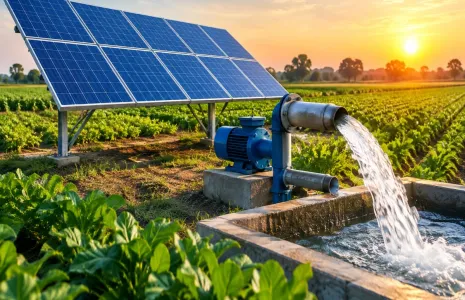
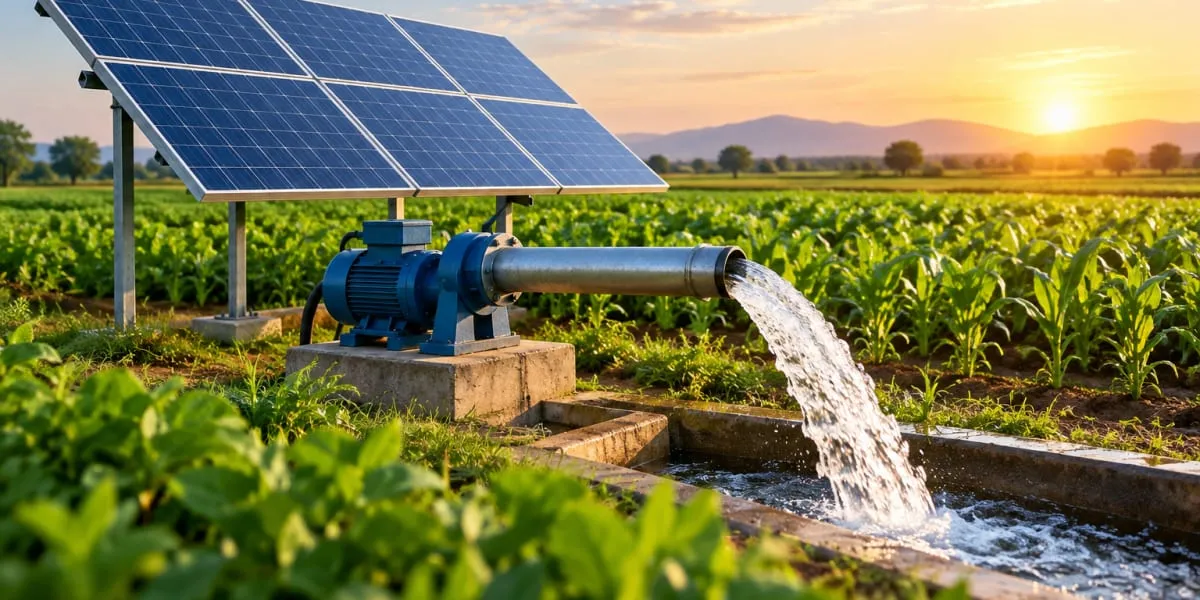
India's agricultural sector could generate demand for an additional 116 GW of solar modules, creating a major market opportunity for domestic manufacturers as the government expands efforts to solarise irrigation pumps and reduce dependence on conventional electricity and diesel, according to a report by the Indian Solar Manufacturers Association (ISMA). The report, titled Powering the Farms, Building the Factory, estimates that grid-connected irrigation pumps could account for 100 GW of additional demand, while diesel-powered pumps could contribute another 16 GW, excluding those in groundwater-stressed areas.

With nearly 23 mn irrigation pumps across the country, agricultural solarisation could become a significant source of long-term demand for India's solar manufacturing industry. It would also connect the clean energy transition with efforts to expand domestic production capacity. The report was launched at the Bharat RE Summit on November 2 and identifies the Pradhan Mantri Kisan Urja Suraksha evam Utthaan Mahabhiyan (PM-KUSUM) as a key driver of the opportunity.

PM-KUSUM added a record 7.6 GW of solar capacity in FY26, while more than 2.8 mn irrigation pumps had been solarised by July 2026, the report said. Domestic Content Requirements (DCR) under Components B and C have helped direct demand towards Indian manufacturers. Installations under the two components reached 13.8 GW by October 2026, meeting nearly two-thirds of the 20.8 GW in domestic manufacturing demand originally projected, ISMA said.

Agriculture accounts for 17.88 per cent of India's electricity consumption, while tariff subsidies billed by distribution companies (DISCOMs) doubled from Rs. 121 bn in FY20 to Rs. 241 bn in FY25. Solarising pumps and feeders could improve electricity availability for farmers, support more sustainable consumption and reduce the financial burden of subsidised agricultural power.

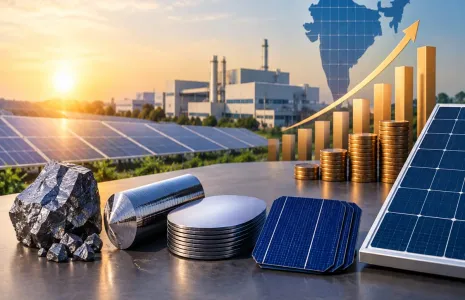
ISMA Secretary General Amit Manohar said the estimated demand linked agriculture with domestic solar manufacturing ambitions, but sustaining the opportunity would require policy support, DCR compliance and predictable project pipelines. The report recommends state-wise targets, multi-year tenders, faster land and clearance processes, and improved grid connectivity. It also calls for investment in upstream capabilities such as silicon wafers and ingots, with actual orders depending on implementation and procurement over multiple years.

India's agricultural sector could generate demand for an additional 116 GW of solar modules, creating a major market opportunity for domestic manufacturers as the government expands efforts to solarise irrigation pumps and reduce dependence on conventional electricity and diesel, according to a report by the Indian Solar Manufacturers Association (ISMA). The report, titled Powering the Farms, Building the Factory, estimates that grid-connected irrigation pumps could account for 100 GW of additional demand, while diesel-powered pumps could contribute another 16 GW, excluding those in groundwater-stressed areas. With nearly 23 mn irrigation pumps across the country, agricultural solarisation could become a significant source of long-term demand for India's solar manufacturing industry. It would also connect the clean energy transition with efforts to expand domestic production capacity. The report was launched at the Bharat RE Summit on November 2 and identifies the Pradhan Mantri Kisan Urja Suraksha evam Utthaan Mahabhiyan (PM-KUSUM) as a key driver of the opportunity. PM-KUSUM added a record 7.6 GW of solar capacity in FY26, while more than 2.8 mn irrigation pumps had been solarised by July 2026, the report said. Domestic Content Requirements (DCR) under Components B and C have helped direct demand towards Indian manufacturers. Installations under the two components reached 13.8 GW by October 2026, meeting nearly two-thirds of the 20.8 GW in domestic manufacturing demand originally projected, ISMA said. Agriculture accounts for 17.88 per cent of India's electricity consumption, while tariff subsidies billed by distribution companies (DISCOMs) doubled from Rs. 121 bn in FY20 to Rs. 241 bn in FY25. Solarising pumps and feeders could improve electricity availability for farmers, support more sustainable consumption and reduce the financial burden of subsidised agricultural power. ISMA Secretary General Amit Manohar said the estimated demand linked agriculture with domestic solar manufacturing ambitions, but sustaining the opportunity would require policy support, DCR compliance and predictable project pipelines. The report recommends state-wise targets, multi-year tenders, faster land and clearance processes, and improved grid connectivity. It also calls for investment in upstream capabilities such as silicon wafers and ingots, with actual orders depending on implementation and procurement over multiple years.

Related Stories

Gold Stories

Next Story
Resources

Prateek Foundation Aakaar celebrates Diwali with children in Noida

Prateek Foundation Aakaar, the community initiative of Prateek Group, organised a Diwali celebration for children at Saikripa, Noida, on 4 November 2026. The one-hour programme brought together members of the foundation and children for an afternoon of creative and recreational activities.The celebration included diya painting, games and interactive sessions, with children designing and decorating diyas. The activities were aimed at encouraging creativity and providing an opportunity for the children to participate in the festive celebrations.Prateek Tiwari, Managing Director, Prateek Group, s..
Next Story
Equipment

Shakti Pumps signs MoU with ISA to expand solar water pumping

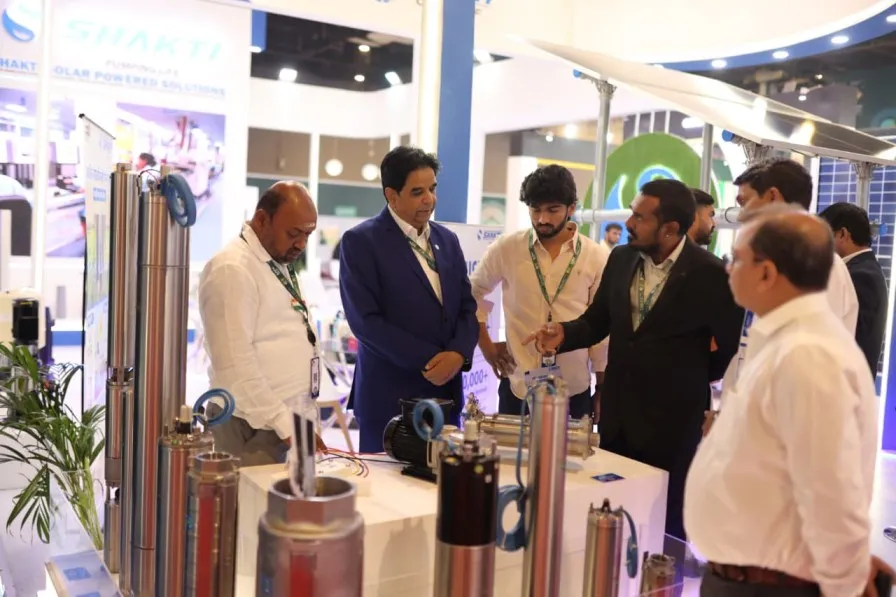
Shakti Pumps (India) signed a Memorandum of Understanding (MoU) with the International Solar Alliance (ISA) to strengthen international collaboration and accelerate the adoption of solar water pumping solutions. The agreement was signed by Ashish Khanna, Director General, ISA, and Ramesh Patidar, Managing Director, Shakti Pumps, alongside the ninth ISA Session at the Bharat Renewable Energy Summit and Expo (BRES) 2026, held at Bharat Mandapam, New Delhi.At the summit, Shakti Pumps showcased its integrated renewable energy portfolio, including solar pumping systems, rooftop solar solutions unde..

Next Story
Real Estate

Worli-Lower Parel gains ground as Mumbai’s commercial hub

Mumbai’s Worli-Lower Parel corridor is gaining prominence as a commercial and luxury residential destination, attracting financial institutions, technology companies and high-net-worth individuals. Infrastructure upgrades, including the Coastal Road and improved transit connectivity, are contributing to the shift in occupier interest from established business districts such as Bandra-Kurla Complex (BKC) and Nariman Point.Recent leasing transactions underline the corridor’s growing commercial appeal. At Marathon Futurex in Lower Parel, three financial firms leased a combined 28,976 sq ft at..

Advertisement

Subscribe to Our Newsletter

Get daily newsletters around different themes from Construction world.

STAY CONNECTED

Advertisement

SPECIAL OFFER
QR Code