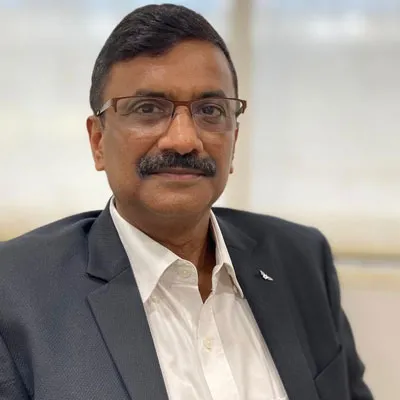
India’s transmission expansion is redefining EPC priorities, shifting focus from scale to specialised execution. Rajesh Kumar Singh, CEO, Jyoti Structures, explains how engineering capability, disciplined project selection and delivery experience will determine competitiveness in the evolving market.India is witnessing a major push to expand its transmission network to integrate renewable energy and strengthen grid resilience. From your perspective, how will this wave of transmission investment reshape opportunities for EPC companies over the next five years?What is happening in Indian transmission right now is not a cyclical uptick. The drivers are renewable capacity additions that need evacuation infrastructure, interstate corridors being upgraded for grid balancing, and ageing lines that need to be replaced or strengthened. These are not going away in two or three years. They are going to keep generating project pipelines well into the next decade.For EPC companies, the more important question is what kind of projects are being tendered. The voltage levels are higher, the spans are longer, the terrain is more difficult. A 765 kV line through creek areas in Gujarat or an 800 kV HVDC corridor is not the same execution proposition as what most of the industry was doing 10 years ago. The companies that have invested in engineering capability, inhouse manufacturing and experienced site teams will find themselves in a different position from those that have not. The next five years will make that gap more visible.Jyoti Structures has been rebuilding its order book and operational momentum in recent years. What strategic priorities have guided this phase of recovery and growth?We went through financial restructuring and the period since then has been about being deliberate in how we rebuild. The temptation in a recovering order book is to go after volume. We chose not to do that. The priority has been to take on projects where we can actually deliver well, and to strengthen the internal infrastructure that makes delivery reliable.That has meant investment in manufacturing and testing. Our second Nashik unit is now fully operational, bringing our aggregate tower manufacturing capacity at Nashik to approximately 72,000 mt. The tower testing station at Ghoti has tested 513 towers and can handle up to 1,200 kV. These are the things that determine whether you can hold a schedule on a high-voltage project when it matters.We have also been selective about clients and project structures. Working capital discipline is important in EPC and the contractual structure of a project matters as much as the technical brief. Our order book now stands close to Rs 2,400 crore, including the 800 kV HVDC package for Power Grid Corporation of India Ltd valued at approximately Rs. 741 crore. That is a manageable portfolio built to be executed well.Transmission projects often face delays owing to right of way (RoW) constraints, environmental clearances and coordination with multiple stakeholders. How can the industry collectively address these bottlenecks to improve project execution timelines?RoW and clearances are the most underestimated part of transmission project planning in India. The construction community spends considerable time on engineering and procurement schedules but the assumptions about RoW resolution are often optimistic to the point of being unrealistic. That mismatch is where many projects lose months they never recover.The fix begins with treating RoW as a parallel workstream from the day a project is awarded, not something to be handled once engineering is underway. Route assessment, local stakeholder engagement, compensation frameworks… all need to move at the same pace as design.At the industry and policy level, the gaps are also clear. Frameworks for RoW compensation are inconsistent across states, which creates negotiating uncertainty at the ground level. Inter-agency clearances for lines crossing state boundaries or forest and protected land can take far longer than the engineering work itself. If the sector is serious about energising large transmission packages on schedule, these processes need to be streamlined with defined timelines and escalation mechanisms that are actually enforced.With transmission infrastructure increasingly moving towards 765 kV lines and HVDC corridors, how is the technical complexity of projects evolving and what new capabilities are EPC contractors required to develop?Going from 400 kV to 765 kV HVAC or to 800 kV HVDC is not just a voltage change. The towers are taller and heavier. Foundation loads are significantly higher. The tolerances in erection and stringing are tighter. At HVDC, the requirements around insulation systems, converter station interfaces and commissioning sequencing are in a different category altogether.For an EPC contractor, the implication is that you cannot approach these projects with a construction-forward mindset and expect the engineering to follow. Design decisions need to account for constructability, site access, foundation options and sequencing from the start. That requires close coordination between engineering and execution teams throughout the design phase, not just at handover.Tower testing becomes genuinely important at these voltage levels. Validating structural performance under design loads before fabrication scales up reduces technical risk significantly. Our testing facility at Ghoti supports testing up to 1,200 kV and we have used it on high-voltage projects before committing to mass fabrication. That step is often treated as optional. At 765 kV and above, it should not be.The other capability that matters, and that is harder to build quickly, is experienced supervision. High-voltage transmission construction involves work at height, heavy lifts and tight sequencing across multiple crews. The supervisory teams that manage this need to have done it before. That kind of experience is accumulated over years of project delivery.Large renewable energy clusters are emerging in regions such as Rajasthan and Gujarat. What unique engineering and logistical challenges arise when building transmission infrastructure for these large-scale renewable zones?Our experience on the Khavda evacuation line for Adani gives a fairly clear picture of what these projects involve. Khavda is remote, the terrain is difficult and a large portion of our line passed through creek areas in a high seismic zone. The original design recommendation was to pile foundations across all those locations. Pile foundations are slow and expensive. Our engineering team proposed stone column foundations instead, which was the first time this approach had been used for transmission lines in India. It saved significant time and cost, the project finished before schedule, and the technique has since been adopted for other lines in the same region.That example illustrates the broader point. In these large renewable zones, standard engineering approaches are often not the right starting point. Ground conditions, seismicity, creek crossings and access constraints in remote areas all require engineering decisions specific to the site. You cannot lift solutions from a previous project and expect them to work.The logistics dimension is equally demanding. Material movement to remote sites in desert or coastal terrain takes longer, requires more planning and is more sensitive to sequencing errors than conventional corridor work. Access roads, staging areas and the coordination between fabrication output and site absorption all have to be planned with greater lead time than would be typical elsewhere. The work we did in Goa for Sterlite, where we used porta mats and bamboo bridges for access and drone-based stringing to navigate environmental constraints, is another example of how execution methodology has to be adapted to conditions on the ground.Transmission EPC contractors continue to face pressures from steel price volatility, logistic costs and tight project timelines. How are companies adapting their procurement and project management strategies to remain competitive?Steel price volatility is a real cost pressure and it is compounded when timelines slip and you are holding fabricated inventory longer than planned. The best mitigation is better alignment between manufacturing output and site readiness, which sounds straightforward but is genuinely difficult to maintain across a large project.Having inhouse manufacturing and galvanisation capacity helps. When we control fabrication and galvanisation internally, we can adjust the pace of output to match site progress rather than working against an external vendor's schedule. With our Nashik facilities now at approximately 72,000 mt in aggregate capacity, we have more flexibility to do that across concurrent projects.On the project management side, the discipline that matters most is cash flow visibility. Working capital in EPC tightens when progress slips and billing milestones move. Our project monitoring systems link procurement status, engineering progress and site execution to billing milestones so that we can see cash flow pressure developing early rather than when it has already become a problem.Selective project engagement is also a genuine response to this. Projects where the client payment track record is poor or where the contract structure creates billing uncertainty should be weighed carefully against the cost of carrying that working capital exposure over a two or three-year delivery cycle.The transmission EPC space is increasingly competitive, with a few large players dominating major projects. How do you see the competitive landscape evolving and where can mid-sized EPC companies carve out an advantage?The large players in this sector have balance sheet scale and long-standing client relationships that give them a natural advantage in the biggest commodity-style packages. That is unlikely to change. The question for a mid-sized contractor is not how to beat them at that game, but where delivery capability matters more than balance sheet size.The answer is in technically demanding projects. Difficult terrain, high voltage levels, long-span crossings, creek and waterlogged zones… these are assignments where the EPC contractor's engineering depth and execution experience determine outcomes more directly than procurement scale or bid price. That is the part of the market where a company like Jyoti Structures can compete on equal or better terms.Our history across 765 kV HVAC, 800 kV HVDC, Himalayan terrain, desert zones and complex water crossings, including a 1,000-m crossing over the River Ganges with 142-m towers, is not just a track record. It is the basis on which clients assess whether you can actually manage what they are about to hand you. In technically complex assignments, that carries more weight than price.Supply chain control also matters increasingly as projects scale. Contractors with inhouse manufacturing and testing capability can provide developers with greater confidence that fabrication will not become a bottleneck when multiple large programmes are running simultaneously. That is a genuine differentiator in periods of high market activity.Looking ahead, which areas of transmission infrastructure – interstate corridors, renewable evacuation lines, HVDC links or cross-border projects – will offer the most promising opportunities for growth?Renewable evacuation is where the near-term pipeline is most active. Solar and wind additions in Rajasthan, Gujarat, and other states are generating consistent demand for evacuation infrastructure and the voltage levels involved are rising. For contractors with high-voltage capability, that combination of volume and technical complexity is a good place to be.Interstate corridors will remain a large and sustained category. As the generation mix changes and regional power flows become more dynamic, the backbone grid needs to be strengthened across multiple corridors simultaneously. These tend to be technically involved projects with demanding timelines and they reward contractors who can manage delivery across long stretches of difficult terrain.HVDC is what we are watching closely. The 800 kV HVDC project awarded to us by Power Grid Corporation of India Ltd is an indication that this technology is now moving into active deployment in India. The pool of contractors globally who can execute HVDC at this voltage level is small. As India adds HVDC corridors for long-distance bulk power transfer, the opportunity for contractors who have built the right capabilities will be meaningful.Cross-border projects have a longer horizon. They involve additional regulatory and coordination complexity. But for companies with genuine international execution experience, they extend the addressable market considerably. We have worked across more than 50 countries, including for utilities such as DEWA in the UAE, ESKOM in South Africa and KETRACO in Kenya, and that experience is relevant when those opportunities develop.- Kavita Parab