‘Missing’ PV Panels Signal Hidden Solar Boom, IEA Says
POWER & RENEWABLE ENERGY

‘Missing’ PV Panels Signal Hidden Solar Boom, IEA Says

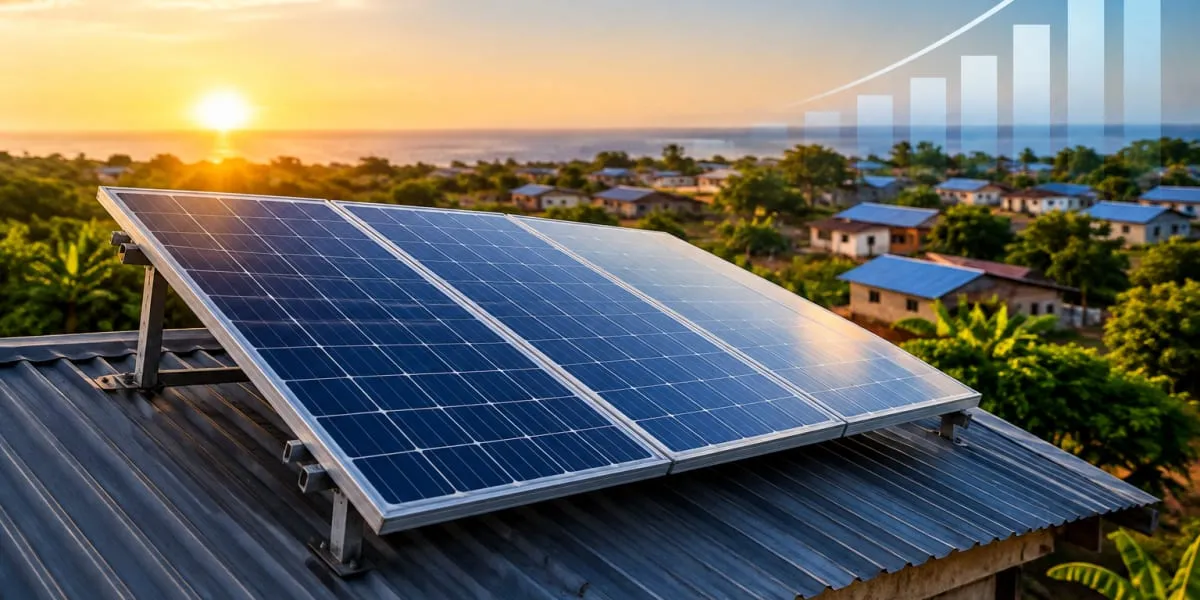
The International Energy Agency (IEA) has identified a widening gap between recorded solar capacity and Chinese panel imports across developing countries in Africa, West Asia and Southeast Asia. It said the discrepancy points to a rapid expansion of decentralised solar systems that are often not connected to national electricity grids and therefore remain absent from official capacity statistics.

The agency described these installations as “missing PV panels” and linked their growth to limited electricity access and prolonged power cuts. Consumers facing daily blackouts lasting 8 to 10 hours are increasingly adopting small rooftop and garden systems to improve the reliability of their electricity supply, according to the IEA.

Pakistan shows the largest disparity highlighted in the assessment. Official data put the country’s installed solar photovoltaic capacity at about 10 GW in March 2026, while panel imports reached nearly 50 GW between 2020 and 2025. The IEA said many other developing economies with limited electricity access also recorded gaps exceeding 50 per cent.

Energy market disruptions linked to the West Asia conflict provided additional momentum. Solar panel imports from China into Africa, the Middle East and Southeast Asia rose sharply between March and May 2026, indicating the growing role of photovoltaic systems in national and household energy supplies.

The IEA forecast that off-grid solar capacity additions between 2026 and 2031 would be 2.5 times the level recorded during 2020-2025, with almost 80 GW of new capacity installed by 2031. Sub-Saharan Africa is expected to account for more than 21 GW, matching its current total installed capacity, while ASEAN countries are projected to add about 10 GW, up from less than 1 GW today.

The agency also noted that import figures do not always represent domestic consumption. Some panels shipped from China to developing economies are re-exported to other markets, sometimes to avoid tariffs, adding another layer of complexity to efforts to measure the global spread of solar power.

The International Energy Agency (IEA) has identified a widening gap between recorded solar capacity and Chinese panel imports across developing countries in Africa, West Asia and Southeast Asia. It said the discrepancy points to a rapid expansion of decentralised solar systems that are often not connected to national electricity grids and therefore remain absent from official capacity statistics. The agency described these installations as “missing PV panels” and linked their growth to limited electricity access and prolonged power cuts. Consumers facing daily blackouts lasting 8 to 10 hours are increasingly adopting small rooftop and garden systems to improve the reliability of their electricity supply, according to the IEA. Pakistan shows the largest disparity highlighted in the assessment. Official data put the country’s installed solar photovoltaic capacity at about 10 GW in March 2026, while panel imports reached nearly 50 GW between 2020 and 2025. The IEA said many other developing economies with limited electricity access also recorded gaps exceeding 50 per cent. Energy market disruptions linked to the West Asia conflict provided additional momentum. Solar panel imports from China into Africa, the Middle East and Southeast Asia rose sharply between March and May 2026, indicating the growing role of photovoltaic systems in national and household energy supplies. The IEA forecast that off-grid solar capacity additions between 2026 and 2031 would be 2.5 times the level recorded during 2020-2025, with almost 80 GW of new capacity installed by 2031. Sub-Saharan Africa is expected to account for more than 21 GW, matching its current total installed capacity, while ASEAN countries are projected to add about 10 GW, up from less than 1 GW today. The agency also noted that import figures do not always represent domestic consumption. Some panels shipped from China to developing economies are re-exported to other markets, sometimes to avoid tariffs, adding another layer of complexity to efforts to measure the global spread of solar power.

Related Stories

Gold Stories

Next Story
Infrastructure Transport

Shillong Airport Expansion on Track for December 2027 Finish

Work on the expansion of Shillong Airport and its runway is progressing according to schedule, with completion targeted for December 2027, Transport and Civil Aviation Department Secretary Sanjay Goyal said. The construction is being carried out under the approved master plan, and officials are monitoring progress to ensure the planned timeline is maintained. Goyal said the work was in full swing and there was currently no reason to anticipate a delay. The project is intended to improve the airport’s capacity and strengthen air connectivity to and from the region as demand for air travel inc..

Next Story
Infrastructure Transport

GMR Hyderabad Airport Enhances Cargo Capacity

GMR Hyderabad International Airport has enhanced its cargo-handling infrastructure by commissioning an upgraded Elevated Transfer Vehicle (ETV)-based storage system at its Cargo Terminal. The facility has been upgraded within the existing terminal footprint, allowing the airport to expand capacity without requiring additional space. The new system has increased Unit Load Device (ULD) storage capacity from 33 to 80 ULDs. This represents an increase of more than double and is intended to provide greater operational flexibility as cargo volumes and freighter activity expand. The additional storag..

Next Story
Infrastructure Urban

Visteon Expands Chennai Manufacturing with Cellular NAD Line

Visteon has launched a production line for Cellular Network Access Device (NAD) modules at its manufacturing plant in Chennai, Tamil Nadu. The investment expands the automotive technology company’s local manufacturing capabilities and strengthens its regional supply chain. The line was inaugurated by Sachin Lawande, Visteon’s President and Chief Executive Officer, along with members of the company’s leadership team. Production in Chennai positions India as a manufacturing base for Cellular NAD technology and enables the company to serve customers in international markets from the region...

Subscribe to Our Newsletter

Get daily newsletters around different themes from Construction world.

STAY CONNECTED

Advertisement

SPECIAL OFFER
QR Code