RMC Switchgears Posts 112 per cent Revenue Surge in H1 FY26
POWER & RENEWABLE ENERGY

RMC Switchgears Posts 112 per cent Revenue Surge in H1 FY26

RMC Switchgears Limited has reported strong financial performance for the first half of FY26, with Revenue from Operations rising to Rs 2.2161 billion, up 111.5 per cent from Rs 1.0478 billion in H1 FY25. The growth was driven by accelerated execution in Solar EPC, alongside steady contributions from Electrical EPC and Electrical Products.

Revenue and Gross Margin

The Cost of Goods Sold increased to Rs 1.6678 billion from Rs 641.8 million in the previous year, reflecting scale-up in operations and higher raw material usage. Despite this, Gross Profit rose to Rs 548.3 million, marking year-on-year growth of 35.05 per cent.

Gross Margin stood at 24.74 per cent in H1 FY26, compared with 25.37 per cent in the prior period, contracting by 63 basis points due to a greater share of EPC revenue. However, margins remained broadly stable against H2 FY25, highlighting disciplined pricing even at higher volumes.

EBITDA and Operating Performance

EBITDA increased sharply to Rs 340 million, up 71.46 per cent from Rs 198.3 million in H1 FY25, supported by scale efficiencies, improved manufacturing throughput and disciplined logistics and procurement management.

The EBITDA margin was 15.34 per cent, compared with 15.65 per cent last year, a modest recalibration of 31 basis points as the company prioritised absolute profit growth while expanding volumes.

Profit Before Tax and Profit After Tax

Profit Before Tax rose to Rs 269 million from Rs 149.5 million, an increase of 79.93 per cent year-on-year. The PBT margin stood at 12.14 per cent against 12.98 per cent previously, reflecting higher Solar EPC contributions and increased finance costs.

Profit After Tax nearly doubled to Rs 200.5 million, compared with Rs 101.3 million in H1 FY25, reflecting 97.93 per cent growth. PAT Margin was 9.05 per cent, compared with 10 per cent earlier, but remained stable relative to H2 FY25. Earnings Per Share increased to Rs 19.26 from Rs 9.89, marking 94.7 per cent year-on-year growth.

Operational Context and Outlook

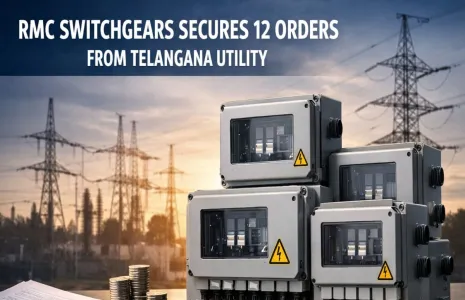
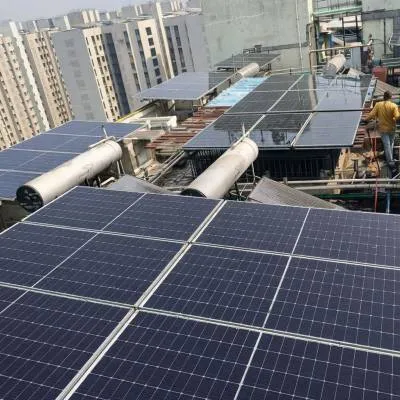
RMC Switchgears continued to build momentum through strong execution, rising order inflows and disciplined operations. Major contract wins of Rs 610 million in Solar EPC, Rs 590 million in Electrical EPC and Rs 160 million in Products strengthened the company’s presence in India’s power and renewable infrastructure sector.

Standardised processes, digital monitoring and integrated supply-chain practices supported rapid scaling while maintaining financial prudence.

The Solar Module Manufacturing Plant—central to RMC’s backward integration strategy—is progressing in phases following procedural and design refinements. With SIDBI funding secured, the project is being aligned with evolving policy frameworks and global market conditions to ensure long-term competitiveness.

The company remains positive about the solar manufacturing landscape, noting that domestic demand, localisation incentives under PLI and ALMM, and global supply-chain diversification mitigate concerns about overcapacity.

RMC’s SPV-based project model continues to offer operational flexibility and strong governance. With innovations such as the Pulse Box and a clear roadmap for capacity expansion, RMC enters the next phase with a solid order book, operational resilience and enhanced visibility.

As the company advances into H2 FY26 and FY27, focus areas include pushing capacity utilisation above 90 per cent, reducing project turnaround times, strengthening vendor partnerships and maintaining its reputation for timely, defect-free delivery, thereby supporting margins and overall efficiency.

RMC Switchgears Limited has reported strong financial performance for the first half of FY26, with Revenue from Operations rising to Rs 2.2161 billion, up 111.5 per cent from Rs 1.0478 billion in H1 FY25. The growth was driven by accelerated execution in Solar EPC, alongside steady contributions from Electrical EPC and Electrical Products. Revenue and Gross Margin The Cost of Goods Sold increased to Rs 1.6678 billion from Rs 641.8 million in the previous year, reflecting scale-up in operations and higher raw material usage. Despite this, Gross Profit rose to Rs 548.3 million, marking year-on-year growth of 35.05 per cent. Gross Margin stood at 24.74 per cent in H1 FY26, compared with 25.37 per cent in the prior period, contracting by 63 basis points due to a greater share of EPC revenue. However, margins remained broadly stable against H2 FY25, highlighting disciplined pricing even at higher volumes. EBITDA and Operating Performance EBITDA increased sharply to Rs 340 million, up 71.46 per cent from Rs 198.3 million in H1 FY25, supported by scale efficiencies, improved manufacturing throughput and disciplined logistics and procurement management. The EBITDA margin was 15.34 per cent, compared with 15.65 per cent last year, a modest recalibration of 31 basis points as the company prioritised absolute profit growth while expanding volumes. Profit Before Tax and Profit After Tax Profit Before Tax rose to Rs 269 million from Rs 149.5 million, an increase of 79.93 per cent year-on-year. The PBT margin stood at 12.14 per cent against 12.98 per cent previously, reflecting higher Solar EPC contributions and increased finance costs. Profit After Tax nearly doubled to Rs 200.5 million, compared with Rs 101.3 million in H1 FY25, reflecting 97.93 per cent growth. PAT Margin was 9.05 per cent, compared with 10 per cent earlier, but remained stable relative to H2 FY25. Earnings Per Share increased to Rs 19.26 from Rs 9.89, marking 94.7 per cent year-on-year growth. Operational Context and Outlook RMC Switchgears continued to build momentum through strong execution, rising order inflows and disciplined operations. Major contract wins of Rs 610 million in Solar EPC, Rs 590 million in Electrical EPC and Rs 160 million in Products strengthened the company’s presence in India’s power and renewable infrastructure sector. Standardised processes, digital monitoring and integrated supply-chain practices supported rapid scaling while maintaining financial prudence. The Solar Module Manufacturing Plant—central to RMC’s backward integration strategy—is progressing in phases following procedural and design refinements. With SIDBI funding secured, the project is being aligned with evolving policy frameworks and global market conditions to ensure long-term competitiveness. The company remains positive about the solar manufacturing landscape, noting that domestic demand, localisation incentives under PLI and ALMM, and global supply-chain diversification mitigate concerns about overcapacity. RMC’s SPV-based project model continues to offer operational flexibility and strong governance. With innovations such as the Pulse Box and a clear roadmap for capacity expansion, RMC enters the next phase with a solid order book, operational resilience and enhanced visibility. As the company advances into H2 FY26 and FY27, focus areas include pushing capacity utilisation above 90 per cent, reducing project turnaround times, strengthening vendor partnerships and maintaining its reputation for timely, defect-free delivery, thereby supporting margins and overall efficiency.

Related Stories

Gold Stories

Next Story
Infrastructure Urban

KONE Opens India's First Digital Experience Centre in Pune

KONE, a global elevator and escalator manufacturer, has inaugurated its first Digital Experience Centre (DEC) in India, located in Pune. The facility aims to showcase how artificial intelligence (AI), connectivity and data-driven technologies can enhance customer experiences and improve building operations.The centre was inaugurated by Jussi Herlin, Executive Vice Chair, KONE Corporation; Philippe Delorme, President and CEO, KONE; and Nandan Nilekani, Co-founder and Chairman of the Board, Infosys.Designed as an interactive customer environment, the facility demonstrates digital solutions cover..

Next Story
Infrastructure Urban

CII GreenCo Launches Circularity Guidelines for Indian Industry

The Confederation of Indian Industry (CII) GreenCo Council has launched the CII GreenCo Circularity Guidelines – Pilot Version at the 17th CII GreenCo Waste & Resource Management Summit 2026 in Chennai. The initiative aims to strengthen resource efficiency, waste reduction and circular economy practices across Indian manufacturing and process industries.The guidelines introduce a structured framework with circularity indices covering raw materials, consumables, packaging and other resource inputs. These indicators will help industries assess existing practices, identify opportunities to ..

Next Story
Infrastructure Energy

Global Electronics Association Launches IPC-1783-CO2E Standard

The Global Electronics Association has introduced IPC-1783-CO2E, a new international standard aimed at improving consistency, transparency and comparability in product carbon footprint reporting across the electronics manufacturing industry.The standard, titled International Standard for Data Collection and Reporting of CO2 Equivalent (CO2e) Emissions for the Electronics Manufacturing Supply Chain, provides industry-specific guidance for collecting, estimating and reporting carbon emissions data.With increasing regulatory requirements and customer expectations, electronics manufacturers face c..

Advertisement

Subscribe to Our Newsletter

Get daily newsletters around different themes from Construction world.

STAY CONNECTED

Advertisement

SPECIAL OFFER
QR Code