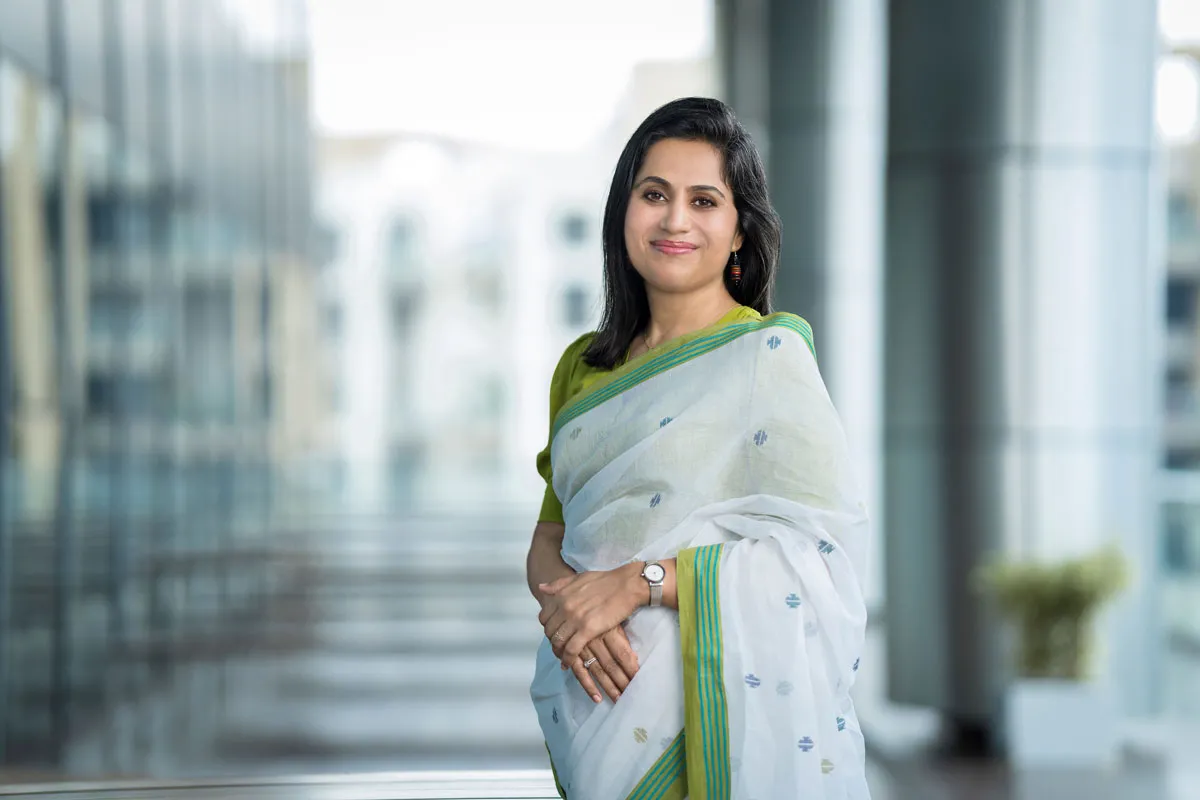
As India accelerates its infrastructure build-out, the role of power, engines and sustainable technologies has never been more critical. In an interaction with CW, Shveta Arya, Managing Director, Cummins India Limited, outlines her views on practical sustainability, fit-for-market innovation, Make in India imperatives, and leadership in complex industrial environments.Cummins has consistently championed sustainability. How are these principles translating into tangible impact across your construction-related products solutions? andShveta: Sustainability has always been core to Cummins, long before it became a buzzword. Globally, Cummins is over 100 years old, and in India, more than 60 years old. While we are known as a diesel engine manufacturer, our belief has always been that businesses grow only when the communities around them grow.If we want communities to prosper, we must work on what is within our control—cleaner environments and responsible technologies. That is why we invested early in R&D to exceed emission norms and, in fact, advocate for tighter regulations. This approach helps move the entire industry forward, which is good not only for business, but also for the country and the environment.In India, sustainability must also be practical. We tailor solutions based on where the country and industry are in their growth journey—balancing affordability with cleaner technologies. Beyond emissions, we explore hybrids, fuel blending, and, in the longer term, alternative fuels such as hydrogen. This is how we build a roadmap that is realistic, progressive, and impactful.What role do you see Cummins India playing in the country’s infrastructure and construction sector in the coming years?Shveta: Our engagement with India’s infrastructure growth is very direct. Whether it is road construction, ports, airports, or urban development, Cummins-powered equipment is often present— in construction machinery and gensets providing power where grid access is limited.Our role here is twofold. First, infrastructure growth must be powered by Make in India solutions. Manufacturing in India allows us to deliver products that are fit for local conditions—cost-conscious, durable, and designed for our operating environment. We don’t need equipment engineered for minus 30 degrees, for example; we tailor products to Indian realities.Second is sustainability. We bring global technology and adapt it locally, supporting India’s goal of energy self-reliance. This includes fuel blending to reduce diesel imports, battery energy storage systems which we recently launched, and exploring pathways for future technologies. Through industry forums, we also work closely with the government to identify what should be manufactured locally and how industry and policy can align to make this viable.Power generation remains critical on construction sites. What innovations are emerging to meet these evolving needs?Shveta: In construction, the key focus is total cost of ownership. These are tendered projects with tight timelines, where equipment often runs 20 to 22 hours a day. Our priority is to ensure high uptime, lower operating costs, and efficient maintenance over long usage cycles.We work closely with customers to provide emission-compliant solutions and help them understand why newer technologies, even if they cost more upfront, are better for long-term operations and the environment. Digital tools play a significant role here—remote monitoring, diagnostics, and predictive maintenance help customers manage equipment more effectively and reduce downtime.Battery energy storage systems are also part of our roadmap, though their application on active construction sites is still evolving. Over time, we see integrated solutions—combining gensets, batteries, and digital platforms—delivering smarter, more sustainable outcomes.What is Cummins India’s strategic vision for the next three to five years?Shveta: Our strategic vision is closely aligned with India’s growth narrative—Viksit Bharat and Atmanirbhar Bharat. Infrastructure development is central to this, and Cummins is committed to helping the country achieve these goals. Beyond our own manufacturing and R&D, we also see our role as one of advocacy—helping policymakers understand which technologies make sense at India’s current stage of development. Some solutions may appear ideal in theory but may not yet be practical or scalable for India.We are committed to making in India for India and for the world. Over the last six decades, India has become a strong base for Cummins in R&D, manufacturing, engineering, talent, and services. Leveraging this scale allows us not only to support India’s growth but also to contribute to Cummins’ global operations.You have built your career in a largely male-dominated industry. What defining moments shaped your leadership journey?Shveta: Like many women, my journey was shaped early in life by values that instilled independence and reinforced the belief in building a full-fledged career. Those values stayed with me, especially during phases when many women step back due to life circumstances.I never consciously viewed my career through the lens of a male-dominated industry. My focus was always on learning, growth, and finding organisations that valued leadership over hierarchy. Cummins stood out because it emphasised building leaders, not just managers.Throughout my career, I encountered mentors and supportive peers who pushed me into roles I didn’t always feel ready for. Each time, that stretch helped me grow. Leadership, for me, has always been about continuous development rather than comfort.What advice would you give to aspiring leaders?Shveta: First, never stop learning. The moment you believe you know enough, growth stops. Leadership requires constant learning—about technology, people, the business, and yourself.Second, trust your instincts. There will be moments when all the data is on the table, advice has been sought, and the final decision rests with you. At that point, you must trust your judgement. You may be wrong sometimes, and that is part of leadership—but learning to trust your instinct is essential.Quote“Leadership is a journey of continuous learning—paired with the courage to trust your instincts when the final decision rests with you.”