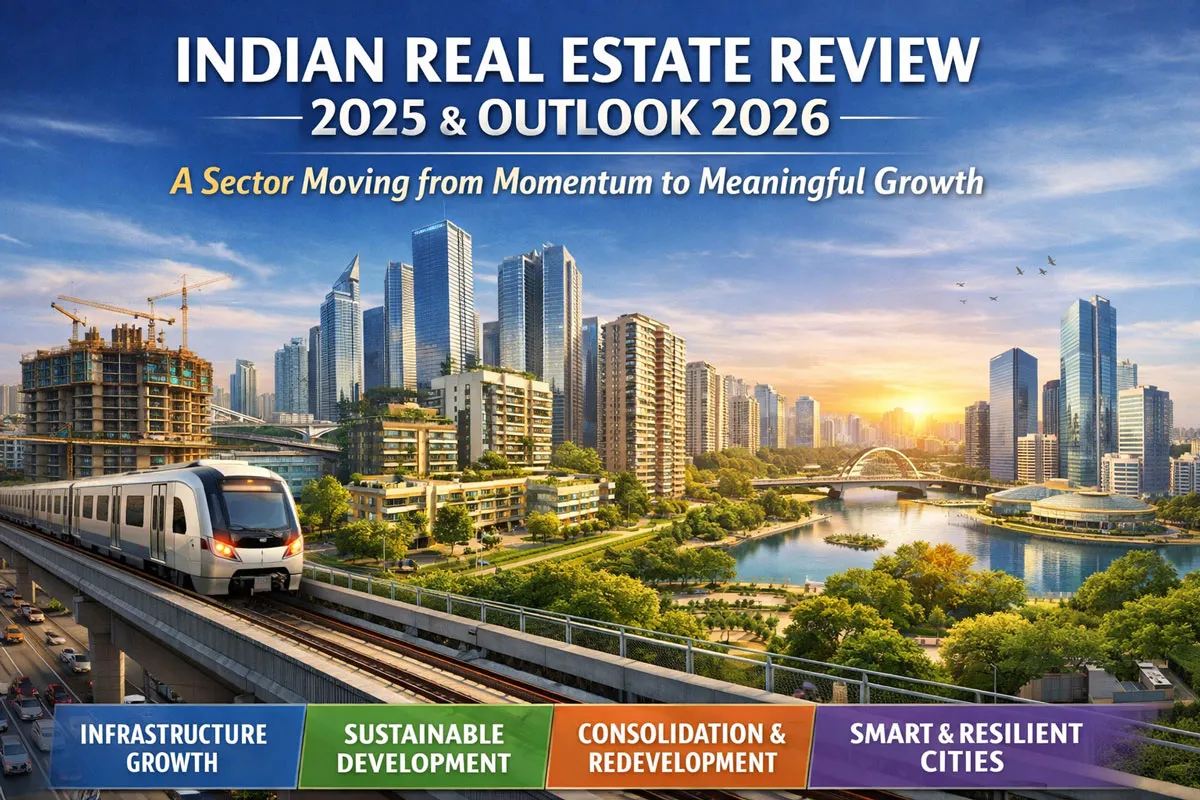
Indian real estate enters next growth phase as infrastructure and end-user demand drive 2026 outlook
Real Estate

Indian real estate enters next growth phase as infrastructure and end-user demand drive 2026 outlook

India’s real estate sector closed 2025 on a strong footing, marked by sustained end-user demand, infrastructure-led growth and increasing market maturity, according to industry leaders and market participants. The year signalled a transition from cyclical recovery to structurally driven expansion, setting the stage for steady, long-term growth in 2026.
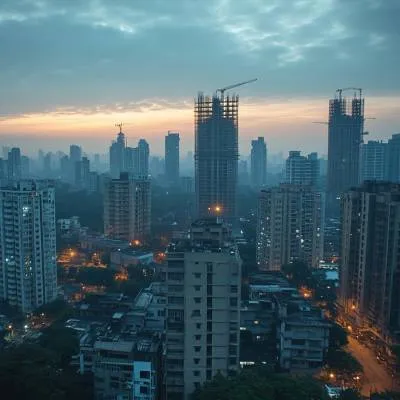
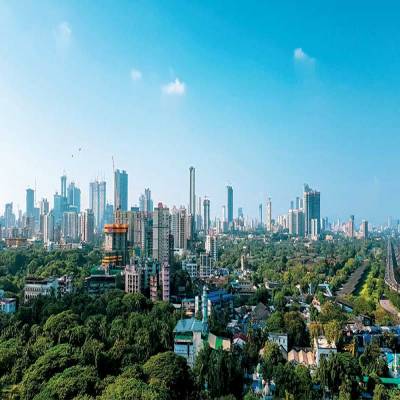
Industry stakeholders noted that large-scale infrastructure investments—particularly in urban transport, connectivity and redevelopment—have emerged as the most powerful drivers of value creation. In the Mumbai Metropolitan Region, improved connectivity through metro corridors, road networks and multimodal infrastructure has reshaped buyer behaviour, with accessibility increasingly outweighing traditional location preferences.
Commenting on the shift, Prashant Sharma, President, NAREDCO Maharashtra, said 2025 marked a turning point for Indian real estate, with stronger governance, rising transparency and technology-led processes helping the sector mature into a more organised and resilient industry.
Industry leaders highlighted that demand across residential segments remained healthy, supported by end-users rather than speculative activity. Mid-income, premium and luxury housing segments all witnessed steady absorption, while redevelopment emerged as a key theme in land-constrained urban centres. Dhruman Shah, Promoter, Ariha Group, noted that redevelopment has become a preferred pathway to urban renewal, offering better infrastructure, improved living standards and optimal land utilisation.
Infrastructure-led development also continued to reshape buyer behaviour. Vijay Choraria, Managing Director, Crest Ventures, observed that connectivity has become the primary determinant of real estate value, with emerging micro-markets gaining prominence as commute times shrink and accessibility improves. Similarly, Kamlesh Thakur, Co-Founder & Managing Director, Srishti Group, pointed out that homebuyers now prioritise ease of movement, social infrastructure and lifestyle integration over mere geographic proximity.
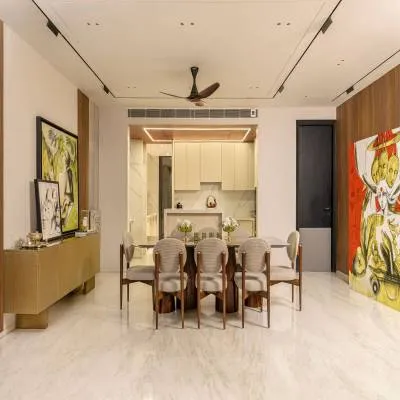
The market also witnessed growing demand for well-planned, design-led developments. According to Shilpin Tater, Managing Director, Superb Realty, buyers are increasingly seeking homes that integrate design quality, sustainability and long-term functionality rather than just square footage.
Commercial real estate and alternative asset classes remained resilient, with steady demand for Grade A office spaces, logistics parks and mixed-use developments. Gaurav Varma, Director, ORA Group, noted that plotted developments and mixed-use formats are gaining traction as buyers look for flexibility, long-term appreciation and diversified investment options.
Looking ahead to 2026, industry leaders expect a continued shift towards structured growth driven by infrastructure expansion, policy stability and rising consumer confidence. Prashant Sharma emphasised that the next phase of real estate growth would be defined by sustainable development, integrated planning and collaboration between policymakers and industry stakeholders.
Summing up the outlook, Shraddha Kedia-Agarwal, Director, Transcon Developers, said that future-ready urban development will focus on connectivity, livability and responsible growth, positioning Indian real estate for a more resilient and inclusive decade ahead.

India’s real estate sector closed 2025 on a strong footing, marked by sustained end-user demand, infrastructure-led growth and increasing market maturity, according to industry leaders and market participants. The year signalled a transition from cyclical recovery to structurally driven expansion, setting the stage for steady, long-term growth in 2026.Industry stakeholders noted that large-scale infrastructure investments—particularly in urban transport, connectivity and redevelopment—have emerged as the most powerful drivers of value creation. In the Mumbai Metropolitan Region, improved connectivity through metro corridors, road networks and multimodal infrastructure has reshaped buyer behaviour, with accessibility increasingly outweighing traditional location preferences.Commenting on the shift, Prashant Sharma, President, NAREDCO Maharashtra, said 2025 marked a turning point for Indian real estate, with stronger governance, rising transparency and technology-led processes helping the sector mature into a more organised and resilient industry.Industry leaders highlighted that demand across residential segments remained healthy, supported by end-users rather than speculative activity. Mid-income, premium and luxury housing segments all witnessed steady absorption, while redevelopment emerged as a key theme in land-constrained urban centres. Dhruman Shah, Promoter, Ariha Group, noted that redevelopment has become a preferred pathway to urban renewal, offering better infrastructure, improved living standards and optimal land utilisation.Infrastructure-led development also continued to reshape buyer behaviour. Vijay Choraria, Managing Director, Crest Ventures, observed that connectivity has become the primary determinant of real estate value, with emerging micro-markets gaining prominence as commute times shrink and accessibility improves. Similarly, Kamlesh Thakur, Co-Founder & Managing Director, Srishti Group, pointed out that homebuyers now prioritise ease of movement, social infrastructure and lifestyle integration over mere geographic proximity.The market also witnessed growing demand for well-planned, design-led developments. According to Shilpin Tater, Managing Director, Superb Realty, buyers are increasingly seeking homes that integrate design quality, sustainability and long-term functionality rather than just square footage.Commercial real estate and alternative asset classes remained resilient, with steady demand for Grade A office spaces, logistics parks and mixed-use developments. Gaurav Varma, Director, ORA Group, noted that plotted developments and mixed-use formats are gaining traction as buyers look for flexibility, long-term appreciation and diversified investment options.Looking ahead to 2026, industry leaders expect a continued shift towards structured growth driven by infrastructure expansion, policy stability and rising consumer confidence. Prashant Sharma emphasised that the next phase of real estate growth would be defined by sustainable development, integrated planning and collaboration between policymakers and industry stakeholders.Summing up the outlook, Shraddha Kedia-Agarwal, Director, Transcon Developers, said that future-ready urban development will focus on connectivity, livability and responsible growth, positioning Indian real estate for a more resilient and inclusive decade ahead.

Next Story
Equipment

Building Greener, Building Faster

The 13th edition of Excon 2025, South Asia’s largest construction equipment exhibition, concluded on a high note at the Bangalore International Exhibition Centre (BIEC), reaffirming its stature as a global platform shaping the future of India’s infrastructure and construction ecosystem. Organised by the Confederation of Indian Industry (CII), the five-day event, held from December 9 to 13, 2025, brought together policymakers, manufacturers, contractors, financiers, technology providers and global stakeholders under one roof.Spread across an expansive 3.5 million sq ft, Excon 2025 hosted ov..

Next Story
Infrastructure Transport

Mahalaxmi Railway Land Fetches Record Rs 22.50 Bn in RLDA Auction

The Railway Land Development Authority (RLDA) has received its highest-ever bid of Rs 22.50 billion for a railway land parcel at Mahalaxmi in south Mumbai, setting a new benchmark for long-term lease auctions in the city’s real estate market.The land parcel, spread over about 2.67 acres or 10,801 square metres, was offered on a revenue-share model with a lease tenure of 99 years. The reserve price for the plot was fixed at Rs 9.93 billion, while the permissible floor space index (FSI) stands at 4.05, making it one of the most attractive redevelopment opportunities in a prime urban location.T..

Next Story
Infrastructure Urban

Seven of 14 National Waterways in Maharashtra Cleared for Development

The Centre has identified 14 national waterways in Maharashtra, of which seven have been found feasible for development, marking a significant step towards strengthening inland water transport infrastructure in the State. The seven waterways together have a navigable length of 662.97 km, according to the Union Ministry of Ports, Shipping and Waterways.The waterways cleared for development include National Waterway (NW)-4 on the River Godavari, NW-11 on the Arunavati–Aran rivers, NW-28 covering Dabhol Creek and the Vashishti River, NW-53 spanning the Kalyan–Thane–Mumbai waterway along wit..

Advertisement

Subscribe to Our Newsletter

Get daily newsletters around different themes from Construction world.

STAY CONNECTED

Advertisement

Advertisement

Advertisement

Advertisement

Open In App