
Building India’s Construction Future
ASHWANI AWASTHI explains why finance, technology, sustainability and talent must work together to improve project delivery, strengthen professional capability and create long-term value.
India is building at a scale few countries have experienced. Metro networks, expressways, airports, industrial corridors, data centres, housing and new urban infrastructure are transforming the country's physical landscape. As India moves towards its ambition of becoming a developed nation by 2047 under ‘Viksit Bharat’, the construction industry faces a more complex challenge: how can it build faster and at greater scale without compromising commercial viability, quality, sustainability or long-term performance?
The answer lies in recognising that finance, technology, talent and sustainability are no longer separate priorities but increasingly interconnected forces.
Better financing cannot compensate for weak project management. Technology creates limited value without people who can use it effectively. Sustainability commitments mean little unless they influence design, procurement, construction and operational decisions. The common thread connecting all four is therefore capability.
As projects become larger and more complex, financial discipline must extend well beyond securing capital. Procurement strategies, cost estimation, contract management, risk assessment and bidding decisions increasingly determine whether projects remain commercially viable.
The lesson for construction businesses is clear: winning a project is not the same as creating value from it.
An inadequately assessed contractual risk, unrealistic programme, poorly prepared bill of quantities or aggressive bid can create problems that surface much later as cost overruns, claims and margin erosion.
Construction professionals therefore need to combine technical knowledge with commercial judgement. Quantity surveyors, cost managers, project managers and commercial specialists must understand not only what a project will cost, but why costs change, where risks sit and how decisions made today affect the economics of the project tomorrow.
Technology is fundamentally changing how projects are designed, coordinated and delivered. BIM, digital project management platforms, automation, data analytics and AI can improve productivity, identify potential conflicts earlier, strengthen safety and support better decision-making.
But the real opportunity is not simply to digitise existing processes. It is to use technology to change the way decisions are made.
A project manager must be able to interpret digital information. A site professional needs to understand how digital models translate into physical construction. Leaders must know where automation can create value and where human judgement remains essential.
Sustainability is similarly moving from a corporate aspiration to an operational requirement. Resource efficiency, embodied carbon, energy performance, responsible material selection and ESG considerations are increasingly influencing construction decisions.
The challenge now is to integrate sustainability into commercial and technical decision-making, rather than treating it as a separate workstream.
A cost manager should understand the lifecycle implications of material choices. A project manager should recognise how construction methods influence resource consumption. A facilities manager should be able to evaluate building performance long after handover.
This requires professionals who can balance cost, quality, programme, carbon and long-term asset performance, making decisions that optimise value across the entire project lifecycle.
This brings us to perhaps the industry's most important challenge: talent. India produces large numbers of engineering, management and other graduates, but academic qualifications do not automatically translate into professional readiness. A graduate may understand estimation in theory but struggle to prepare a commercially robust bill of quantities. Another may know project management principles but lack experience dealing with contractors, resolving site issues or making decisions under time and cost pressure.
The gap is therefore not simply a shortage of people; it is a shortage of professionals who can apply knowledge, exercise judgement and solve real problems.
The response needs to begin much earlier. Industry and academia must work more closely together. Curricula should evolve with professional requirements, while internships, apprenticeships, live projects and practitioner-led learning should become integral to professional development.
Equally important is developing future-ready leadership. Tomorrow's construction leaders will need to understand commercial risk, technology, sustainability and increasingly complex stakeholder expectations. Technical expertise will remain essential, but the ability to connect disciplines, manage uncertainty and make responsible decisions will increasingly distinguish effective leaders.
Strong professional standards and globally recognised qualifications will be increasingly important as India’s construction sector integrates with global markets. They can help build trust among investors, employers and clients while strengthening the credibility and global competitiveness of Indian professionals.
Attracting the next generation will also require greater awareness of the breadth of careers available across the built environment. Alongside traditional disciplines such as civil engineering and architecture, emerging opportunities in cost management, project controls, sustainability, facilities management, digital construction and valuation are becoming increasingly important.
India's construction ambitions cannot be delivered by government, industry, academia or professional bodies working independently. We need a sustained partnership between all four to modernise curricula, strengthen practical learning, develop continuous professional development and establish trusted standards.
As India looks towards 2047, success should not be measured only by how much we build, but by the quality, productivity, resilience, sustainability and long-term value of what we build.
Finance will enable projects. Technology will transform delivery. Sustainability will shape long-term value. But skilled professionals will bring them together.
Ultimately, India's construction future will be defined not only by the scale of what we build, but by the capability, judgement and leadership of the people who build it.
 ABOUT THE AUTHOR
Ashwani Awasthi, Managing Director, South Asia, RICS, leads regional growth, industry engagement and thought leadership, working with industry, academia and government to advance professional standards, develop future-ready talent, and drive capability development, innovation and transformation across India’s built environment.
Related Stories




Gold Stories






IRB InvIT declares Q2 distribution of Rs 1.625 per unit
IRB InvIT Fund has announced a distribution of Rs 2.69 billion for the second quarter of FY27, translating into a payout of Rs 1.625 per unit. The distribution comprises Rs 1.475 per unit as interest and Rs 0.15 per unit as return of capital.The record date has been set as 3 November 2026, with payment to unitholders scheduled on or before 11 November 2026. With this payout, the trust’s cumulative distributions since listing have reached Rs 54.99 billion.The announcement was made following a board meeting of IRB Infrastructure, the investment manager to the trust.For Q2 FY27, the trust repor..

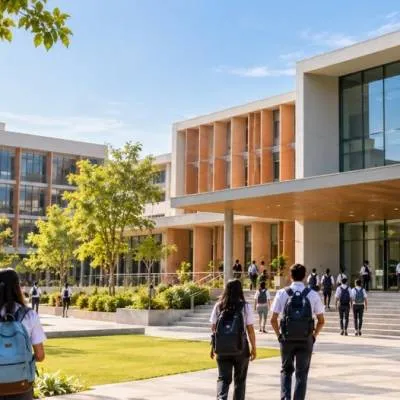
India needs up to 1.5 billion sq ft of education infrastructure by FY35
India is projected to require 1-1.5 billion sq ft of additional private education infrastructure by FY2035, driven by rising enrolments, growing private-sector participation and demand for quality education, according to a report by CBRE South Asia.The report, Beyond Core: A 2035 View of India’s Alternate Sectors – Part I, estimates that private unaided K–12 schools will account for approximately 0.9 billion sq ft of incremental infrastructure demand, while private unaided higher education institutions will contribute another 0.4 billion sq ft.The report identifies investment opportuniti..
Related Articles
Latest Updates