

PureSil Paints Develops Mineral Coatings from Industrial Waste
Paint

PureSil Paints Develops Mineral Coatings from Industrial Waste

PureSil Paints, a brand of Relic Coatings LLP, has developed an indigenous mineral-based coating technology aimed at reducing dependence on petrochemical-derived raw materials in the paints and coatings industry. Its proprietary Silicification Technology uses agricultural and industrial by-products to manufacture architectural coatings as an alternative to conventional acrylic paints.

Developed in-house by Dr Nikhil Dhote, Founder and Chief Technologist, Relic Coatings LLP, the technology uses silicate binders derived from upcycled rice husk ash and industrial coal fly ash. The formulation is designed to chemically bond with suitable masonry surfaces rather than forming a conventional polymer film.

According to the company, this mineral-based approach allows moisture vapour to escape through coated surfaces, helping regulate moisture within walls. Its naturally alkaline composition is also designed to resist mould and fungal growth without relying on toxic biocides.

PureSil states that its coatings contain no petroleum-derived ingredients and are formulated to be solvent-free and free from volatile organic compounds (VOCs). The technology aims to reduce reliance on imported petrochemical-based polymers while supporting the use of locally available raw materials.

Approximately 85 per cent of the company's raw materials are sourced from upcycled domestic agricultural and industrial waste streams. This includes rice husk ash and coal fly ash, helping reduce exposure to international raw material price fluctuations and supply-chain uncertainties.

The company also reports that its mineral coating formulation has a carbon footprint more than 46 per cent lower than standard acrylic paints. By converting agricultural and industrial waste into functional building materials, PureSil aims to promote circular economy practices within the construction sector.

PureSil manufactures its coatings at its facility in MIDC Butibori, Nagpur, Maharashtra, which has a production capacity of 100,000 litres per month. The company undertakes its entire formulation and manufacturing process domestically, supporting its focus on indigenous technology and resource-efficient production.

Dr Nikhil Dhote highlighted the role of mineral chemistry in developing alternatives to conventional petrochemical-based coatings. He stated that Silicification Technology enables coatings to chemically bond with masonry while converting domestic waste materials into construction products.

As part of its industry outreach, PureSil Paints will showcase its mineral-based architectural coatings at the Indian Green Building Council exhibition in Mumbai from 26 to 28 November 2026. The company plans to demonstrate its Silicification Technology and its potential applications in sustainable building construction.

Through domestic sourcing, mineral-based formulations and manufacturing innovation, PureSil Paints aims to strengthen India's sustainable building materials ecosystem while reducing dependence on petroleum-derived inputs.

PureSil Paints, a brand of Relic Coatings LLP, has developed an indigenous mineral-based coating technology aimed at reducing dependence on petrochemical-derived raw materials in the paints and coatings industry. Its proprietary Silicification Technology uses agricultural and industrial by-products to manufacture architectural coatings as an alternative to conventional acrylic paints.Developed in-house by Dr Nikhil Dhote, Founder and Chief Technologist, Relic Coatings LLP, the technology uses silicate binders derived from upcycled rice husk ash and industrial coal fly ash. The formulation is designed to chemically bond with suitable masonry surfaces rather than forming a conventional polymer film.According to the company, this mineral-based approach allows moisture vapour to escape through coated surfaces, helping regulate moisture within walls. Its naturally alkaline composition is also designed to resist mould and fungal growth without relying on toxic biocides.PureSil states that its coatings contain no petroleum-derived ingredients and are formulated to be solvent-free and free from volatile organic compounds (VOCs). The technology aims to reduce reliance on imported petrochemical-based polymers while supporting the use of locally available raw materials.Approximately 85 per cent of the company's raw materials are sourced from upcycled domestic agricultural and industrial waste streams. This includes rice husk ash and coal fly ash, helping reduce exposure to international raw material price fluctuations and supply-chain uncertainties.The company also reports that its mineral coating formulation has a carbon footprint more than 46 per cent lower than standard acrylic paints. By converting agricultural and industrial waste into functional building materials, PureSil aims to promote circular economy practices within the construction sector.PureSil manufactures its coatings at its facility in MIDC Butibori, Nagpur, Maharashtra, which has a production capacity of 100,000 litres per month. The company undertakes its entire formulation and manufacturing process domestically, supporting its focus on indigenous technology and resource-efficient production.Dr Nikhil Dhote highlighted the role of mineral chemistry in developing alternatives to conventional petrochemical-based coatings. He stated that Silicification Technology enables coatings to chemically bond with masonry while converting domestic waste materials into construction products.As part of its industry outreach, PureSil Paints will showcase its mineral-based architectural coatings at the Indian Green Building Council exhibition in Mumbai from 26 to 28 November 2026. The company plans to demonstrate its Silicification Technology and its potential applications in sustainable building construction.Through domestic sourcing, mineral-based formulations and manufacturing innovation, PureSil Paints aims to strengthen India's sustainable building materials ecosystem while reducing dependence on petroleum-derived inputs.

Related Stories

Gold Stories
Next Story
Infrastructure Energy

Vedanta Eyes AI to Accelerate Mineral Exploration

Vedanta Group is exploring the use of artificial intelligence (AI) to significantly improve efficiency in mineral exploration, geological analysis and resource modelling. The company aims to reduce exploration processes that traditionally take three to four months to just six to seven days through AI-driven technologies.The proposed approach involves AI-led geological analysis and mineral block modelling to accelerate mineral resource assessment and support faster, more cost-efficient development of domestic mineral reserves. The initiative aligns with India's growing focus on critical mineral..

Next Story
Technology

NXP Launches Unified Robotics Platform for Physical AI

NXP Semiconductors has launched a unified robotics platform designed to accelerate the development and deployment of trusted physical artificial intelligence (AI) systems. Built on the company's neural axis architecture, the platform integrates AI processing, connectivity, motor control, security and energy management within a common hardware and software ecosystem.The platform combines an open-source, modular software development kit (SDK) with pre-validated reference designs, enabling developers to build robotic systems more efficiently. It supports development ranging from individual subsys..
Next Story
Technology

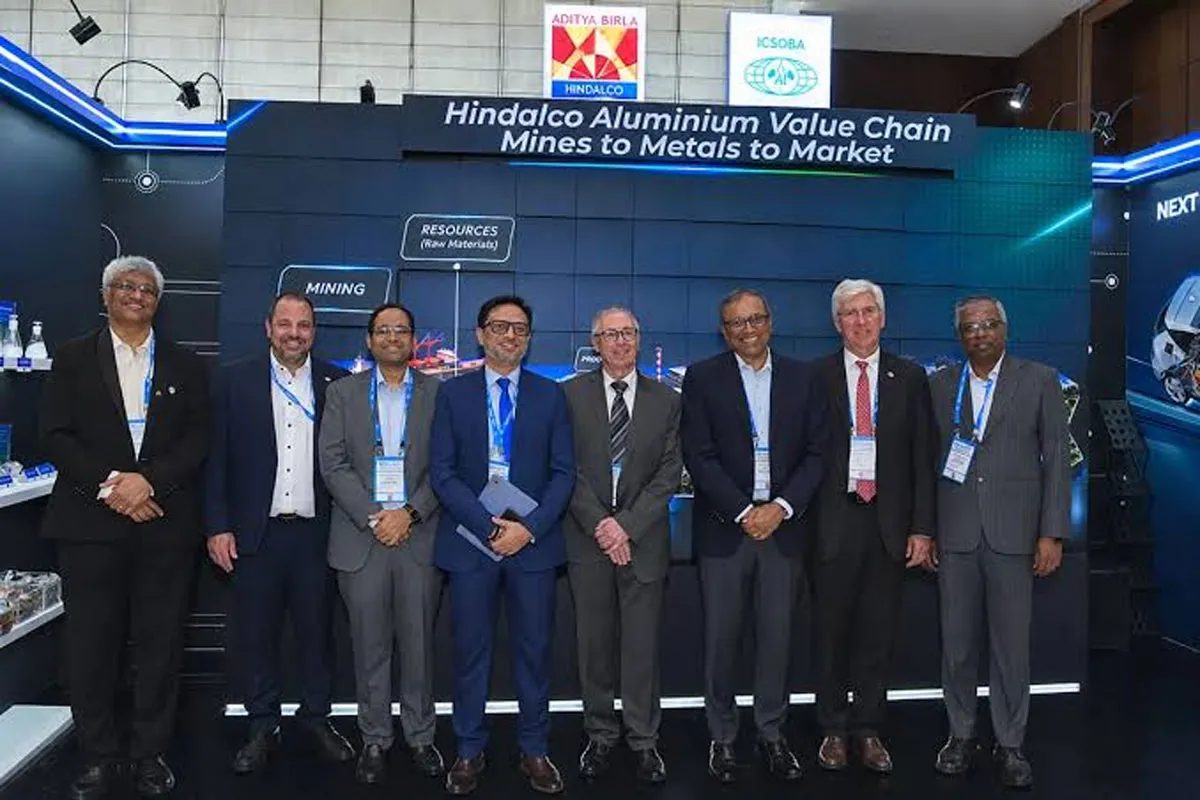
Hindalco Hosts 44th ICSOBA Aluminium Conference in Bengaluru

Hindalco Industries, the metals flagship of the Aditya Birla Group, is hosting the 44th International Conference and Exhibition of the International Committee for Study of Bauxite, Alumina and Aluminium (ICSOBA) in Bengaluru from 15 to 20 November 2026.The conference brings together global aluminium producers, technology providers, researchers and industry experts to discuss technological advancements, sustainability and emerging opportunities across the aluminium value chain.Featuring more than 160 technical papers, nine keynote presentations and four parallel technical streams, the event foc..

Advertisement

Subscribe to Our Newsletter

Get daily newsletters around different themes from Construction world.

STAY CONNECTED

Advertisement

SPECIAL OFFER
QR Code