Mumbai Infrastructure Upgrades Lift Suburban Home Prices by 12%
Real Estate

Mumbai Infrastructure Upgrades Lift Suburban Home Prices by 12%

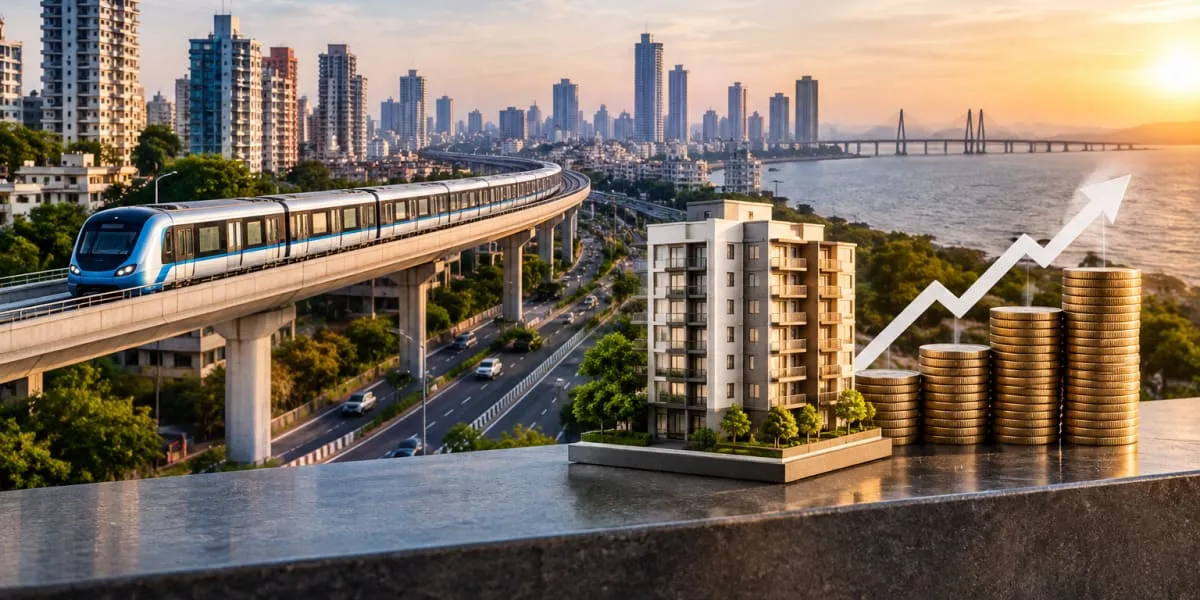
Mumbai’s infrastructure expansion is reshaping residential property values across the metropolitan region, with improved connectivity increasing demand in previously less-accessible neighbourhoods. Prices rose 10 to 12 per cent year-on-year across several suburban markets during the first quarter of 2026, according to Cushman & Wakefield.

Quoted mid-segment prices in the western suburbs increased 11 per cent to Rs. 17,500-34,500 per sq ft, while eastern suburban prices rose 10 per cent to Rs. 16,000-33,500 per sq ft. Thane and Navi Mumbai recorded 12 per cent increases, with prices ranging from Rs. 11,500 to Rs. 22,100 per sq ft and Rs. 9,000 to Rs. 23,500 per sq ft, respectively.

Metro Lines 2A and 7, the Western Express Highway, the Coastal Road and other transport projects have strengthened demand in areas including Goregaon, Malad, Mulund, Thane, Kharghar and Panvel. Redevelopment, limited land availability, construction costs and new housing supply are also influencing prices, meaning infrastructure alone does not explain the market’s performance.

The Goregaon-Mulund Link Road is expected to improve east-west travel through flyovers and twin tunnels beneath Sanjay Gandhi National Park. However, delays and cost escalation have affected the project, with the estimated cost of its fourth phase increasing from Rs. 12.93 bn to Rs. 21.13 bn and completion now expected in 2029. The eastern suburbs recorded 3,861 new residential launches in the first quarter, while the western suburbs contributed 4,734 units.

Thane is attracting buyers seeking larger homes at prices below those in Mumbai’s established premium locations. In Navi Mumbai, the international airport and Mumbai Trans Harbour Link are supporting interest in surrounding areas, while Kalyan-Dombivli and Panvel are drawing buyers seeking lower entry prices. Analysts cautioned that advertised and quoted prices may not reflect final transaction values, and delays in promised infrastructure could leave buyers paying a premium before connectivity and employment benefits fully materialise.

Mumbai’s infrastructure expansion is reshaping residential property values across the metropolitan region, with improved connectivity increasing demand in previously less-accessible neighbourhoods. Prices rose 10 to 12 per cent year-on-year across several suburban markets during the first quarter of 2026, according to Cushman & Wakefield. Quoted mid-segment prices in the western suburbs increased 11 per cent to Rs. 17,500-34,500 per sq ft, while eastern suburban prices rose 10 per cent to Rs. 16,000-33,500 per sq ft. Thane and Navi Mumbai recorded 12 per cent increases, with prices ranging from Rs. 11,500 to Rs. 22,100 per sq ft and Rs. 9,000 to Rs. 23,500 per sq ft, respectively. Metro Lines 2A and 7, the Western Express Highway, the Coastal Road and other transport projects have strengthened demand in areas including Goregaon, Malad, Mulund, Thane, Kharghar and Panvel. Redevelopment, limited land availability, construction costs and new housing supply are also influencing prices, meaning infrastructure alone does not explain the market’s performance. The Goregaon-Mulund Link Road is expected to improve east-west travel through flyovers and twin tunnels beneath Sanjay Gandhi National Park. However, delays and cost escalation have affected the project, with the estimated cost of its fourth phase increasing from Rs. 12.93 bn to Rs. 21.13 bn and completion now expected in 2029. The eastern suburbs recorded 3,861 new residential launches in the first quarter, while the western suburbs contributed 4,734 units. Thane is attracting buyers seeking larger homes at prices below those in Mumbai’s established premium locations. In Navi Mumbai, the international airport and Mumbai Trans Harbour Link are supporting interest in surrounding areas, while Kalyan-Dombivli and Panvel are drawing buyers seeking lower entry prices. Analysts cautioned that advertised and quoted prices may not reflect final transaction values, and delays in promised infrastructure could leave buyers paying a premium before connectivity and employment benefits fully materialise.

Related Stories

Gold Stories

Next Story
Resources

Kalpataru Projects International elevates Amit Uplenchwar as Joint MD and CEO

Kalpataru Projects International (KPIL) has elevated Amit Uplenchwar as Joint Managing Director and CEO (designate), following approval by its board on 5 November 2026. He will take charge as Additional Director, Joint Managing Director and CEO from 1 January 2027 for a five-year term ending 31 December 2031, subject to shareholders' approval.Uplenchwar brings over three decades of experience in corporate strategy, business operations, business development, mergers and acquisitions, and international business management. His experience spans transportation, power, water, oil and gas, aerospace..

Next Story
Resources

HCC appoints Vivek Singhal as CEO

Hindustan Construction Company (HCC) has appointed Vivek Singhal as Chief Executive Officer, effective 5 November 2026. He brings over four decades of experience in infrastructure and engineering, procurement and construction (EPC), covering project execution, business leadership, business development and profit and loss management.Singhal has spent 16 years in international markets, delivering projects and managing assets worth approximately Rs 285 billion across five countries. His experience spans airports, metro rail, urban transport, hydropower, bridges and other infrastructure sectors.He..
Next Story
Infrastructure Energy

Essar Signs PPA for 300 MW Hybrid Renewable Energy Project

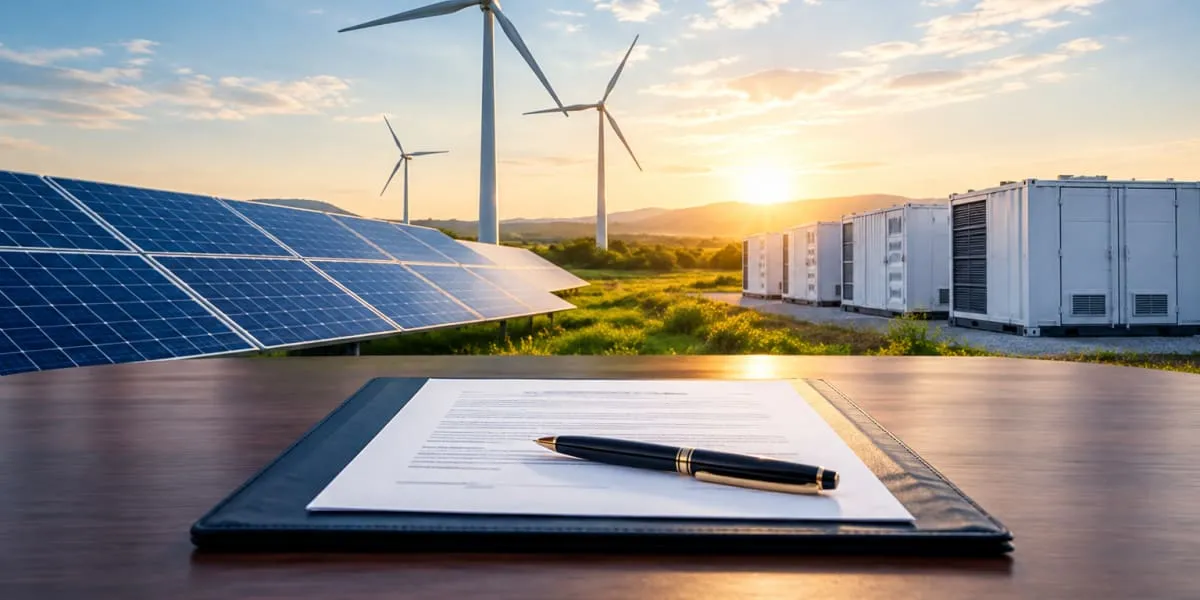
Essar Renewables, the renewable energy arm of Essar Power, has signed a Power Purchase Agreement (PPA) with NHPC for a 300 MW renewable energy project in Andhra Pradesh. The agreement follows the company’s successful bid for the project two years ago. Essar Power will invest approximately Rs. 45 bn in the development. The project will combine solar and wind generation with Battery Energy Storage Systems (BESS), enabling the supply of reliable and dispatchable renewable power. It forms part of Essar Power’s plan to build a diversified energy portfolio of approximately 5 GW across renewable,..

Advertisement

Subscribe to Our Newsletter

Get daily newsletters around different themes from Construction world.

STAY CONNECTED

Advertisement

SPECIAL OFFER
QR Code