- Home
- Real Estate
- Vertical integration gives us control over cost and delivery: Renny Strips
Vertical integration gives us control over cost and delivery: Renny Strips
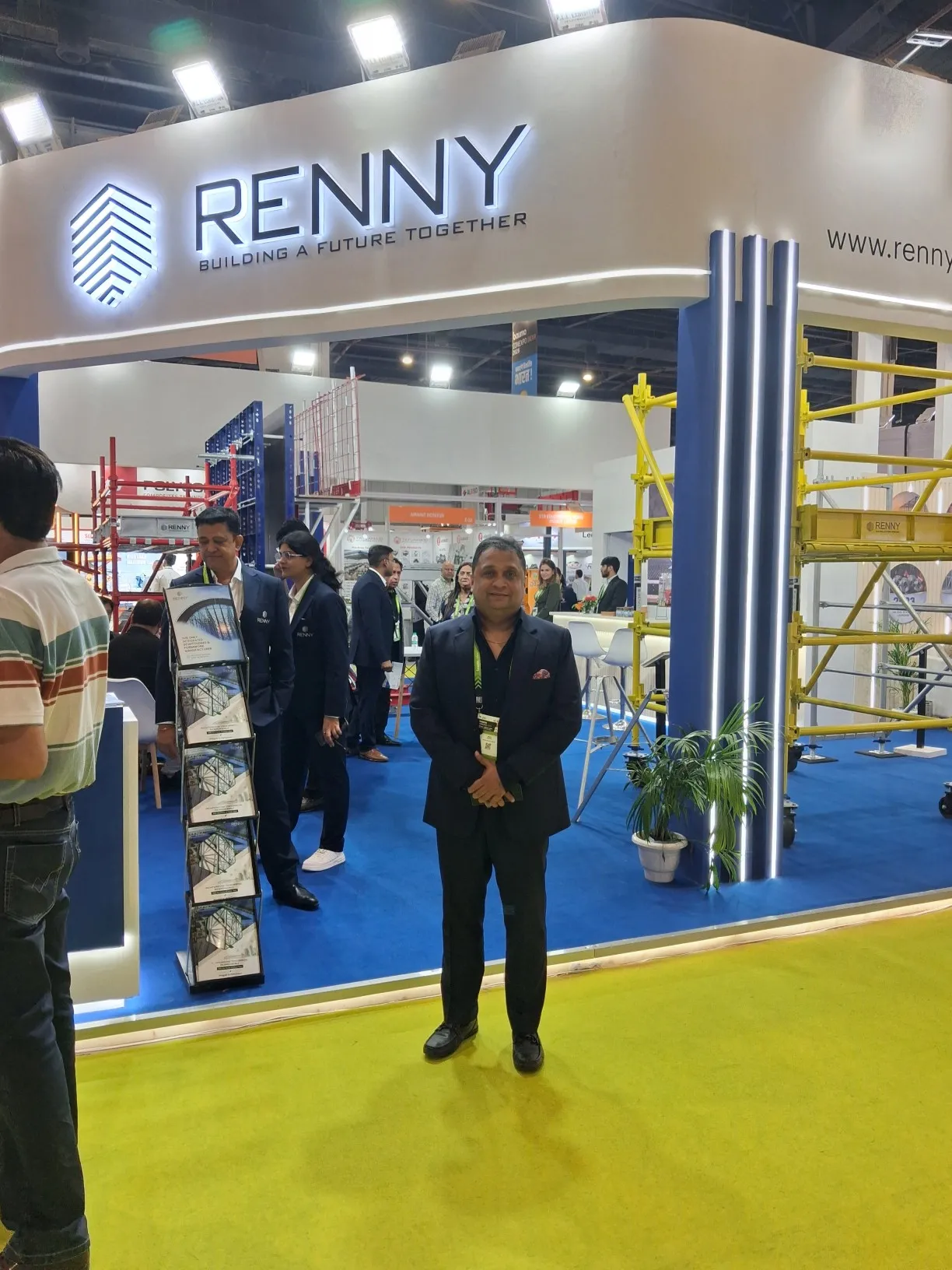
At bauma CONEXPO India 2026, Renny Strips showcased its green steel proposition, with a focus on lower-emission manufacturing, vertical integration and customised structural steel solutions. Managing Director Binny Gupta spoke to Kavita Parab about the company’s sustainability initiatives, including its 22MW solar plant, and its plans to expand capacity and support India’s infrastructure growth.
What was Renny Strips’ focus at Bauma CONEXPO India 2026?
We focused on showcasing our green steel proposition and explaining its benefits to customers, particularly in European markets. Our steel is rated five-star by the Government of India, and our carbon emissions are less than 40 per cent of industry standards.
With the EU’s Carbon Border Adjustment Mechanism (CBAM), emissions are becoming an increasingly important consideration for buyers. Our lower-emission steel can therefore offer an advantage to customers sourcing products for the European market.
How is sustainability integrated into your manufacturing operations?
We are building a vertically integrated structural steel manufacturing operation, with products including wire rod, HR coils, tubes and scaffolding components. We source around 90 per cent of our raw material internally, reducing our dependence on external suppliers.
We have also commissioned a 22MW solar plant, with an investment of around Rs 110 crore, which is expected to meet approximately 33 per cent of our power requirement.
How does vertical integration benefit your customers?
It gives us greater control over both availability and pricing. Since we control much of our raw material requirement, we can offer shorter delivery timelines and reduce the impact of market price volatility.
For customised requirements, we can deliver raw material in around three to four days, compared with much longer lead times when material has to be sourced externally. This can help construction companies save project time, labour and associated costs.
Which construction segments do you primarily serve?
Our customers are mainly construction companies involved in dams, power projects, bridges and high-rise buildings, particularly projects exceeding 60-75 floors. We focus on customised scaffolding and structural steel requirements rather than conventional residential housing.
Quality is particularly critical for scaffolding because it is a high-risk application. We therefore maintain strict quality controls throughout our manufacturing process.
What are the next steps in Renny Strips’ growth journey?
We are currently in a growth phase and are planning to commission another plant next year. Our objective is to convert a greater proportion of our raw materials into finished products and strengthen our ability to support India’s infrastructure and construction growth.
At bauma CONEXPO India 2026, Renny Strips showcased its green steel proposition, with a focus on lower-emission manufacturing, vertical integration and customised structural steel solutions. Managing Director Binny Gupta spoke to Kavita Parab about the company’s sustainability initiatives, including its 22MW solar plant, and its plans to expand capacity and support India’s infrastructure growth.What was Renny Strips’ focus at Bauma CONEXPO India 2026?We focused on showcasing our green steel proposition and explaining its benefits to customers, particularly in European markets. Our steel is rated five-star by the Government of India, and our carbon emissions are less than 40 per cent of industry standards.With the EU’s Carbon Border Adjustment Mechanism (CBAM), emissions are becoming an increasingly important consideration for buyers. Our lower-emission steel can therefore offer an advantage to customers sourcing products for the European market.How is sustainability integrated into your manufacturing operations?We are building a vertically integrated structural steel manufacturing operation, with products including wire rod, HR coils, tubes and scaffolding components. We source around 90 per cent of our raw material internally, reducing our dependence on external suppliers.We have also commissioned a 22MW solar plant, with an investment of around Rs 110 crore, which is expected to meet approximately 33 per cent of our power requirement.How does vertical integration benefit your customers?It gives us greater control over both availability and pricing. Since we control much of our raw material requirement, we can offer shorter delivery timelines and reduce the impact of market price volatility.For customised requirements, we can deliver raw material in around three to four days, compared with much longer lead times when material has to be sourced externally. This can help construction companies save project time, labour and associated costs.Which construction segments do you primarily serve?Our customers are mainly construction companies involved in dams, power projects, bridges and high-rise buildings, particularly projects exceeding 60-75 floors. We focus on customised scaffolding and structural steel requirements rather than conventional residential housing.Quality is particularly critical for scaffolding because it is a high-risk application. We therefore maintain strict quality controls throughout our manufacturing process.What are the next steps in Renny Strips’ growth journey?We are currently in a growth phase and are planning to commission another plant next year. Our objective is to convert a greater proportion of our raw materials into finished products and strengthen our ability to support India’s infrastructure and construction growth.
Related Stories
Gold Stories
Mindspace REIT earns IGBC Green Landscape Gold Rating
Mindspace Business Parks REIT’s Mindspace Airoli East business park in Navi Mumbai has received the IGBC Green Landscape Gold Rating from the Indian Green Building Council (IGBC). Mindspace REIT said it is the first REIT in India to receive the distinction.The certification evaluates the design, management and ecological performance of landscaped areas, including biodiversity, resource efficiency and sustainability practices.Mindspace Airoli East has more than 60 per cent native and adaptive green cover and more than 30 per cent vegetation supporting local birds and insects. Smart landscape ..
Related Articles
Latest Updates

Recommended for you
Advertisement
Subscribe to Our Newsletter
Get daily newsletters around different themes from Construction world.
subscribe to the newsletter
Don't miss out on valuable insights and opportunities
to connect with like minded professionals