Sweetch Energy secures €5.2 mn for osmotic energy harvesting tech
Technology

Sweetch Energy secures €5.2 mn for osmotic energy harvesting tech

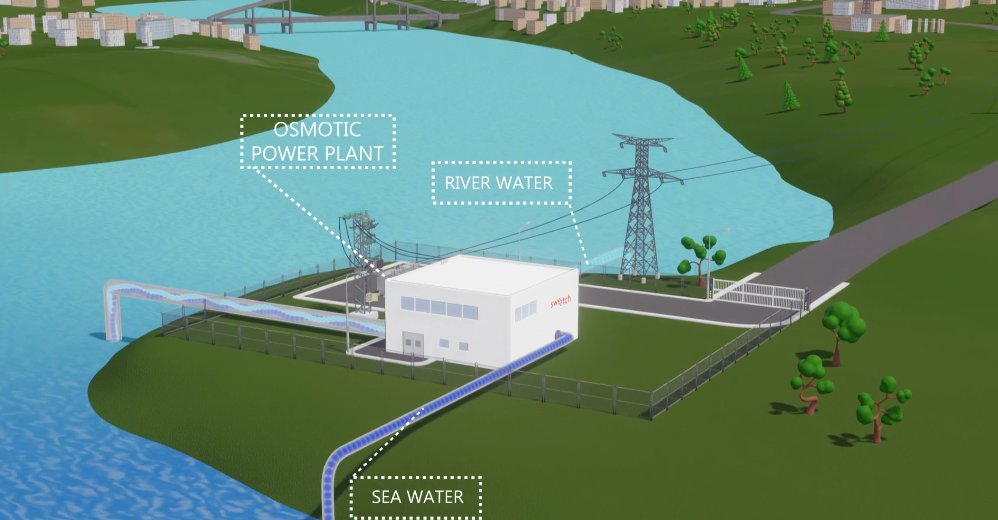
Sweetch Energy announced that it has secured € 5.2 million to initiate its industrialisation phase and develop a full-scale prototype of its osmotic energy harvesting model. The company says osmotic energy is a breakthrough non-intermittent and abundant source of clean electricity.

Osmotic energy represents an addition to existing renewable energy technologies. Naturally available from the difference in the salt concentration when river fresh water meets sea water, osmotic power provides a source of clean energy. Unlike wind or solar energies, and similarly to hydropower, it can deliver electricity continuously, and is dispatchable to meet the grid baseload power requirements, with an estimated 27,000 terawatt-hours.

The investment round was supported by a group of deep tech and cleantech investors with a strong track record in backing highly disruptive industrial companies such as Ÿnsect, Meatable or McPhy Energy. It was led by new investor Future Positive Capital, and co-led by existing investors Demeter and Go Capital. Other investors such as Dominique Gaillard, co-founder of Ardian, and Fabio Ferrari, founder of Symbio also participated. ADEME provided additional funding as well.

Sweetch Energy focuses on developing proprietary technology to harvest osmotic energy.

Image source

Sweetch Energy announced that it has secured € 5.2 million to initiate its industrialisation phase and develop a full-scale prototype of its osmotic energy harvesting model. The company says osmotic energy is a breakthrough non-intermittent and abundant source of clean electricity. Osmotic energy represents an addition to existing renewable energy technologies. Naturally available from the difference in the salt concentration when river fresh water meets sea water, osmotic power provides a source of clean energy. Unlike wind or solar energies, and similarly to hydropower, it can deliver electricity continuously, and is dispatchable to meet the grid baseload power requirements, with an estimated 27,000 terawatt-hours. The investment round was supported by a group of deep tech and cleantech investors with a strong track record in backing highly disruptive industrial companies such as Ÿnsect, Meatable or McPhy Energy. It was led by new investor Future Positive Capital, and co-led by existing investors Demeter and Go Capital. Other investors such as Dominique Gaillard, co-founder of Ardian, and Fabio Ferrari, founder of Symbio also participated. ADEME provided additional funding as well. Sweetch Energy focuses on developing proprietary technology to harvest osmotic energy. Image source

Related Stories

Gold Stories

Next Story
Infrastructure Urban

KONE Opens India's First Digital Experience Centre in Pune

KONE, a global elevator and escalator manufacturer, has inaugurated its first Digital Experience Centre (DEC) in India, located in Pune. The facility aims to showcase how artificial intelligence (AI), connectivity and data-driven technologies can enhance customer experiences and improve building operations.The centre was inaugurated by Jussi Herlin, Executive Vice Chair, KONE Corporation; Philippe Delorme, President and CEO, KONE; and Nandan Nilekani, Co-founder and Chairman of the Board, Infosys.Designed as an interactive customer environment, the facility demonstrates digital solutions cover..

Next Story
Infrastructure Urban

CII GreenCo Launches Circularity Guidelines for Indian Industry

The Confederation of Indian Industry (CII) GreenCo Council has launched the CII GreenCo Circularity Guidelines – Pilot Version at the 17th CII GreenCo Waste & Resource Management Summit 2026 in Chennai. The initiative aims to strengthen resource efficiency, waste reduction and circular economy practices across Indian manufacturing and process industries.The guidelines introduce a structured framework with circularity indices covering raw materials, consumables, packaging and other resource inputs. These indicators will help industries assess existing practices, identify opportunities to ..

Next Story
Infrastructure Energy

Global Electronics Association Launches IPC-1783-CO2E Standard

The Global Electronics Association has introduced IPC-1783-CO2E, a new international standard aimed at improving consistency, transparency and comparability in product carbon footprint reporting across the electronics manufacturing industry.The standard, titled International Standard for Data Collection and Reporting of CO2 Equivalent (CO2e) Emissions for the Electronics Manufacturing Supply Chain, provides industry-specific guidance for collecting, estimating and reporting carbon emissions data.With increasing regulatory requirements and customer expectations, electronics manufacturers face c..

Advertisement

Subscribe to Our Newsletter

Get daily newsletters around different themes from Construction world.

STAY CONNECTED

Advertisement

SPECIAL OFFER
QR Code