CEAT Specialty Expands with Camso, Eyes Global Growth
ECONOMY & POLICY

CEAT Specialty Expands with Camso, Eyes Global Growth

CEAT Specialty, the off-highway tyre (OHT) division of CEAT, is ramping up its global expansion strategy, aiming for a 70-30 export-domestic revenue split in the coming years. With exports currently contributing 50% of total sales, the company is strengthening its position in international markets through acquisitions, capacity expansion, and sustainability initiatives.

A key move in this direction is CEAT Specialty’s acquisition of Camso, a leading global OHT solutions provider. The deal significantly enhances CEAT’s presence in North America and the European Union—both high-margin markets with strong growth potential.

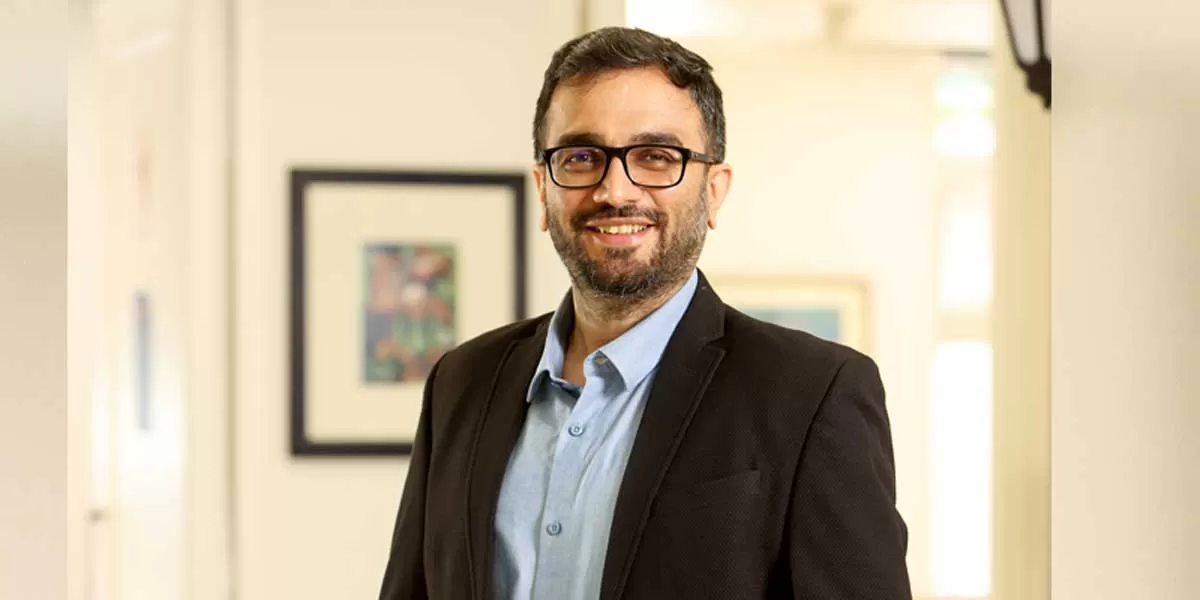
“Our decision to focus more on our international business is closely tied to our recent definitive agreement to acquire Camso, which has significant operations in both the European Union and North America. As a result of this proposed acquisition, we anticipate a natural shift in our business split towards these regions. Additionally, these markets offer more favorable margins, which makes them an attractive focus for our growth strategy,” said Amit Tolani, Chief Executive of CEAT Specialty.

Beyond the US and Europe, CEAT is also targeting Latin America, Australia, and parts of Asia, where demand for OHTs is rising. To support its export-driven growth, the company is expanding its Ambernath plant, aligning production capacity with global demand.

Capacity Expansion & R&D Investments

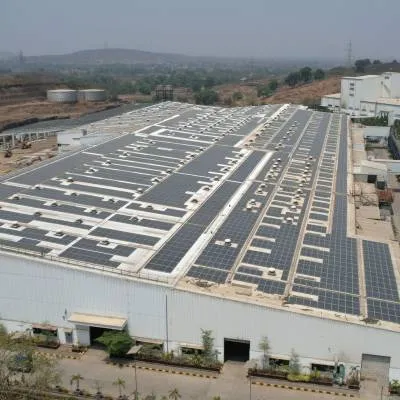
CEAT Specialty is boosting production capacity at its Ambernath plant, reinforcing its manufacturing capabilities. The company’s overall capacity stands at 500 tonnes per day across four plants, with an additional 350 tonnes per day expected from the Camso acquisition.

Simultaneously, the company is investing $25-30 million in research and development, with a strong focus on digital innovation, simulation technology, and intelligent tyre solutions. CEAT is developing tyres embedded with chips for predictive analytics in port applications and is also working on airless tyre technology in partnership with an Israeli startup.

Sustainability at the Core

Sustainability remains a priority for CEAT Specialty. The company’s ‘Sustained Max’ range incorporates eco-friendly materials like rice husk silica. Currently, 38-39% of its product portfolio consists of sustainable materials, with a target of increasing this to 54-55% over the next two to three years.

While European customers are more receptive to sustainable products, wider adoption will depend on customers' willingness to pay a premium. With the global OHT market expected to grow at a CAGR of 6-7% over the next five years, CEAT Specialty’s strategic investments in exports, capacity expansion, product diversification, and sustainability position it for substantial market share growth. The company is also strengthening its dealer network and digital capabilities to reinforce its foothold in key global markets.

CEAT Specialty, the off-highway tyre (OHT) division of CEAT, is ramping up its global expansion strategy, aiming for a 70-30 export-domestic revenue split in the coming years. With exports currently contributing 50% of total sales, the company is strengthening its position in international markets through acquisitions, capacity expansion, and sustainability initiatives. A key move in this direction is CEAT Specialty’s acquisition of Camso, a leading global OHT solutions provider. The deal significantly enhances CEAT’s presence in North America and the European Union—both high-margin markets with strong growth potential. “Our decision to focus more on our international business is closely tied to our recent definitive agreement to acquire Camso, which has significant operations in both the European Union and North America. As a result of this proposed acquisition, we anticipate a natural shift in our business split towards these regions. Additionally, these markets offer more favorable margins, which makes them an attractive focus for our growth strategy,” said Amit Tolani, Chief Executive of CEAT Specialty. Beyond the US and Europe, CEAT is also targeting Latin America, Australia, and parts of Asia, where demand for OHTs is rising. To support its export-driven growth, the company is expanding its Ambernath plant, aligning production capacity with global demand. Capacity Expansion & R&D Investments CEAT Specialty is boosting production capacity at its Ambernath plant, reinforcing its manufacturing capabilities. The company’s overall capacity stands at 500 tonnes per day across four plants, with an additional 350 tonnes per day expected from the Camso acquisition. Simultaneously, the company is investing $25-30 million in research and development, with a strong focus on digital innovation, simulation technology, and intelligent tyre solutions. CEAT is developing tyres embedded with chips for predictive analytics in port applications and is also working on airless tyre technology in partnership with an Israeli startup. Sustainability at the Core Sustainability remains a priority for CEAT Specialty. The company’s ‘Sustained Max’ range incorporates eco-friendly materials like rice husk silica. Currently, 38-39% of its product portfolio consists of sustainable materials, with a target of increasing this to 54-55% over the next two to three years. While European customers are more receptive to sustainable products, wider adoption will depend on customers' willingness to pay a premium. With the global OHT market expected to grow at a CAGR of 6-7% over the next five years, CEAT Specialty’s strategic investments in exports, capacity expansion, product diversification, and sustainability position it for substantial market share growth. The company is also strengthening its dealer network and digital capabilities to reinforce its foothold in key global markets.

Next Story
Real Estate

AI: The New Recruit

From getting ideas to evaluating designs, presenting concepts to clients and tracking projects, artificial intelligence (AI) is helping architects work better and faster.“AI allows architects to spend more time doing what only they can do: think critically, synthesise complexity and design with intent,” says Dikshu C Kukreja, Managing Principal, CP Kukreja Architects. “Every minute reclaimed from repetitive processes can be invested in creativity, contextual understanding, interdisciplinary collaboration and innovation – the qualities that define meaningful architecture.”To read the ..

Next Story
Real Estate

Redevelopment 2.0

In 2017, Mumbai identified 160,000 ageing buildings due for structural audit. Close to half of these were in the Western Suburbs. Redeveloping the oldest and structurally weakest of these would help unlock new housing, much needed given the city’s growing population density and constant developed area of 437.7 sq km. At 30,600 people per sq km in 2024, Mumbai’s density was almost thrice that of Gurugram, and 60 per cent higher than Bengaluru’s.Essentially, Mumbai’s realty market has demand. It has capital. It has realty development potential.Fast forward to 2026. Mumbai has 1,094 regis..

Next Story
Technology

Cost intelligence will become a strategic contributor to project success

As India's construction industry accelerates its digital transformation, integrated platforms, AI and connected data are becoming essential to improving cost certainty, project efficiency and sustainability. Ravi Kumar, Sales Director – India, RIB Software India, shares how digital workflows are reshaping project planning, commercial management and decision-making across the construction value chain.India's construction sector is embracing digital technologies at an unprecedented pace. From your perspective, what are the biggest shifts driving this transformation and how is RIB Software enab..

Advertisement

Subscribe to Our Newsletter

Get daily newsletters around different themes from Construction world.

STAY CONNECTED

Advertisement

Advertisement

Advertisement