Faster Execution Boosts India–Japan Deal Sizes: Hitachi
ECONOMY & POLICY

Faster Execution Boosts India–Japan Deal Sizes: Hitachi

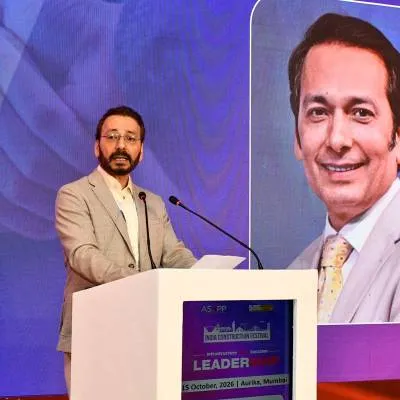
Hitachi India Chairman Bharat Kaushal said faster implementation of large projects in India has significantly improved the utilisation of Japanese investment commitments and led to larger deal sizes between the two countries. Speaking on the sidelines of the World Economic Forum Annual Meeting, he noted that partnerships are increasingly extending beyond government-led initiatives to include private-sector equity, debt and strategic collaborations.

Kaushal credited the Indian government for transforming project execution over the past decade, citing the modernisation and expansion of railways and urban metro systems as key examples. He said implementation efficiency has improved markedly across infrastructure sectors, enabling faster absorption of foreign capital and accelerating development outcomes.

He also highlighted the transformation of India’s energy sector, describing it as increasingly horizontal and interconnected with multiple segments of the economy. According to Kaushal, energy and rail remain among the most significant social, political and economic priorities in India, with their impact unmatched by most other sectors.

Kaushal noted that annual spending in the rail sector, including urban mobility, is estimated at around USD 45–50 billion, while close to USD 40 billion is being invested in the energy sector. He added that beyond these core areas, Hitachi’s payments business plays a distinctive role in India, spanning both cash-based services such as ATMs and digital payments in collaboration with the State Bank of India. These businesses have become integral to India’s digital transformation and have experienced strong growth.

On India–Japan economic ties, Kaushal said sustained engagement between the two nations has been a defining feature of bilateral relations. He observed that earlier delays in project execution had constrained India’s capacity to absorb Japanese funding, despite the emphasis of Japanese companies on quality and reliability. However, improved implementation has transformed both the scale of deals and the urgency with which projects are pursued.

He pointed out that in 2022, Japan committed around USD 42 billion to India, with most of the funds utilised by the end of 2025. He added that private-sector commitments are now increasingly complementing government-led investments, signalling a deeper and more diversified economic partnership.

Commenting on artificial intelligence, Kaushal described it as a transformative force comparable to the internet, with the potential to influence nearly all sectors, including manufacturing. He said AI would help reduce costs, improve productivity and enhance technological capabilities, reinforcing its role in India’s next phase of industrial development.

Overall, Kaushal’s remarks underscore how improved execution, infrastructure expansion and digital innovation are reshaping India–Japan economic engagement and positioning India as a more attractive destination for large-scale foreign investment.

Hitachi India Chairman Bharat Kaushal said faster implementation of large projects in India has significantly improved the utilisation of Japanese investment commitments and led to larger deal sizes between the two countries. Speaking on the sidelines of the World Economic Forum Annual Meeting, he noted that partnerships are increasingly extending beyond government-led initiatives to include private-sector equity, debt and strategic collaborations. Kaushal credited the Indian government for transforming project execution over the past decade, citing the modernisation and expansion of railways and urban metro systems as key examples. He said implementation efficiency has improved markedly across infrastructure sectors, enabling faster absorption of foreign capital and accelerating development outcomes. He also highlighted the transformation of India’s energy sector, describing it as increasingly horizontal and interconnected with multiple segments of the economy. According to Kaushal, energy and rail remain among the most significant social, political and economic priorities in India, with their impact unmatched by most other sectors. Kaushal noted that annual spending in the rail sector, including urban mobility, is estimated at around USD 45–50 billion, while close to USD 40 billion is being invested in the energy sector. He added that beyond these core areas, Hitachi’s payments business plays a distinctive role in India, spanning both cash-based services such as ATMs and digital payments in collaboration with the State Bank of India. These businesses have become integral to India’s digital transformation and have experienced strong growth. On India–Japan economic ties, Kaushal said sustained engagement between the two nations has been a defining feature of bilateral relations. He observed that earlier delays in project execution had constrained India’s capacity to absorb Japanese funding, despite the emphasis of Japanese companies on quality and reliability. However, improved implementation has transformed both the scale of deals and the urgency with which projects are pursued. He pointed out that in 2022, Japan committed around USD 42 billion to India, with most of the funds utilised by the end of 2025. He added that private-sector commitments are now increasingly complementing government-led investments, signalling a deeper and more diversified economic partnership. Commenting on artificial intelligence, Kaushal described it as a transformative force comparable to the internet, with the potential to influence nearly all sectors, including manufacturing. He said AI would help reduce costs, improve productivity and enhance technological capabilities, reinforcing its role in India’s next phase of industrial development. Overall, Kaushal’s remarks underscore how improved execution, infrastructure expansion and digital innovation are reshaping India–Japan economic engagement and positioning India as a more attractive destination for large-scale foreign investment.

Related Stories

Gold Stories

Next Story
Real Estate

WSB Real Estate Partners Exits Six Housing Investments

WSB Real Estate Partners recently announced the successful exit of six residential investments across Bengaluru, Mumbai Metropolitan Region (MMR) and National Capital Region (NCR), delivering an average internal rate of return (IRR) of 19–21 per cent and an overall investment return of 1.4 times.The real estate-focused investment firm invested approximately Rs 7 billion across six mid-affordable housing projects over the past four years. All six investments were fully repaid between April and November 2026, several months ahead of their original investment tenures.WSB collaborated with sever..

Next Story
Infrastructure Transport

Aluminium Industry Seeks Policy Support for Rs 4 Trillion Investment

The Aluminium Association of India (AAI) has recently urged the government to introduce supportive policy measures to safeguard the sector’s proposed Rs 4 trillion investment pipeline. The association highlighted the need for a predictable policy framework to strengthen domestic manufacturing, expand production capacity and reduce import dependence.AAI submitted its recommendations for the Union Budget 2027-28 to the Ministries of Finance, Commerce and Industry, and Mines, along with the Department for Promotion of Industry and Internal Trade (DPIIT).India’s aluminium demand is projected t..

Next Story
Technology

ABB Unveils Intelligent Motor to Accelerate Industrial AI Adoption

ABB recently launched Intelleqt, which it describes as the world’s first low-voltage motor with factory-integrated intelligence, at the SPS trade fair in Germany. Designed to deliver real-time operational insights from its first rotation, the motor enables industrial operators to integrate equipment-level data into existing digital platforms while retaining full ownership of their data.The launch addresses growing challenges in scaling artificial intelligence (AI) across industrial operations, particularly data quality and availability. According to Deloitte, while 84 per cent of manufacture..

Subscribe to Our Newsletter

Get daily newsletters around different themes from Construction world.

STAY CONNECTED

Advertisement

SPECIAL OFFER
QR Code