Gandhidham Gets Rs 1.76 Billion Boost As CM Unveils 66 Projects
ECONOMY & POLICY

Gandhidham Gets Rs 1.76 Billion Boost As CM Unveils 66 Projects

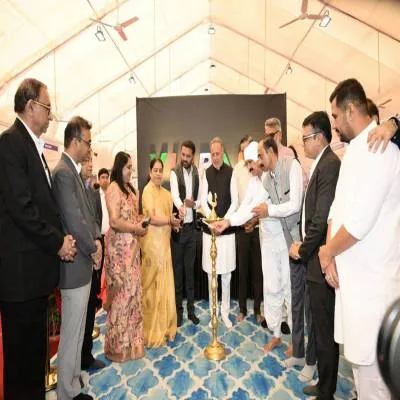
Gandhidham received a major development boost as Chief Minister Bhupendra Patel, on his first visit after the city’s upgrade from municipality to municipal corporation, inaugurated and laid the foundation stone for 66 projects worth Rs 1.76 billion. At Oslo Circle, he paid floral tributes to Dr Babasaheb Ambedkar, unveiled his reinstalled statue and inaugurated the newly built Dr Babasaheb Ambedkar Bridge along with associated circle and parking development works.

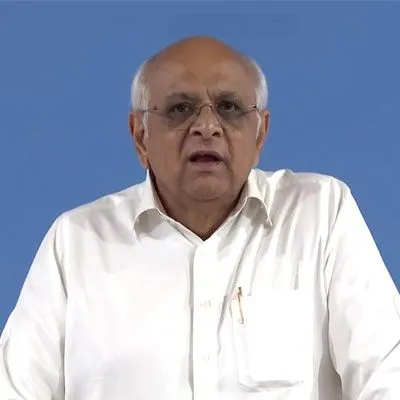
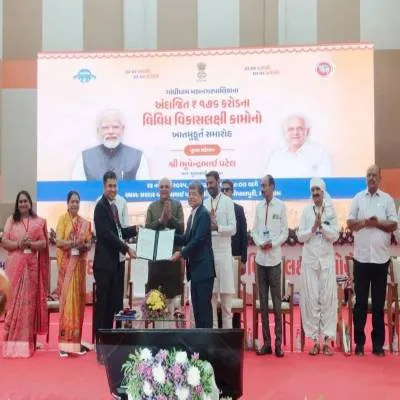
At an event held at the Sardar Vallabhbhai Patel Auditorium in Gopalpuri, the Chief Minister performed the e-foundation stone laying ceremony for the Rs 1.76 billion package of development works. Congratulating residents on Gandhidham’s new municipal corporation status, he said the Prime Minister and the state government are committed to taking the city — known as the economic capital of Kutch — to new heights of development.

Gandhidham Municipality earlier operated with an annual budget of Rs 1.1 billion, but after becoming a municipal corporation its budget has risen sixfold to Rs 6.08 billion. In the past three years alone, the city has received Rs 2.55 billion under various urban development schemes. Eleven surrounding villages have been merged into the expanded municipal corporation area to accelerate urban growth.

The Chief Minister highlighted that the approved works reflect a holistic approach to urban development, combining people-centric amenities such as roads, water supply, drainage, gardens and ponds with modern facilities like a new fire station and a library. He emphasised that Gujarat’s cities have become national models of scale, speed and successful urban transformation under the leadership of Prime Minister Narendra Modi.

He noted that the Prime Minister transformed urban development from concept to reality and placed Gujarat on a rapid growth path across trade, industry, employment, education and healthcare. He added that the state is celebrating 2025 as Gujarat Urban Development Year, backed by a 40 per cent higher urban development budget of Rs 300 billion, to advance the vision of “Earning Well, Living Well.”

The Chief Minister also referenced the Swarnim Jayanti Mukhyamantri Shaheri Vikas Yojana, launched in 2010, under which more than Rs 570 billion has been invested over 15 years to strengthen smaller cities. He said the government plans to develop cities as future-ready growth hubs and continues to promote economic development through regional Vibrant Conferences. He expressed confidence that the upcoming Saurashtra–Kutch conference in Rajkot will attract investment and boost local industries.

He urged Gandhidham to lead in building sustainable, future-ready urban systems, aligning with the national vision of Viksit Bharat and Aatmanirbhar Bharat by 2047.

Minister of State for Higher and Technical Education Trikambhai Chhanga said Gandhidham, a city born out of the trauma of Partition, has now become a major economic and port hub. He added that granting municipal corporation status will accelerate planned development and that both the Prime Minister and the Chief Minister share a deep commitment to the region’s growth.

The event was attended by several dignitaries, including MP Vinodbhai Chavda, District Panchayat President Janaksinh Jadeja, MLAs Maltiben Maheshwari and Virendrasinh Jadeja, former Assembly Speaker Dr Nimaben Acharya, Municipal Commissioner Manish Gurwani, Deendayal Port Chairman Sushil Kumar Singh and other civic leaders.

Gandhidham received a major development boost as Chief Minister Bhupendra Patel, on his first visit after the city’s upgrade from municipality to municipal corporation, inaugurated and laid the foundation stone for 66 projects worth Rs 1.76 billion. At Oslo Circle, he paid floral tributes to Dr Babasaheb Ambedkar, unveiled his reinstalled statue and inaugurated the newly built Dr Babasaheb Ambedkar Bridge along with associated circle and parking development works. At an event held at the Sardar Vallabhbhai Patel Auditorium in Gopalpuri, the Chief Minister performed the e-foundation stone laying ceremony for the Rs 1.76 billion package of development works. Congratulating residents on Gandhidham’s new municipal corporation status, he said the Prime Minister and the state government are committed to taking the city — known as the economic capital of Kutch — to new heights of development. Gandhidham Municipality earlier operated with an annual budget of Rs 1.1 billion, but after becoming a municipal corporation its budget has risen sixfold to Rs 6.08 billion. In the past three years alone, the city has received Rs 2.55 billion under various urban development schemes. Eleven surrounding villages have been merged into the expanded municipal corporation area to accelerate urban growth. The Chief Minister highlighted that the approved works reflect a holistic approach to urban development, combining people-centric amenities such as roads, water supply, drainage, gardens and ponds with modern facilities like a new fire station and a library. He emphasised that Gujarat’s cities have become national models of scale, speed and successful urban transformation under the leadership of Prime Minister Narendra Modi. He noted that the Prime Minister transformed urban development from concept to reality and placed Gujarat on a rapid growth path across trade, industry, employment, education and healthcare. He added that the state is celebrating 2025 as Gujarat Urban Development Year, backed by a 40 per cent higher urban development budget of Rs 300 billion, to advance the vision of “Earning Well, Living Well.” The Chief Minister also referenced the Swarnim Jayanti Mukhyamantri Shaheri Vikas Yojana, launched in 2010, under which more than Rs 570 billion has been invested over 15 years to strengthen smaller cities. He said the government plans to develop cities as future-ready growth hubs and continues to promote economic development through regional Vibrant Conferences. He expressed confidence that the upcoming Saurashtra–Kutch conference in Rajkot will attract investment and boost local industries. He urged Gandhidham to lead in building sustainable, future-ready urban systems, aligning with the national vision of Viksit Bharat and Aatmanirbhar Bharat by 2047. Minister of State for Higher and Technical Education Trikambhai Chhanga said Gandhidham, a city born out of the trauma of Partition, has now become a major economic and port hub. He added that granting municipal corporation status will accelerate planned development and that both the Prime Minister and the Chief Minister share a deep commitment to the region’s growth. The event was attended by several dignitaries, including MP Vinodbhai Chavda, District Panchayat President Janaksinh Jadeja, MLAs Maltiben Maheshwari and Virendrasinh Jadeja, former Assembly Speaker Dr Nimaben Acharya, Municipal Commissioner Manish Gurwani, Deendayal Port Chairman Sushil Kumar Singh and other civic leaders.

Next Story
Infrastructure Urban

India–Japan CEPA Joint Committee Meets in Tokyo

The seventh Joint Committee Meeting under the India–Japan Comprehensive Economic Partnership Agreement (CEPA) was held on two March 2026 in Tokyo and was co-chaired by the Secretary of the Department of Commerce, Shri Rajesh Agrawal, and the Senior Deputy Minister of the Ministry of Foreign Affairs of Japan. Delegates from both sides reviewed implementation issues under the CEPA and deliberated on measures to further strengthen bilateral economic engagement. The meeting was positioned as part of ongoing efforts to translate high-level commitments into concrete trade and investment outcomes. ..

Next Story
Infrastructure Urban

India Sets Vision For Affordable Intelligent Connectivity At MWC 2026

Union Minister Jyotiraditya M. Scindia led India’s engagements at Mobile World Congress 2026 (MWC 2026) in Barcelona, outlining a vision for affordable, inclusive and future ready digital connectivity. He delivered addresses at the GSMA Ministerial Programme and the MWC Main Stage and emphasised that affordability must be central to digital inclusion, noting that three point one billion (bn) people remain excluded from meaningful digital participation. He called for a coordinated response by government, industry and finance to enable device affordability and sustainable ecosystems. On the MW..

Next Story
Infrastructure Transport

Indian Railways Cuts Charges To Boost Bulk Cement Tank Transport

Indian Railways (IR) has announced a reduction in charges for transporting bulk cement in tank containers to encourage modal shift from bagged consignments to specialised tank logistics. The move is presented as part of a broader push to improve efficiency in freight operations and to reduce handling time and costs for cement producers and buyers. Officials indicated the adjustment aims to optimise wagon utilisation and lower unit transport costs across domestic and interstate routes nationwide. Railway officials noted that tank container consignments reduce transshipment and the need for repe..

Advertisement

Subscribe to Our Newsletter

Get daily newsletters around different themes from Construction world.

STAY CONNECTED

Advertisement

Advertisement

Advertisement