


India Seeks China Talks Over Magnet Import Delays
ECONOMY & POLICY

India Seeks China Talks Over Magnet Import Delays

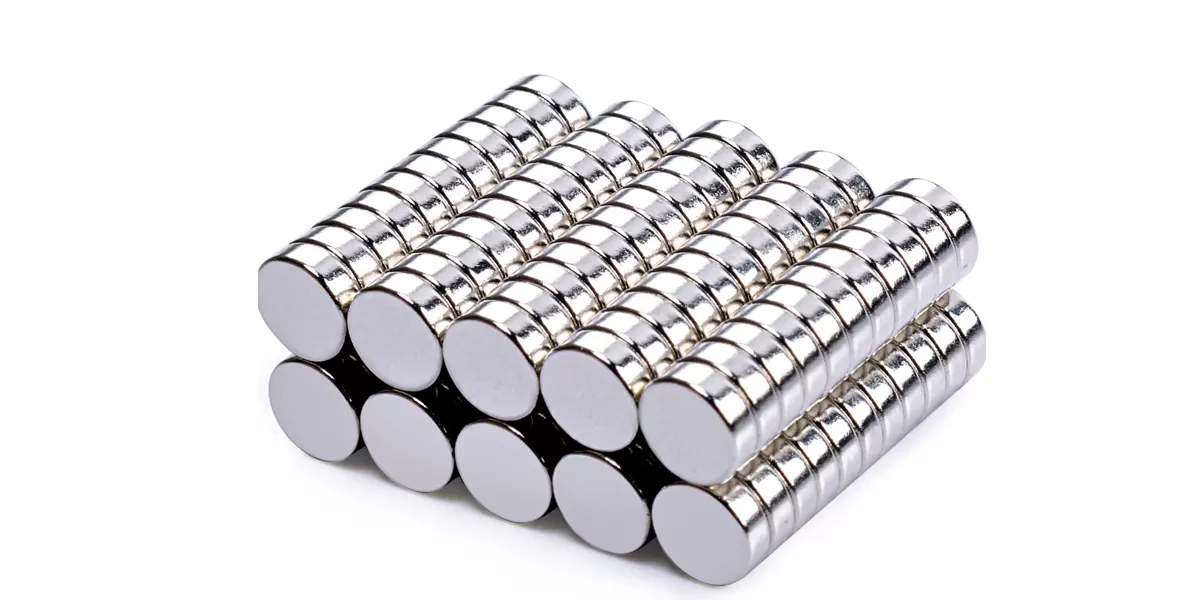
Indian authorities are initiating diplomatic engagement with Beijing to resolve delays in the import of rare earth magnets from China, which are critical to the country's auto, electronics, and clean energy sectors. According to The Economic Times, the supply disruption has triggered concerns across industries, particularly among electric vehicle (EV) and gear system manufacturers.
Despite the Chinese embassy in India endorsing import applications for nine Indian auto component firms—including Continental Automotive, Hitachi Astemo, and Mahle Electric Drives—final clearance from China’s commerce ministry has not been granted. No shipments have been released in the past two months, raising the risk of production halts.
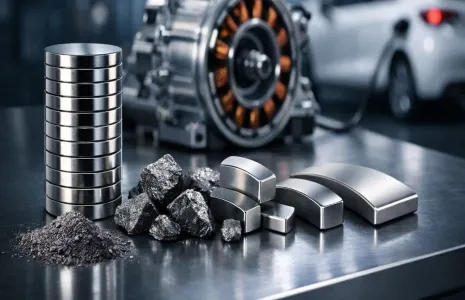
Rare earth magnets, though representing a small proportion of total import value, are indispensable in drive trains, electric circuits, and motor systems. “Even if one such component is missing, production stops entirely,” an industry executive told The Economic Times.
India imported 870 tonnes of rare earth magnets worth approximately Rs 3.06 billion in FY25. The Society of Indian Automobile Manufacturers (SIAM) recently warned the government that inventory levels are critically low and disruptions to vehicle production could begin within weeks.
The impact extends beyond the auto industry. “It affects everyone—automotive, aerospace, electronics, clean energy. Anything involving electric circuits is at risk,” said another executive.
These supply issues stem from export restrictions announced by China on 4 April, reportedly for national security reasons. The controls follow global trade tensions and have impacted firms not only in India but also in the US, Germany, and Japan.
Out of 17 Indian companies that applied for import clearances, eight—including Minda Instruments, Nippon Audiotronix, and HMC MM Auto—are still awaiting End User Certificate (EUC) approvals from the Chinese embassy, further aggravating the supply chain crisis.

Indian authorities are initiating diplomatic engagement with Beijing to resolve delays in the import of rare earth magnets from China, which are critical to the country's auto, electronics, and clean energy sectors. According to The Economic Times, the supply disruption has triggered concerns across industries, particularly among electric vehicle (EV) and gear system manufacturers.Despite the Chinese embassy in India endorsing import applications for nine Indian auto component firms—including Continental Automotive, Hitachi Astemo, and Mahle Electric Drives—final clearance from China’s commerce ministry has not been granted. No shipments have been released in the past two months, raising the risk of production halts.Rare earth magnets, though representing a small proportion of total import value, are indispensable in drive trains, electric circuits, and motor systems. “Even if one such component is missing, production stops entirely,” an industry executive told The Economic Times.India imported 870 tonnes of rare earth magnets worth approximately Rs 3.06 billion in FY25. The Society of Indian Automobile Manufacturers (SIAM) recently warned the government that inventory levels are critically low and disruptions to vehicle production could begin within weeks.The impact extends beyond the auto industry. “It affects everyone—automotive, aerospace, electronics, clean energy. Anything involving electric circuits is at risk,” said another executive.These supply issues stem from export restrictions announced by China on 4 April, reportedly for national security reasons. The controls follow global trade tensions and have impacted firms not only in India but also in the US, Germany, and Japan.Out of 17 Indian companies that applied for import clearances, eight—including Minda Instruments, Nippon Audiotronix, and HMC MM Auto—are still awaiting End User Certificate (EUC) approvals from the Chinese embassy, further aggravating the supply chain crisis.

Next Story
Real Estate

Redevelopment 2.0

In 2017, Mumbai identified 160,000 ageing buildings due for structural audit. Close to half of these were in the Western Suburbs. Redeveloping the oldest and structurally weakest of these would help unlock new housing, much needed given the city’s growing population density and constant developed area of 437.7 sq km. At 30,600 people per sq km in 2024, Mumbai’s density was almost thrice that of Gurugram, and 60 per cent higher than Bengaluru’s.Essentially, Mumbai’s realty market has demand. It has capital. It has realty development potential.Fast forward to 2026. Mumbai has 1,094 regis..

Next Story
Technology

Cost intelligence will become a strategic contributor to project success

As India's construction industry accelerates its digital transformation, integrated platforms, AI and connected data are becoming essential to improving cost certainty, project efficiency and sustainability. Ravi Kumar, Sales Director – India, RIB Software India, shares how digital workflows are reshaping project planning, commercial management and decision-making across the construction value chain.India's construction sector is embracing digital technologies at an unprecedented pace. From your perspective, what are the biggest shifts driving this transformation and how is RIB Software enab..

Next Story
Technology

Twin Tracks

Digital-twin adoption in India’s rail sector is gradually making its presence felt across asset management, infrastructure planning, predictive maintenance, construction monitoring and operator training.While large-scale deployments of digital twins are still evolving, Nipun Dumpala, a Senior Technical Lead specialising in digital twins, synthetic data, simulation and mixed reality technologies, points out that several organisations are exploring BIM-integrated digital twins, IoT-enabled monitoring, AI-based analytics and simulation platforms to improve operational efficiency and reduce life..

Advertisement

Subscribe to Our Newsletter

Get daily newsletters around different themes from Construction world.

STAY CONNECTED

Advertisement

Advertisement

Advertisement















