China to Create World's Largest Artificial Island Airport
AVIATION & AIRPORTS

China to Create World's Largest Artificial Island Airport

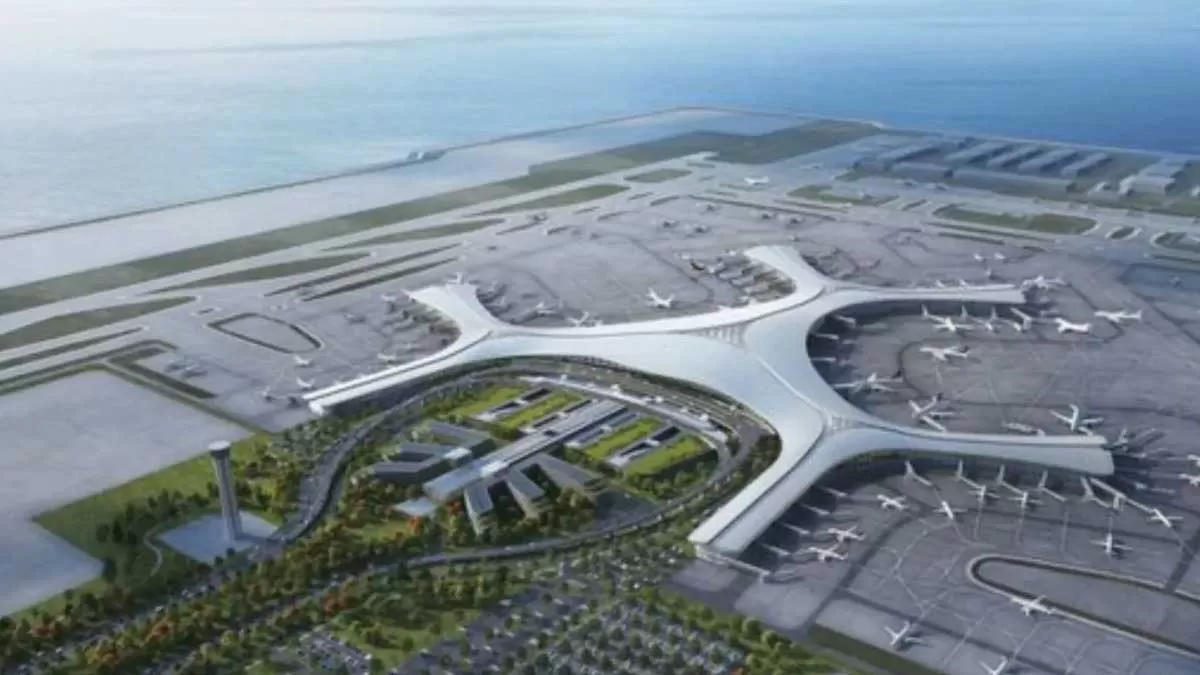
China is developing a large-scale airport on reclaimed land in Jinzhou Bay to establish a significant travel hub. The Dalian Jinzhouwan International Airport will span a 7.7-square-mile artificial island, featuring four runways and a 90,000-square-meter passenger terminal.

Once operational, it will be the world's largest airport constructed on an artificial island, surpassing Hong Kong International Airport and Japan’s Kansai Airport. The facility is projected to accommodate 80 million passengers annually and manage approximately 540,000 flights.

Located north of Dalian city in Liaoning Province, the airport is set in a region recognized for its coastal scenery, distinct architecture, and popular tourist destinations such as Xinghai Square and Dalian Forest Zoo. Given its geographical proximity to Japan and South Korea, Dalian has historically served as a critical transport hub in China.

The new airport is intended to replace Dalian Zhoushuizi International Airport, which began operations in 1927. Despite multiple expansions, the existing airport faces space constraints, limiting further development. In 2018, it handled nearly 19 million passengers, ranking as the busiest airport in northeastern China and the 24th busiest nationwide.

First announced in 2012, the project had already commenced construction in April 2011. Initially scheduled for completion in 2018, delays have pushed the expected opening to 2035. The total cost of the development is estimated at 26.3 billion yuan.

The project is progressing in two phases. The first phase includes the construction of the main terminal and two runways, designed to accommodate 31 million passengers and 650,000 tons of cargo annually. The second phase will add two more runways, expanding the airport’s total capacity to 80 million passengers.

China continues to enhance its aviation infrastructure, with plans to build numerous new airports to support increasing air travel demand. By 2035, the country is expected to require 450 airports to meet its growing aviation needs.

News source: DNA

Image Source: travelandleisureasia

China is developing a large-scale airport on reclaimed land in Jinzhou Bay to establish a significant travel hub. The Dalian Jinzhouwan International Airport will span a 7.7-square-mile artificial island, featuring four runways and a 90,000-square-meter passenger terminal. Once operational, it will be the world's largest airport constructed on an artificial island, surpassing Hong Kong International Airport and Japan’s Kansai Airport. The facility is projected to accommodate 80 million passengers annually and manage approximately 540,000 flights. Located north of Dalian city in Liaoning Province, the airport is set in a region recognized for its coastal scenery, distinct architecture, and popular tourist destinations such as Xinghai Square and Dalian Forest Zoo. Given its geographical proximity to Japan and South Korea, Dalian has historically served as a critical transport hub in China. The new airport is intended to replace Dalian Zhoushuizi International Airport, which began operations in 1927. Despite multiple expansions, the existing airport faces space constraints, limiting further development. In 2018, it handled nearly 19 million passengers, ranking as the busiest airport in northeastern China and the 24th busiest nationwide. First announced in 2012, the project had already commenced construction in April 2011. Initially scheduled for completion in 2018, delays have pushed the expected opening to 2035. The total cost of the development is estimated at 26.3 billion yuan. The project is progressing in two phases. The first phase includes the construction of the main terminal and two runways, designed to accommodate 31 million passengers and 650,000 tons of cargo annually. The second phase will add two more runways, expanding the airport’s total capacity to 80 million passengers. China continues to enhance its aviation infrastructure, with plans to build numerous new airports to support increasing air travel demand. By 2035, the country is expected to require 450 airports to meet its growing aviation needs. News source: DNAImage Source: travelandleisureasia

Next Story
Infrastructure Transport

India Becomes First to Produce Bio-Bitumen for Roads

India has become the first country in the world to commercially produce bio-bitumen for use in road construction, according to Road, Transport and Highways Minister Nitin Gadkari. Bitumen, a black and viscous hydrocarbon derived from crude oil, is a key binding material in road building, and the bio-based alternative is expected to significantly improve the sector’s environmental footprint.Addressing the CSIR Technology Transfer Ceremony in New Delhi, Mr Gadkari congratulated Council of Scientific and Industrial Research on achieving the milestone, noting that the initiative would help curb ..

Next Story
Infrastructure Urban

HILT Policy Seen Boosting Telangana Revenue Sharply

The Hyderabad Industrial Land Transformation (HILT) Policy is expected to generate around Rs 1.08 billion in revenue for the Telangana state exchequer, according to Deputy Chief Minister Bhatti Vikramarka Mallu. Speaking in the Telangana Legislative Assembly, he said the policy would be implemented within a six-month timeframe in a transparent manner, with uniform rules applicable to all stakeholders. Mr Vikramarka noted that without the HILT Policy, the state would have earned only about Rs 1.2 million per acre. Under the new framework, however, revenue is projected to rise sharply to Rs 70 ..

Next Story
Infrastructure Urban

India Post, MoRD Tie Up to Boost Rural Inclusion

The Department of Posts and the Ministry of Rural Development have signed a Memorandum of Understanding to accelerate rural transformation and expand financial, digital and logistics services for Self-Help Groups (SHGs) and rural households across India. The agreement was signed in the presence of Union Minister of Communications and Development of North Eastern Region Jyotiraditya M. Scindia and Union Minister of Rural Development and Agriculture and Farmers’ Welfare Shivraj Singh Chouhan. The collaboration aligns with the government’s “Dak Sewa, Jan Sewa” vision and seeks to repositi..

Advertisement

Subscribe to Our Newsletter

Get daily newsletters around different themes from Construction world.

STAY CONNECTED

Advertisement

Advertisement

Advertisement

Advertisement

Open In App