


New Coal Mine Capacity Hits Decade Low in 2024
COAL & MINING

New Coal Mine Capacity Hits Decade Low in 2024

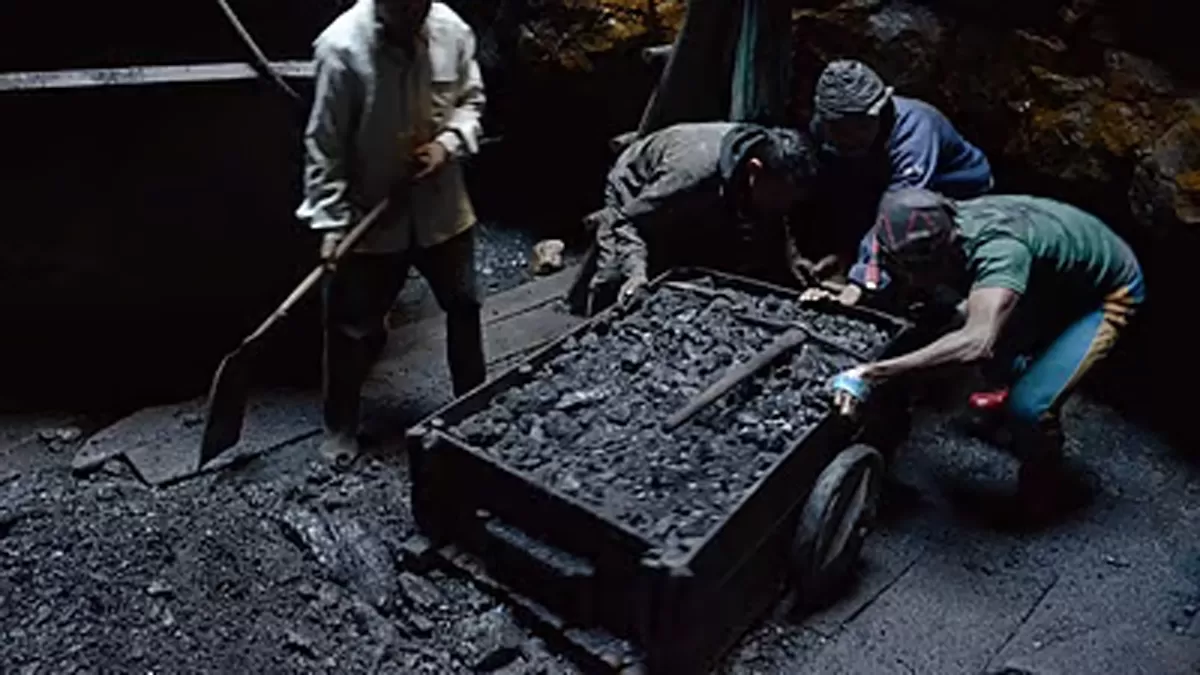
Mumbai: The global capacity of newly opened coal mines in 2024 has fallen to its lowest level in a decade, totalling just 105 million tonnes (Mt), according to a new report by Global Energy Monitor (GEM). This marks a 46 per cent drop from 193 Mt in 2023 and the lowest level recorded since 2014.
However, the downward trend may be short-lived. GEM warns that over 2,270 million tonnes per annum (Mtpa) of coal mine capacity is currently under development worldwide, threatening efforts to curb greenhouse gas emissions. The International Energy Agency and United Nations have recommended production cuts of 39 to 75 per cent by 2030 compared to 2020 levels (7,607 Mt), targets that could become unachievable if planned developments proceed.
Dorothy Mei, Project Manager at GEM, cautioned, “Without drastically scaling back new mine capacity, methane emissions will soar—jeopardising the goals of the Paris Agreement.”
The fall in new capacity this year is largely due to India and China, where delays in approvals and eased supply pressures followed a recent surge in coal mine expansions. Yet, coal developers are now aggressively pursuing over 850 new mines, expansions, and recommissioning projects across 30 countries. An additional 35 mine extensions are also under consideration.
China leads proposed developments with 1,350 Mtpa, mostly in its northern and north-western regions. India follows with 329 Mtpa—almost half of which is being advanced by Coal India. Australia (165 Mtpa), Russia (98 Mtpa), and South Africa (73 Mtpa) round out the top five countries with the largest project pipelines.
If all proposed mines are developed, GEM estimates 15.7 million tonnes of methane could be released annually—exceeding Japan’s total annual greenhouse gas emissions. Given methane’s warming potential—over 80 times that of carbon dioxide over a 20-year period—the proposed expansion poses a severe risk to climate goals.

Mumbai: The global capacity of newly opened coal mines in 2024 has fallen to its lowest level in a decade, totalling just 105 million tonnes (Mt), according to a new report by Global Energy Monitor (GEM). This marks a 46 per cent drop from 193 Mt in 2023 and the lowest level recorded since 2014.However, the downward trend may be short-lived. GEM warns that over 2,270 million tonnes per annum (Mtpa) of coal mine capacity is currently under development worldwide, threatening efforts to curb greenhouse gas emissions. The International Energy Agency and United Nations have recommended production cuts of 39 to 75 per cent by 2030 compared to 2020 levels (7,607 Mt), targets that could become unachievable if planned developments proceed.Dorothy Mei, Project Manager at GEM, cautioned, “Without drastically scaling back new mine capacity, methane emissions will soar—jeopardising the goals of the Paris Agreement.”The fall in new capacity this year is largely due to India and China, where delays in approvals and eased supply pressures followed a recent surge in coal mine expansions. Yet, coal developers are now aggressively pursuing over 850 new mines, expansions, and recommissioning projects across 30 countries. An additional 35 mine extensions are also under consideration.China leads proposed developments with 1,350 Mtpa, mostly in its northern and north-western regions. India follows with 329 Mtpa—almost half of which is being advanced by Coal India. Australia (165 Mtpa), Russia (98 Mtpa), and South Africa (73 Mtpa) round out the top five countries with the largest project pipelines.If all proposed mines are developed, GEM estimates 15.7 million tonnes of methane could be released annually—exceeding Japan’s total annual greenhouse gas emissions. Given methane’s warming potential—over 80 times that of carbon dioxide over a 20-year period—the proposed expansion poses a severe risk to climate goals. 

Next Story
Infrastructure Energy

Vedanta Aluminium Uses 1.57 bn Units of Green Energy in FY25

Vedanta Aluminium, India’s largest aluminium producer, recently reported consumption of 1.57 billion units of renewable energy in FY25, marking a significant milestone in its 2030 decarbonisation roadmap. The company also achieved an 8.96 per cent reduction in greenhouse gas (GHG) emissions intensity compared to FY21, reinforcing its leadership in India’s low-carbon manufacturing transition. During FY25, Vedanta Aluminium expanded its renewable energy portfolio through long-term power purchase agreements, strengthening its strategy to source nearly 1,500 MW of renewable power over the lon..

Next Story
Real Estate

Oberoi Group to Develop Luxury Resort at Makaibari Tea Estate

EIH Limited, the flagship company of The Oberoi Group, has announced the signing of a management agreement to develop an Oberoi luxury resort at the iconic Makaibari Tea Estate in Darjeeling. The project marks a key milestone in the Group’s long-term strategy of creating distinctive hospitality experiences in rare and environmentally significant locations. Established in 1859, Makaibari is one of the world’s oldest tea estates and is globally recognised for its Himalayan landscape, primary forests and exceptional biodiversity. Spread across 1,236 acres, the estate houses one of the world..

Next Story
Real Estate

GHV Infra Secures Rs 1.09 Bn EPC Order in Jamshedpur

GHV Infra Projects Ltd, a fast-growing EPC company in India’s infrastructure and construction sector, has recently secured a Rs 1.09 billion work order in Jamshedpur, Jharkhand. Awarded by a reputed group entity, the contract covers end-to-end civil construction, mechanical, electrical and plumbing (MEP) systems, along with high-quality finishing works for a large building development. The project will be executed over a 30-month period, with defined benchmarks for quality, safety and timely delivery. The order strengthens GHV Infra’s footprint in Jamshedpur, a key industrial hub known fo..

Advertisement

Subscribe to Our Newsletter

Get daily newsletters around different themes from Construction world.

STAY CONNECTED

Advertisement

Advertisement

Advertisement

Advertisement

Open In App