+
17 Bidders Vie For Rs 83 bn Rameshwar-Paradip Highway
ROADS & HIGHWAYS

17 Bidders Vie For Rs 83 bn Rameshwar-Paradip Highway

Seventeen bidders have placed offers for the coastal highway project linking Rameshwar and Paradip, the government said. The package covers a section valued at Rs 83 billion (bn) and forms part of Odisha's coastal connectivity initiative.

The greenfield corridor is part of a 346 km alignment from Rameshwar in Odisha to Digha in West Bengal, a scheme that was announced in 2015 and has been delayed by more than ten years. Bids were invited for a 160 km stretch while the detailed project report is being prepared for the remaining section, and the stretch between Konark and Paradip has been downscaled from four lanes to two based on assessed traffic volumes.

The highway is intended to provide an alternative to NH-16 and NH-316 by offering an access-controlled corridor that separates long-distance traffic from heavy local movement, thereby improving travel efficiency. It will traverse the districts of Khordha, Puri, Kendrapada, Jagatsinghpur, Bhadrak and Baleshwar and is expected to improve access to Puri, Konark, Paradip Port and the planned Puri International Airport as well as emerging ports at Astarang and Subarnarekha.

Authorities estimate that the corridor could cut travel time between Rameshwar and Paradip by about two-and-a-half hours and that construction would generate 5.36 million (mn) man-days of direct employment and 6.7 million (mn) man-days of indirect employment. The project is expected to reduce fuel consumption, lower carbon emissions and decrease vehicle operating costs, outcomes that the ministry said would support regional economic growth.

Existing corridors such as the Puri-Satpada and Puri-Konark stretches have significant ribbon development, with nearly 40 per cent of certain stretches showing roadside development and high local commuter movement, which has limited their suitability for high-speed long-distance traffic. The new access-controlled alignment is intended to separate local and long-distance traffic and to relieve congestion while enhancing logistics efficiency for the eastern coast.

Seventeen bidders have placed offers for the coastal highway project linking Rameshwar and Paradip, the government said. The package covers a section valued at Rs 83 billion (bn) and forms part of Odisha's coastal connectivity initiative. The greenfield corridor is part of a 346 km alignment from Rameshwar in Odisha to Digha in West Bengal, a scheme that was announced in 2015 and has been delayed by more than ten years. Bids were invited for a 160 km stretch while the detailed project report is being prepared for the remaining section, and the stretch between Konark and Paradip has been downscaled from four lanes to two based on assessed traffic volumes. The highway is intended to provide an alternative to NH-16 and NH-316 by offering an access-controlled corridor that separates long-distance traffic from heavy local movement, thereby improving travel efficiency. It will traverse the districts of Khordha, Puri, Kendrapada, Jagatsinghpur, Bhadrak and Baleshwar and is expected to improve access to Puri, Konark, Paradip Port and the planned Puri International Airport as well as emerging ports at Astarang and Subarnarekha. Authorities estimate that the corridor could cut travel time between Rameshwar and Paradip by about two-and-a-half hours and that construction would generate 5.36 million (mn) man-days of direct employment and 6.7 million (mn) man-days of indirect employment. The project is expected to reduce fuel consumption, lower carbon emissions and decrease vehicle operating costs, outcomes that the ministry said would support regional economic growth. Existing corridors such as the Puri-Satpada and Puri-Konark stretches have significant ribbon development, with nearly 40 per cent of certain stretches showing roadside development and high local commuter movement, which has limited their suitability for high-speed long-distance traffic. The new access-controlled alignment is intended to separate local and long-distance traffic and to relieve congestion while enhancing logistics efficiency for the eastern coast.

Related Stories

Gold Stories

Next Story
Real Estate

Mindspace REIT earns IGBC Green Landscape Gold Rating

Mindspace Business Parks REIT’s Mindspace Airoli East business park in Navi Mumbai has received the IGBC Green Landscape Gold Rating from the Indian Green Building Council (IGBC). Mindspace REIT said it is the first REIT in India to receive the distinction.The certification evaluates the design, management and ecological performance of landscaped areas, including biodiversity, resource efficiency and sustainability practices.Mindspace Airoli East has more than 60 per cent native and adaptive green cover and more than 30 per cent vegetation supporting local birds and insects. Smart landscape ..
Next Story
Real Estate

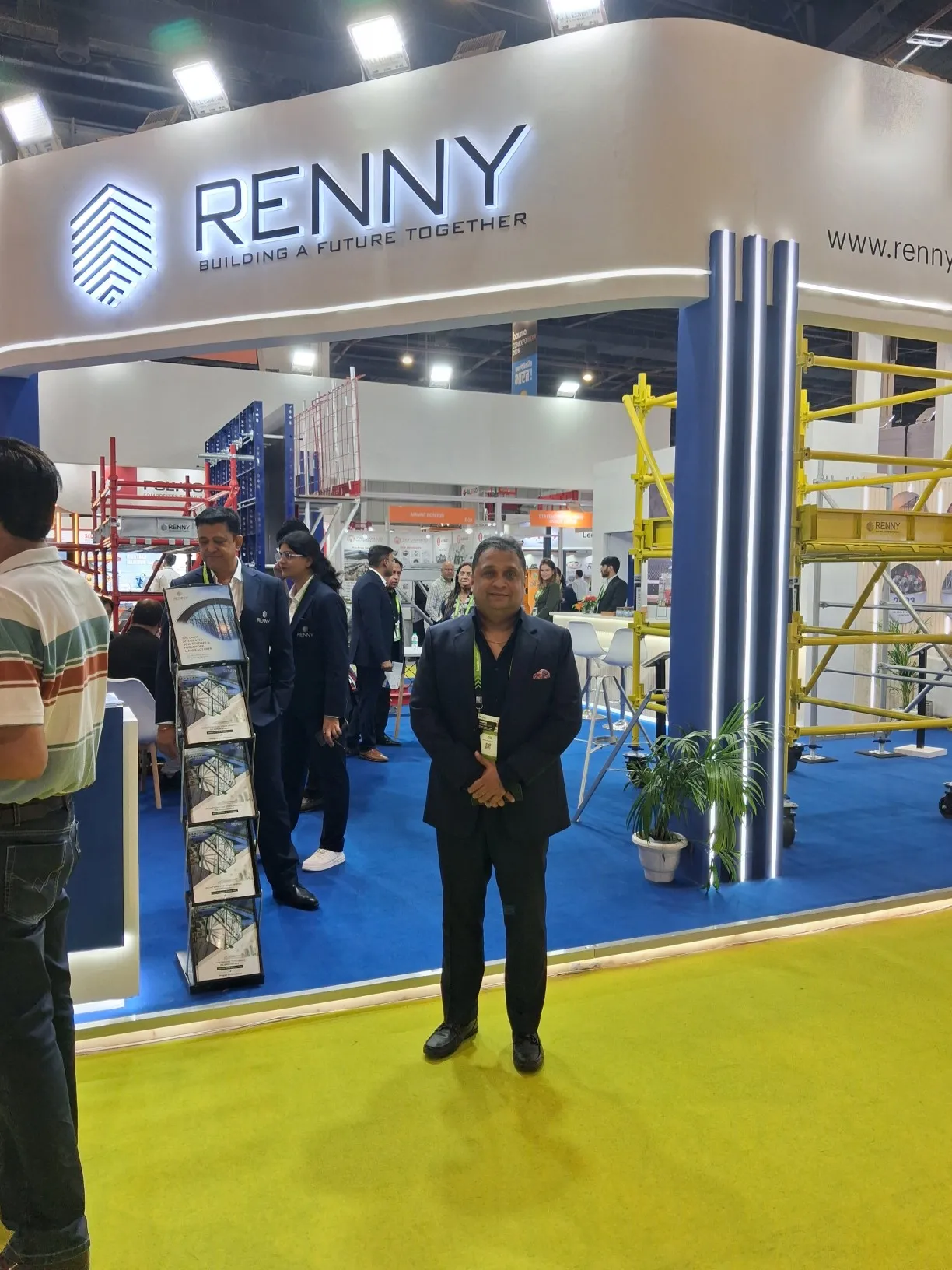
Vertical integration gives us control over cost and delivery: Renny Strips

At bauma CONEXPO India 2026, Renny Strips showcased its green steel proposition, with a focus on lower-emission manufacturing, vertical integration and customised structural steel solutions. Managing Director Binny Gupta spoke to Kavita Parab about the company’s sustainability initiatives, including its 22MW solar plant, and its plans to expand capacity and support India’s infrastructure growth.What was Renny Strips’ focus at Bauma CONEXPO India 2026?We focused on showcasing our green steel proposition and explaining its benefits to customers, particularly in European markets. Our steel ..

Next Story
Infrastructure Energy

Beyond Energy-Efficiency

Walk through any major Indian business district today and you will see slick, glass-clad towers shimmering under the tropical sun. Most of these structures proudly display plaque certifications: Platinum, Gold, or 5-Star ratings. They promise lower carbon footprints, reduced electricity bills and a sustainable future.Yet, behind these polished green plaques, the electricity meter tells a different story. Many of these certified structures consume massive amounts of energy to remain operational. This gap, between what a certificate says and what a building actually does, is where this critique ..

Advertisement

Subscribe to Our Newsletter

Get daily newsletters around different themes from Construction world.

STAY CONNECTED

Advertisement

SPECIAL OFFER
QR Code