Bahraich Water Infrastructure Supports Rural Economy
ROADS & HIGHWAYS

Bahraich Water Infrastructure Supports Rural Economy

Bahraich’s rural development is being shaped by investments in water supply, roads, healthcare, education and livelihood support. As an Aspirational District in Uttar Pradesh, it has pursued a framework linking basic infrastructure with agriculture, skills, financial inclusion and social services.

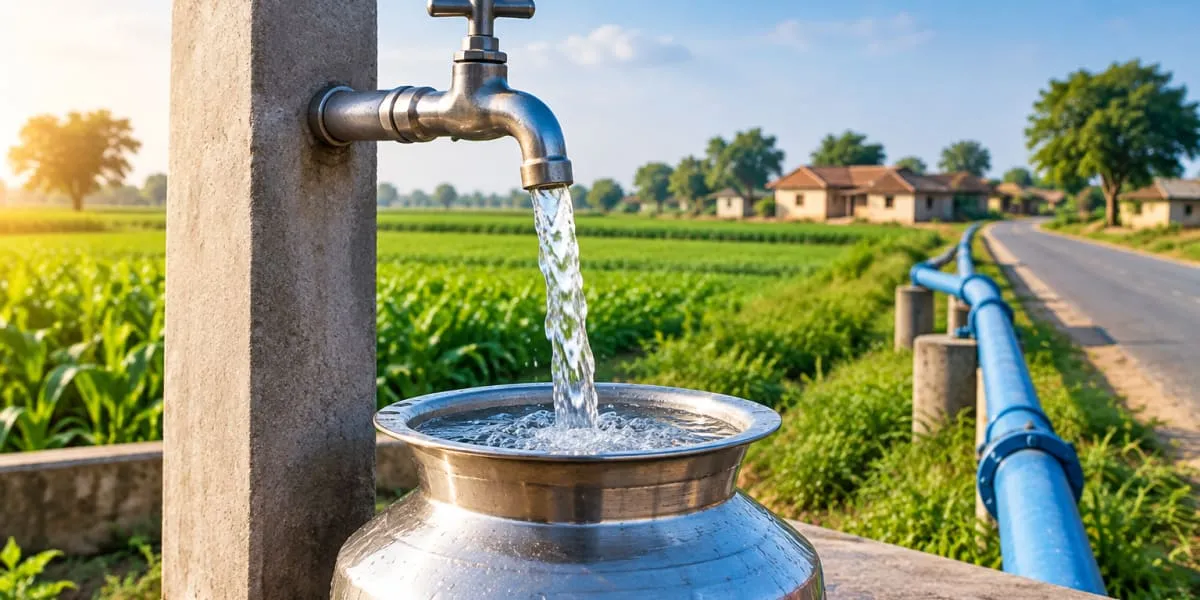
The Jal Jeevan Mission has provided 5,43,947 household tap connections against a target of 5,54,464, achieving 98.10 per cent coverage across 1,082 villages. Nearly 9,701 km of pipeline has been laid against a target of 9,848 km, while 780 of 783 targeted tubewells and 771 pump houses have been completed. The network also includes treatment and chlorination systems, overhead tanks, pumping facilities and solar plants.

Water-quality concerns have been addressed through piped-water schemes in all 216 villages identified as arsenic-affected in a 2016 assessment. Work has been completed in 213 villages and remains underway in three. Seven villages identified as affected by Japanese Encephalitis or Acute Encephalitis Syndrome have also been covered. The next test will be maintaining safe and regular supplies after construction is completed.

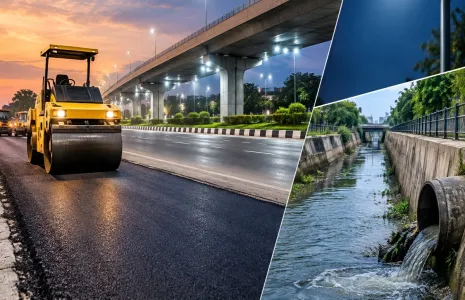
Road connectivity remains another priority. Proposals made in 2025 included reconstructing 668 rural roads at an estimated cost of Rs. 9.99 bn under the State Road Fund, alongside a separate Rs. 68 mn programme for roads in selected areas. A proposed Bahraich bypass linking the Lucknow–Bahraich road with the Bahraich–Gonda road is intended to improve movement through the district and connect rural settlements with wider transport routes.

Infrastructure is also being linked with local enterprise. Bahraich’s economy is centred on agriculture, while its One District One Product identity covers wheat-stalk handicrafts; food processing is an emerging activity. Training in craft and food processing, bamboo-based markets involving women’s Self-Help Groups, multi-layer farming and agricultural procurement are intended to broaden rural incomes. The available figures establish substantial construction progress, but do not yet measure service reliability, household income gains or enterprise growth. Continued monitoring of water operations, road delivery and market access will determine whether the infrastructure becomes a durable platform for rural economic development.

Bahraich’s rural development is being shaped by investments in water supply, roads, healthcare, education and livelihood support. As an Aspirational District in Uttar Pradesh, it has pursued a framework linking basic infrastructure with agriculture, skills, financial inclusion and social services. The Jal Jeevan Mission has provided 5,43,947 household tap connections against a target of 5,54,464, achieving 98.10 per cent coverage across 1,082 villages. Nearly 9,701 km of pipeline has been laid against a target of 9,848 km, while 780 of 783 targeted tubewells and 771 pump houses have been completed. The network also includes treatment and chlorination systems, overhead tanks, pumping facilities and solar plants. Water-quality concerns have been addressed through piped-water schemes in all 216 villages identified as arsenic-affected in a 2016 assessment. Work has been completed in 213 villages and remains underway in three. Seven villages identified as affected by Japanese Encephalitis or Acute Encephalitis Syndrome have also been covered. The next test will be maintaining safe and regular supplies after construction is completed. Road connectivity remains another priority. Proposals made in 2025 included reconstructing 668 rural roads at an estimated cost of Rs. 9.99 bn under the State Road Fund, alongside a separate Rs. 68 mn programme for roads in selected areas. A proposed Bahraich bypass linking the Lucknow–Bahraich road with the Bahraich–Gonda road is intended to improve movement through the district and connect rural settlements with wider transport routes. Infrastructure is also being linked with local enterprise. Bahraich’s economy is centred on agriculture, while its One District One Product identity covers wheat-stalk handicrafts; food processing is an emerging activity. Training in craft and food processing, bamboo-based markets involving women’s Self-Help Groups, multi-layer farming and agricultural procurement are intended to broaden rural incomes. The available figures establish substantial construction progress, but do not yet measure service reliability, household income gains or enterprise growth. Continued monitoring of water operations, road delivery and market access will determine whether the infrastructure becomes a durable platform for rural economic development.

Related Stories

Gold Stories

Next Story
Building Material

Nuvoco reports 13.5% revenue growth in Q2 FY27

Nuvoco Vistas Corp. Ltd. reported consolidated revenue of Rs 27.9 billion for Q2 FY27, up 13.5% year on year. Cement sales volume rose 9% to 4.7 million tonnes (MMT), while EBITDA increased 11% to Rs 4.11 billion.The company said it began its cement operations in 2014 with a 2.3 MMT per annum (MMTPA) operation at Nimbol. It now aims to reach 35 MMTPA of cement capacity by FY28, nearly 15 times its initial capacity. Its portfolio spans cement, ready-mix concrete and modern building materials.On sustainability and cost efficiency, Nuvoco partnered with CleanMax for a 46.4 MW wind-solar hybrid re..
Next Story
Infrastructure Urban

Thermax showcases water technologies at WETEX 2026

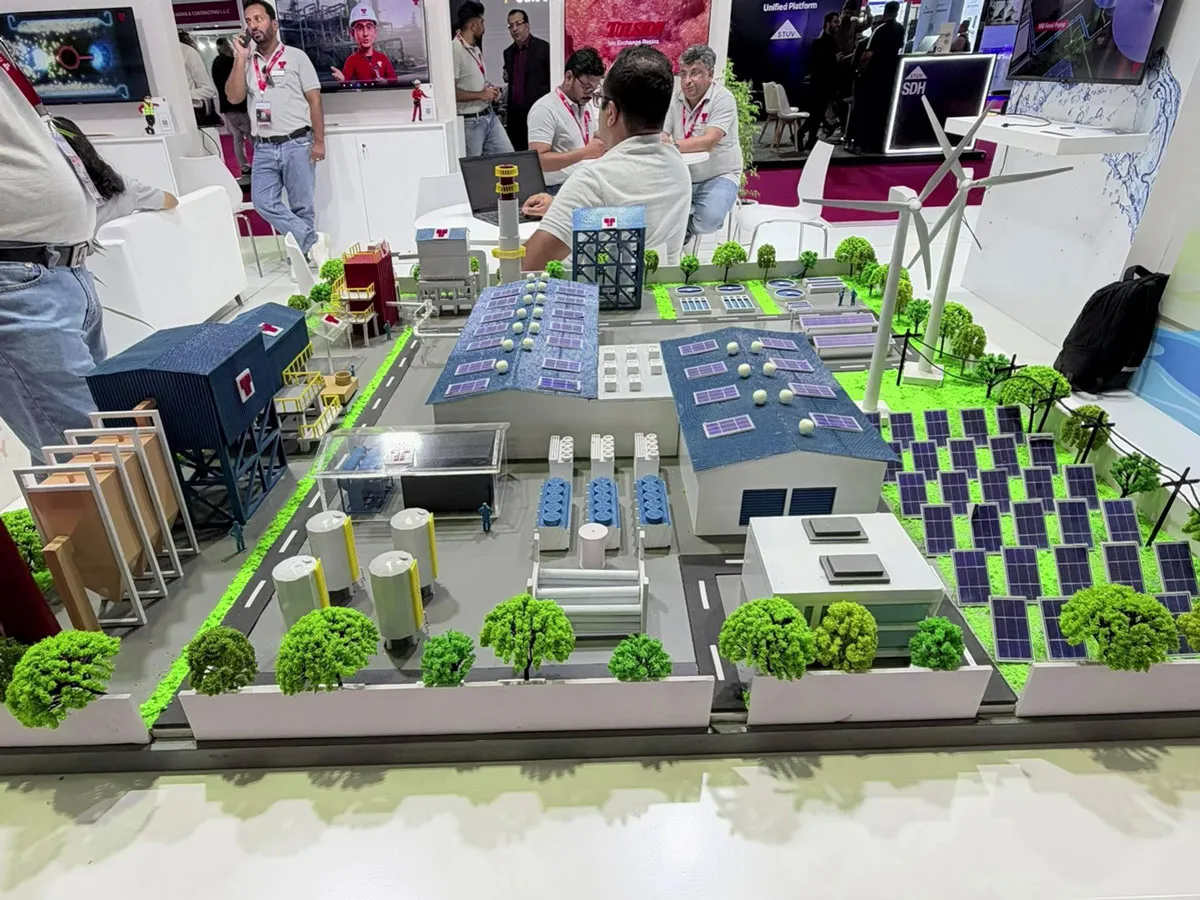
Thermax Limited showcased its seawater desalination and industrial water recovery technologies at the Water, Energy, Technology and Environment Exhibition 2026 (WETEX), held at Dubai World Trade Centre from October 20 to 22. Its digital showcase featured solutions intended to help industries secure reliable water supplies, improve resource efficiency and reduce environmental impact.Dubai Electricity and Water Authority’s (DEWA) financial annual report stated that desalinated water production rose 5.51% year on year in the first quarter of 2026 to 37.57 billion imperial gallons. By June 2026,..
Next Story
Infrastructure Energy

Bondada receives LOI for 120 MWh battery storage project

Bondada Engineering Limited, a Hyderabad-based engineering, procurement and construction (EPC) company, has received a Letter of Intent (LOI) from Gujarat Industries Power Company Limited (GIPCL) for a 20 MW/120 MWh Vanadium Redox Flow Battery Energy Storage System (VRFB BESS). The project will be developed at GIPCL’s 165 MW natural gas power plant complex in Vadodara, Gujarat, and includes a 10-year operations and maintenance (O&M) contract.Bondada Engineering said the project is India’s largest grid-scale VRFB energy storage system. It marks the company’s expansion into advanced en..

Advertisement

Subscribe to Our Newsletter

Get daily newsletters around different themes from Construction world.

STAY CONNECTED

Advertisement

SPECIAL OFFER
QR Code