Elevated Delhi Mumbai Expressway Section Closed Again
ROADS & HIGHWAYS

Elevated Delhi Mumbai Expressway Section Closed Again

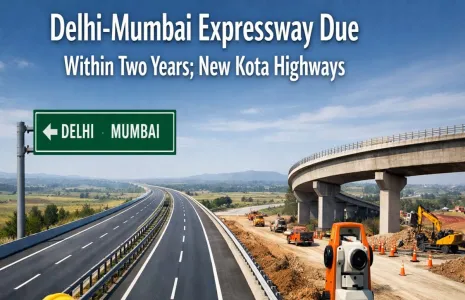
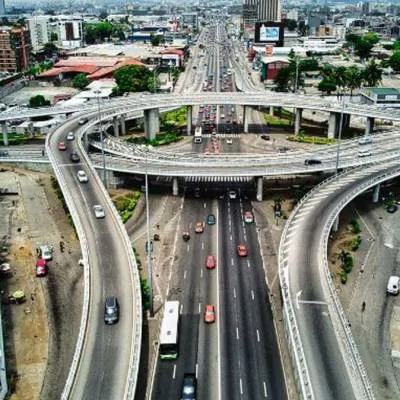
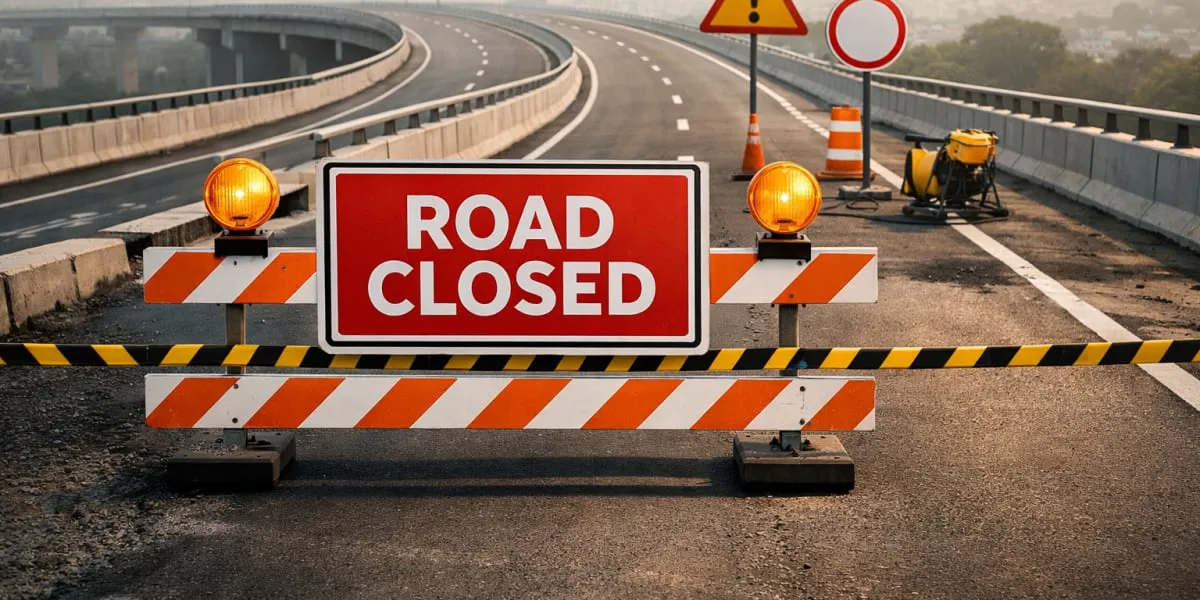
The elevated section of the Delhi Mumbai Expressway between Jaitpur and the DND Flyway in Faridabad was opened on a trial and then closed after the Delhi Police raised safety concerns. Officials reported that the nine-km stretch lacked traffic safety signs, rumble strips and speed breakers at the merging point, making the route accident prone. The National Highways Authority of India has started work to install the missing measures.

The Project Director at the highways authority said rumble strips, speed breakers and other arrangements were being put in place within the Delhi border to meet traffic safety standards. The Faridabad-to-Delhi lane was expected to be operational in two to three days while authorities complete checks. Officials described the trial as a routine step to uncover deficiencies and improve readiness.

Traffic officials said the corridor could ease pressure on Mathura Road and provide an alternative route for commuters travelling from Delhi, Noida and Ghaziabad towards Haryana and Rajasthan. Residents of New Friends Colony, Sukhdev Vihar, Sarita Vihar and Kalindi Kunj were identified as likely beneficiaries. Entry and exit points at Jaitpur and Meethapur remained closed during the initial controlled trial.

Once fully operational, the DND-Jaitpur stretch will link Delhi to the Delhi Mumbai Expressway, the country’s longest access controlled expressway, and is expected to relieve bottlenecks at the Kalindi Kunj crossing. The route was originally planned to connect Sohna with Jawaharlal Nehru Port Trust near Mumbai, and the highways authority proposed an extension to the DND Flyway in August 2018 to provide a direct link to Delhi. Work has been phased to align construction, safety checks and traffic integration.

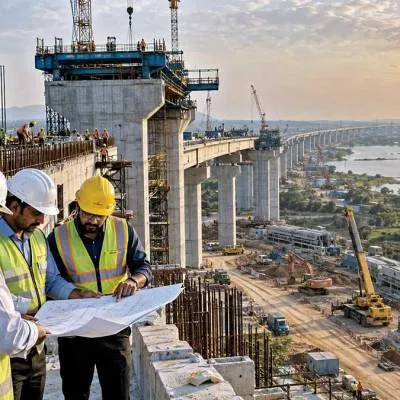
The Centre is developing a separate connectivity corridor between the expressway and Noida International Airport and the Union Cabinet approved a revised alignment in March that includes an 11-km elevated section between Faridabad and the airport. The modified link is estimated at Rs 36.31 billion (bn). The Union Road Transport Minister told the Rajya Sabha in December 2025 that the full expressway was likely to be completed by 2027–28.

The elevated section of the Delhi Mumbai Expressway between Jaitpur and the DND Flyway in Faridabad was opened on a trial and then closed after the Delhi Police raised safety concerns. Officials reported that the nine-km stretch lacked traffic safety signs, rumble strips and speed breakers at the merging point, making the route accident prone. The National Highways Authority of India has started work to install the missing measures. The Project Director at the highways authority said rumble strips, speed breakers and other arrangements were being put in place within the Delhi border to meet traffic safety standards. The Faridabad-to-Delhi lane was expected to be operational in two to three days while authorities complete checks. Officials described the trial as a routine step to uncover deficiencies and improve readiness. Traffic officials said the corridor could ease pressure on Mathura Road and provide an alternative route for commuters travelling from Delhi, Noida and Ghaziabad towards Haryana and Rajasthan. Residents of New Friends Colony, Sukhdev Vihar, Sarita Vihar and Kalindi Kunj were identified as likely beneficiaries. Entry and exit points at Jaitpur and Meethapur remained closed during the initial controlled trial. Once fully operational, the DND-Jaitpur stretch will link Delhi to the Delhi Mumbai Expressway, the country’s longest access controlled expressway, and is expected to relieve bottlenecks at the Kalindi Kunj crossing. The route was originally planned to connect Sohna with Jawaharlal Nehru Port Trust near Mumbai, and the highways authority proposed an extension to the DND Flyway in August 2018 to provide a direct link to Delhi. Work has been phased to align construction, safety checks and traffic integration. The Centre is developing a separate connectivity corridor between the expressway and Noida International Airport and the Union Cabinet approved a revised alignment in March that includes an 11-km elevated section between Faridabad and the airport. The modified link is estimated at Rs 36.31 billion (bn). The Union Road Transport Minister told the Rajya Sabha in December 2025 that the full expressway was likely to be completed by 2027–28.

Related Stories

Gold Stories

Next Story
Infrastructure Urban

Bajaj Auto to Raise Monthly Electric 2W Capacity to 80,000 by March

Bajaj Auto plans to raise monthly production capacity for electric two-wheelers to around 80,000 units by the end of March, as demand for its Chetak electric scooter continues to exceed available output. The company currently has capacity for around 60,000 electric two-wheelers a month. Joint Managing Director Rakesh Sharma said production had returned to the existing full capacity after a supply chain disruption affected output. The issue had reduced recent production to around 40,000 units, resulting in a shortfall of 20,000 vehicles despite strong demand. The company expects to remove produ..

Next Story
Infrastructure Transport

India’s Domestic Air Passenger Traffic Falls 6.5% in September

India’s domestic air passenger traffic declined 6.49 per cent month on month to 11.8 mn in September, according to data released by the Directorate General of Civil Aviation (DGCA). IndiGo retained its leading position, carrying nearly two-thirds of domestic passengers, while the Air India Group remained the second-largest operator. IndiGo held a 65.4 per cent market share and transported 7.73 mn passengers during the month. The Air India Group accounted for 26.8 per cent of the market, carrying 3.165 mn passengers, based on data from the aviation regulator. Akasa Air ranked third with a 5.6..

Next Story
Infrastructure Urban

DPIIT Advances Trust-Based Governance Across India

The Department for Promotion of Industry and Internal Trade (DPIIT), under the Ministry of Commerce and Industry, is shifting India’s regulatory approach from permission-based administration to trust-based governance. The reforms seek to reduce business compliance, support startups, attract investment and simplify approvals across the country. According to an official statement, 47,957 compliance requirements have been reduced across Central Ministries and States and Union Territories. Of these, 22,290 have been digitised, 16,141 simplified, 5,255 decriminalised and 4,271 eliminated. The Jan..

Advertisement

Subscribe to Our Newsletter

Get daily newsletters around different themes from Construction world.

STAY CONNECTED

Advertisement

SPECIAL OFFER
QR Code