NHAI Advances RIIT Plan To Widen Highway Investment Access
ROADS & HIGHWAYS

NHAI Advances RIIT Plan To Widen Highway Investment Access

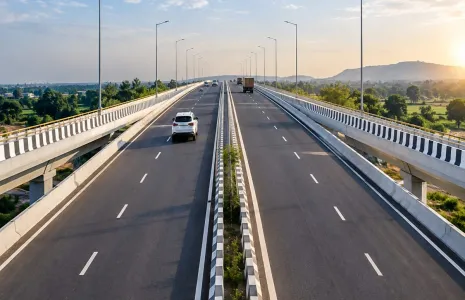
The National Highways Authority of India (NHAI) is moving ahead with the creation of its Public Infrastructure Investment Trust — the Raajmarg Infra Investment Trust (RIIT) — in a move aimed at accelerating road development and broadening investment access for the public. As part of this effort, NHAI has formally incorporated Raajmarg Infra Investment Managers Private Limited (RIIMPL), which will serve as the Investment Manager for the upcoming Public InvIT.

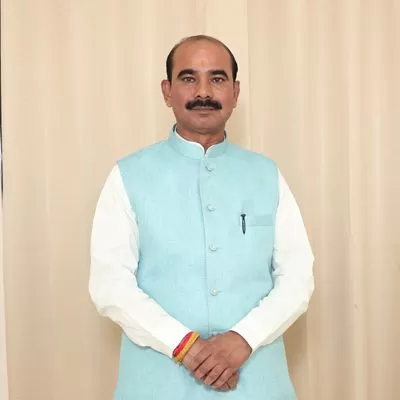
The launch event in Mumbai was led by NHAI Chairman Santosh Kumar Yadav and attended by senior officials and representatives from major financial institutions. The initiative underscores NHAI’s intent to bring India’s extensive highway network into mainstream investment channels, particularly for domestic and retail investors.

RIIMPL is among the most wide-ranging collaborations in India’s infrastructure financing space. It includes equity participation from leading banks and financial institutions such as State Bank of India, Punjab National Bank, NaBFID, Axis Bank, Bajaj Finserv Ventures, HDFC Bank, ICICI Bank, IDBI Bank, IndusInd Bank and Yes Bank. Their involvement ensures strong financial backing, governance discipline and institutional confidence as RIIT enters the public investment arena.

NRVVMK Rajendra Kumar, Member (Finance) at NHAI, has been appointed Managing Director and CEO (Additional Charge) of RIIMPL, bringing strategic financial oversight to the InvIT’s operations and future growth.

At the launch, Yadav highlighted NHAI’s strong record in asset monetisation, noting that the authority has earned Rs 489.95 billion through the Toll-Operate-Transfer (TOT) model and mobilised Rs 436.38 billion across four rounds of Private InvITs. These achievements position NHAI as a leader in innovative infrastructure financing, attracting major domestic and international investors.

He added that over the next three to five years, around 1,500 km of completed and operational National Highways will be transferred into the Public InvIT, creating substantial investment opportunities for citizens and advancing India’s goal of democratising infrastructure ownership.

RIIMPL will manage the InvIT with strict adherence to regulatory and governance standards, including full compliance with SEBI’s InvIT regulations, high levels of transparency and reporting, robust investor protection and best-in-class management practices. These measures aim to build confidence among retail investors engaging with highways as a financial asset class.

The first issuance of InvIT units for retail and public investors is scheduled for February 2026, giving NHAI and RIIMPL time to complete structuring, regulatory approvals and asset preparation. Strong interest is anticipated, backed by NHAI’s credibility, steady cash flows from highway assets and the rising appeal of infrastructure-linked investment products.

The establishment of RIIMPL and the upcoming launch of RIIT mark a significant shift in India’s infrastructure financing landscape. By opening highway investment to retail participants, NHAI is not only advancing its monetisation strategy but also fostering a more inclusive investment ecosystem.

The National Highways Authority of India (NHAI) is moving ahead with the creation of its Public Infrastructure Investment Trust — the Raajmarg Infra Investment Trust (RIIT) — in a move aimed at accelerating road development and broadening investment access for the public. As part of this effort, NHAI has formally incorporated Raajmarg Infra Investment Managers Private Limited (RIIMPL), which will serve as the Investment Manager for the upcoming Public InvIT. The launch event in Mumbai was led by NHAI Chairman Santosh Kumar Yadav and attended by senior officials and representatives from major financial institutions. The initiative underscores NHAI’s intent to bring India’s extensive highway network into mainstream investment channels, particularly for domestic and retail investors. RIIMPL is among the most wide-ranging collaborations in India’s infrastructure financing space. It includes equity participation from leading banks and financial institutions such as State Bank of India, Punjab National Bank, NaBFID, Axis Bank, Bajaj Finserv Ventures, HDFC Bank, ICICI Bank, IDBI Bank, IndusInd Bank and Yes Bank. Their involvement ensures strong financial backing, governance discipline and institutional confidence as RIIT enters the public investment arena. NRVVMK Rajendra Kumar, Member (Finance) at NHAI, has been appointed Managing Director and CEO (Additional Charge) of RIIMPL, bringing strategic financial oversight to the InvIT’s operations and future growth. At the launch, Yadav highlighted NHAI’s strong record in asset monetisation, noting that the authority has earned Rs 489.95 billion through the Toll-Operate-Transfer (TOT) model and mobilised Rs 436.38 billion across four rounds of Private InvITs. These achievements position NHAI as a leader in innovative infrastructure financing, attracting major domestic and international investors. He added that over the next three to five years, around 1,500 km of completed and operational National Highways will be transferred into the Public InvIT, creating substantial investment opportunities for citizens and advancing India’s goal of democratising infrastructure ownership. RIIMPL will manage the InvIT with strict adherence to regulatory and governance standards, including full compliance with SEBI’s InvIT regulations, high levels of transparency and reporting, robust investor protection and best-in-class management practices. These measures aim to build confidence among retail investors engaging with highways as a financial asset class. The first issuance of InvIT units for retail and public investors is scheduled for February 2026, giving NHAI and RIIMPL time to complete structuring, regulatory approvals and asset preparation. Strong interest is anticipated, backed by NHAI’s credibility, steady cash flows from highway assets and the rising appeal of infrastructure-linked investment products. The establishment of RIIMPL and the upcoming launch of RIIT mark a significant shift in India’s infrastructure financing landscape. By opening highway investment to retail participants, NHAI is not only advancing its monetisation strategy but also fostering a more inclusive investment ecosystem.

Next Story
Real Estate

RBI Rate Cut Boosts Confidence Across Housing Market

Industry Context and Market DynamicsThe real estate industry has welcomed the RBI’s rate cut as a timely boost to affordability and demand. With home prices having risen steadily across major markets, even a marginal reduction in interest rates meaningfully strengthens purchasing power, especially for first-time and mid-income buyers.Ashish Jerath, President – Sales & Marketing, Smartworld Developers, observes:“The RBI’s 25-basis-point cut, bringing the repo rate down to 5.25%, is a timely boost for the real estate sector. Lower interest rates reduce borrowing costs, enabling homeb..

Next Story
Infrastructure Transport

BMC Resumes Rs 170 Billion Road Works, Targets 80 per cent By Jan 2026

Following the withdrawal of the southwest monsoon in October, the Brihanmumbai Municipal Corporation (BMC) has restarted work on 645 roads—covering 297.49 kilometres—under its large-scale concretisation programme. Data shows that more than 60 per cent of the resumed works are located in the western suburbs. Officials said the civic body aims to complete concretisation on 80 per cent of the roads where fresh work has begun by January 2026. Launched in 2022, the Rs 170 billion project seeks to concretise 700 kilometres of roads across Mumbai. All civil works were halted during the monsoon ..

Next Story
Infrastructure Urban

India Pushes Digital Shift In Urban Land Mapping

The Department of Land Resources (DoLR) under the Ministry of Rural Development has convened a National Symposium on NAKSHA – the National Geospatial Knowledge-based Land Survey of Urban Habitations – to advance India’s transition to modern, technology-driven land mapping. Speaking at the inaugural session, Secretary Manoj Joshi underscored the urgent need to move revenue departments away from outdated, tape-based methods and rough hand-drawn sketches. He stressed that adopting latitude–longitude-based digital mapping and GIS-linked registration systems is essential for economic stabi..

Advertisement

Subscribe to Our Newsletter

Get daily newsletters around different themes from Construction world.

STAY CONNECTED

Advertisement

Advertisement

Advertisement

Advertisement

Open In App