



NHAI Mandates Eight-Lane Free-Flow Toll Plazas
ROADS & HIGHWAYS

NHAI Mandates Eight-Lane Free-Flow Toll Plazas

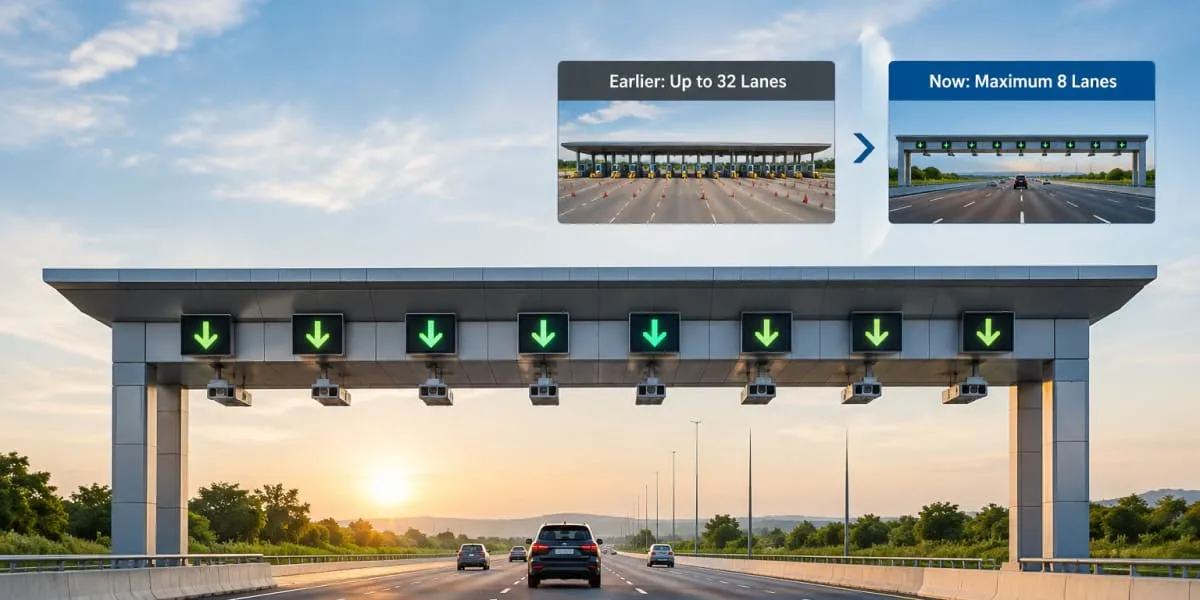
The National Highways Authority of India (NHAI) has mandated Multi-Lane Free Flow (MLFF) tolling for all future national highway projects, marking a shift away from large physical toll plazas. Under the directive, new plazas will have a maximum of eight lanes, compared with designs that previously provided up to 32 lanes on heavily used routes.

The policy applies immediately to upcoming projects. Projects that have been awarded but have not started construction on their toll plazas must revise their plans to meet the new standards, while schemes still at the Detailed Project Report (DPR) stage will incorporate the layout into their bidding documents.

NHAI’s MLFF system uses overhead gantries fitted with Radio Frequency Identification (RFID) readers and Automatic Number Plate Recognition (ANPR) cameras. The arrangement is intended to identify and charge vehicles as they pass at highway speeds, removing the need for drivers to stop or slow down at conventional booths. It also reduces the requirement for multiple tolling lanes and attendant facilities.

The authority has directed regional officers, project implementation units and consultants to apply the provisions across upcoming and ongoing projects where relevant. The instruction represents a broader redesign of toll infrastructure, with smaller plazas requiring less land and fewer physical assets than conventional facilities.

NHAI expects the change to reduce land acquisition costs by shrinking the footprint of each plaza. It also estimates that operating costs for toll collection could fall from 12 to 15 per cent currently to about 3 to 4 per cent under the automated model. Each MLFF lane is estimated to process 600 vehicles an hour, although the system will depend on accurate vehicle identification and collection processes.

The National Highways Authority of India (NHAI) has mandated Multi-Lane Free Flow (MLFF) tolling for all future national highway projects, marking a shift away from large physical toll plazas. Under the directive, new plazas will have a maximum of eight lanes, compared with designs that previously provided up to 32 lanes on heavily used routes. The policy applies immediately to upcoming projects. Projects that have been awarded but have not started construction on their toll plazas must revise their plans to meet the new standards, while schemes still at the Detailed Project Report (DPR) stage will incorporate the layout into their bidding documents. NHAI’s MLFF system uses overhead gantries fitted with Radio Frequency Identification (RFID) readers and Automatic Number Plate Recognition (ANPR) cameras. The arrangement is intended to identify and charge vehicles as they pass at highway speeds, removing the need for drivers to stop or slow down at conventional booths. It also reduces the requirement for multiple tolling lanes and attendant facilities. The authority has directed regional officers, project implementation units and consultants to apply the provisions across upcoming and ongoing projects where relevant. The instruction represents a broader redesign of toll infrastructure, with smaller plazas requiring less land and fewer physical assets than conventional facilities. NHAI expects the change to reduce land acquisition costs by shrinking the footprint of each plaza. It also estimates that operating costs for toll collection could fall from 12 to 15 per cent currently to about 3 to 4 per cent under the automated model. Each MLFF lane is estimated to process 600 vehicles an hour, although the system will depend on accurate vehicle identification and collection processes.

Related Stories

Gold Stories

Next Story
Equipment

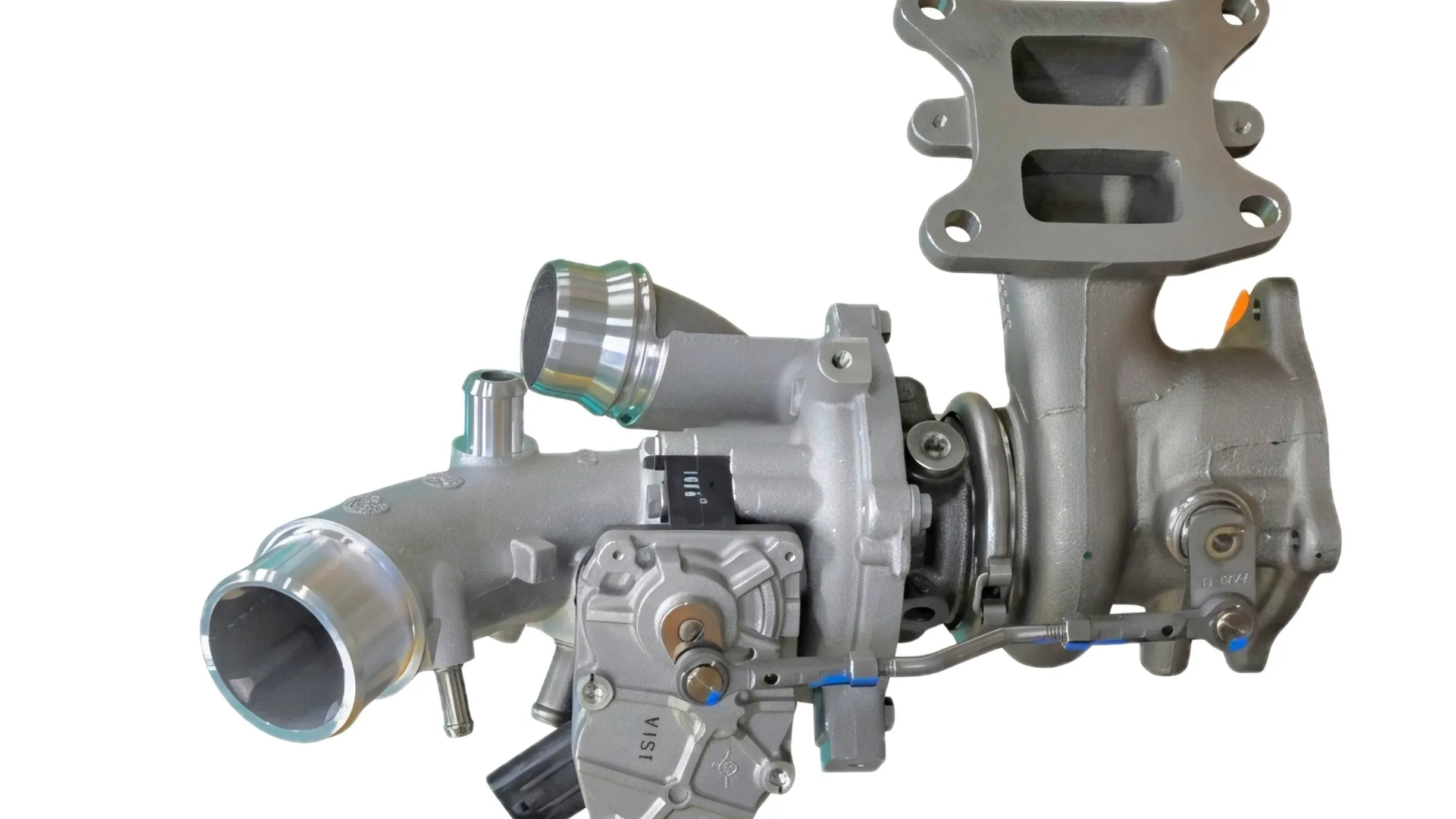
BorgWarner secures three turbocharger contracts with global powertrain leader

BorgWarner has secured three new turbocharger contracts with a global powertrain technology company. The wins comprise one contract for its variable turbine geometry (VTG) turbocharger and two for its wastegate turbocharger. The technologies will be deployed in the customer's light-vehicle gasoline platforms in South America and Europe, with production scheduled to begin in 2027.The VTG turbochargers are designed for gasoline engines operating under demanding conditions and high-boost pressure requirements. They are engineered to support Miller-cycle engines and withstand exhaust temperatures ..

Next Story
Infrastructure Transport

International Digi Yatra Trials Begin at Seven Airports

India has begun trials of Digi Yatra for international passengers at seven airports, allowing eligible Indian passport holders to use facial recognition at selected airport checkpoints. The facility is currently limited to Indian nationals with e-passports travelling on selected international flights operated by Air India and IndiGo. The Civil Aviation Ministry announced the trials on 1 November, with testing scheduled through December 2026. A wider rollout is expected in 2027 after the ministry assesses passenger feedback gathered during the trial period, according to PTI. The system is inten..

Next Story
Infrastructure Transport

Air India Plans More Wide-Body Jets, CEO Signals Profitability Soon

Air India is seeking to expand its order for wide-body aircraft as it works to increase international passenger traffic, chief executive Tewolde Gebremariam said on Tuesday. The Tata Group-owned carrier is also targeting a return to profitability in the near term, as its turnaround programme addresses fleet, network and service challenges. The comments came months after Gebremariam took charge of the airline. Gebremariam, who previously led Ethiopian Airlines, said the airline wanted more wide-body aircraft. Air India has held discussions with Boeing and Airbus while assessing the economics of..

Advertisement

Subscribe to Our Newsletter

Get daily newsletters around different themes from Construction world.

STAY CONNECTED

Advertisement

SPECIAL OFFER
QR Code