Railways to Use AI Tech for Rolling Stock Inspection
RAILWAYS & METRO RAIL

Railways to Use AI Tech for Rolling Stock Inspection

In a major stride towards automating maintenance and improving operational safety, Indian Railways has signed a Memorandum of Understanding (MoU) with the Dedicated Freight Corridor Corporation of India Ltd (DFCCIL) to deploy Machine Vision Based Inspection Systems (MVIS) for rolling stock monitoring.

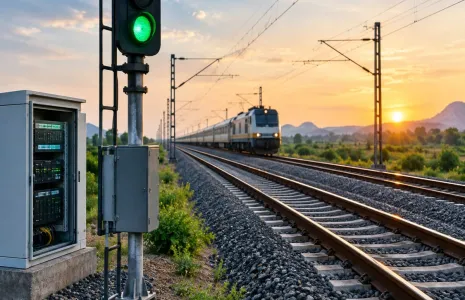
MVIS is an AI and machine learning-enabled wayside solution that captures high-resolution images of moving trains’ undercarriages to detect loose, hanging or missing components. Upon detecting faults, it issues real-time alerts, enabling swift corrective actions and preventing potential accidents or service disruptions.

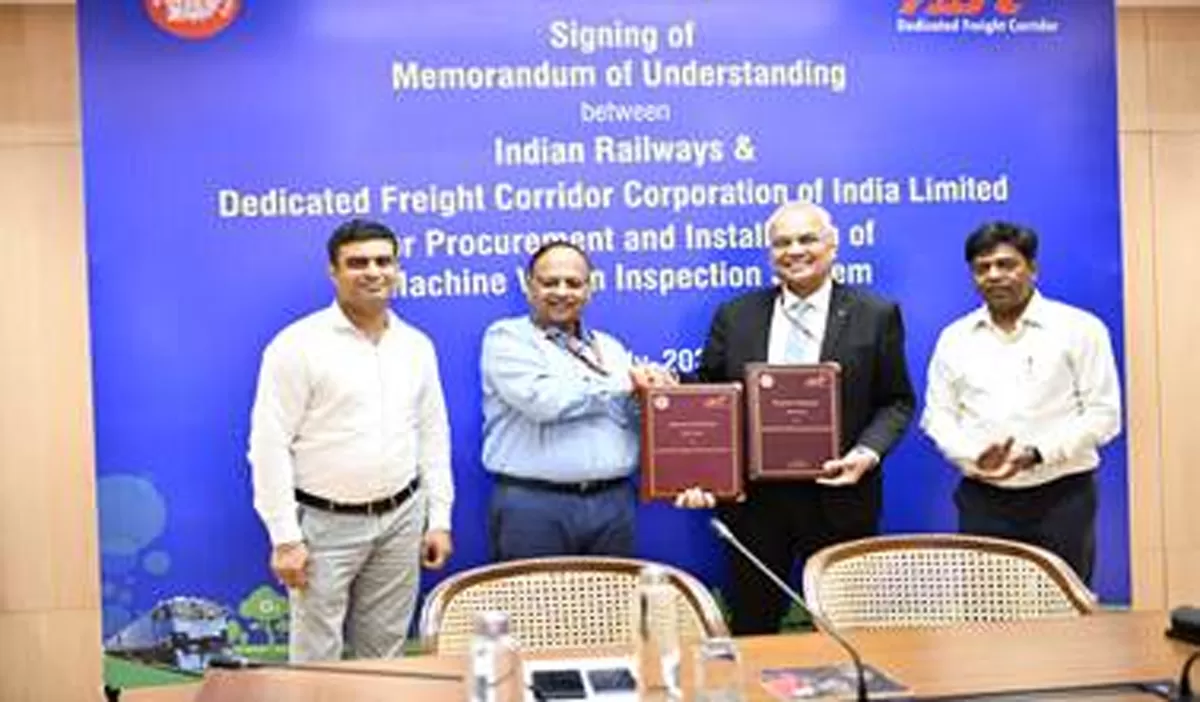
The MoU was signed by Shri Sumit Kumar, Director (Project & Development), Railway Board, and Shri Jawahar Lal, GGM (Mechanical), DFCCIL, at Rail Bhawan, New Delhi, in the presence of senior officials including Shri B. M. Agrawal, Member (Traction & Rolling Stock), and Shri Praveen Kumar, Managing Director, DFCCIL.

DFCCIL will oversee the procurement, installation, testing and commissioning of four MVIS units, marking a first-of-its-kind initiative for Indian Railways. The system is expected to improve safety, reduce manual inspections, and enhance overall efficiency of railway operations.

This development aligns with Indian Railways' broader digital transformation agenda to integrate smart, predictive, and automated technologies into its infrastructure, thereby building a future-ready, resilient, and intelligent rail network.

In a major stride towards automating maintenance and improving operational safety, Indian Railways has signed a Memorandum of Understanding (MoU) with the Dedicated Freight Corridor Corporation of India Ltd (DFCCIL) to deploy Machine Vision Based Inspection Systems (MVIS) for rolling stock monitoring.MVIS is an AI and machine learning-enabled wayside solution that captures high-resolution images of moving trains’ undercarriages to detect loose, hanging or missing components. Upon detecting faults, it issues real-time alerts, enabling swift corrective actions and preventing potential accidents or service disruptions.The MoU was signed by Shri Sumit Kumar, Director (Project & Development), Railway Board, and Shri Jawahar Lal, GGM (Mechanical), DFCCIL, at Rail Bhawan, New Delhi, in the presence of senior officials including Shri B. M. Agrawal, Member (Traction & Rolling Stock), and Shri Praveen Kumar, Managing Director, DFCCIL.DFCCIL will oversee the procurement, installation, testing and commissioning of four MVIS units, marking a first-of-its-kind initiative for Indian Railways. The system is expected to improve safety, reduce manual inspections, and enhance overall efficiency of railway operations.This development aligns with Indian Railways' broader digital transformation agenda to integrate smart, predictive, and automated technologies into its infrastructure, thereby building a future-ready, resilient, and intelligent rail network.

Next Story
Infrastructure Transport

India Becomes First to Produce Bio-Bitumen for Roads

India has become the first country in the world to commercially produce bio-bitumen for use in road construction, according to Road, Transport and Highways Minister Nitin Gadkari. Bitumen, a black and viscous hydrocarbon derived from crude oil, is a key binding material in road building, and the bio-based alternative is expected to significantly improve the sector’s environmental footprint.Addressing the CSIR Technology Transfer Ceremony in New Delhi, Mr Gadkari congratulated Council of Scientific and Industrial Research on achieving the milestone, noting that the initiative would help curb ..

Next Story
Infrastructure Urban

HILT Policy Seen Boosting Telangana Revenue Sharply

The Hyderabad Industrial Land Transformation (HILT) Policy is expected to generate around Rs 1.08 billion in revenue for the Telangana state exchequer, according to Deputy Chief Minister Bhatti Vikramarka Mallu. Speaking in the Telangana Legislative Assembly, he said the policy would be implemented within a six-month timeframe in a transparent manner, with uniform rules applicable to all stakeholders. Mr Vikramarka noted that without the HILT Policy, the state would have earned only about Rs 1.2 million per acre. Under the new framework, however, revenue is projected to rise sharply to Rs 70 ..

Next Story
Infrastructure Urban

India Post, MoRD Tie Up to Boost Rural Inclusion

The Department of Posts and the Ministry of Rural Development have signed a Memorandum of Understanding to accelerate rural transformation and expand financial, digital and logistics services for Self-Help Groups (SHGs) and rural households across India. The agreement was signed in the presence of Union Minister of Communications and Development of North Eastern Region Jyotiraditya M. Scindia and Union Minister of Rural Development and Agriculture and Farmers’ Welfare Shivraj Singh Chouhan. The collaboration aligns with the government’s “Dak Sewa, Jan Sewa” vision and seeks to repositi..

Advertisement

Subscribe to Our Newsletter

Get daily newsletters around different themes from Construction world.

STAY CONNECTED

Advertisement

Advertisement

Advertisement

Advertisement

Open In App