+
Adani’s Dhamra Port Shifts Entirely to Renewable Power
PORTS & SHIPPING

Adani’s Dhamra Port Shifts Entirely to Renewable Power

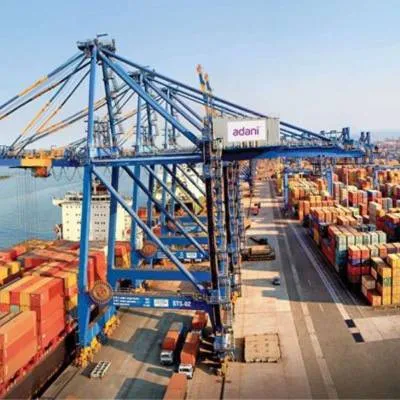
Dhamra Port in Odisha, operated by Adani Ports and Special Economic Zone (APSEZ), has shifted its entire electricity consumption to renewable power, becoming India’s first large-scale private multi-cargo port to operate fully on renewable electricity, the company said. It now handles more than 48 mn t of cargo annually and meets monthly electricity demand of more than 9,000,000 units from renewable sources. At current operating levels, renewable consumption exceeds 108 GWh annually.

The transition, which took effect in August 2026, forms part of APSEZ’s long-term net-zero strategy. The company said the move is expected to reduce emissions associated with purchased electricity and improve the environmental performance of the energy-intensive port’s operations.

The renewable power supply combines captive generation, third-party access arrangements and green-power procurement under Odisha’s regulatory framework. About 25 to 30 per cent of Dhamra’s renewable electricity comes from APSEZ’s captive hybrid power plant at Khavda in Gujarat, while a further 10 to 15 per cent is sourced through third-party access.

The remaining requirement is met through a Green Consumer arrangement with Odisha’s distribution utility. Renewable electricity now supports the port’s round-the-clock activities, including cargo handling, storage, rail-linked operations and other critical infrastructure.

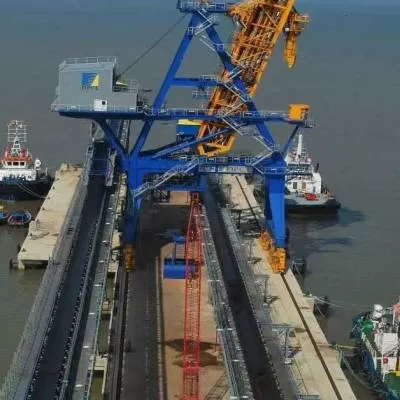
Located on Odisha’s coast between Haldia and Paradip, Dhamra is one of eastern India’s key deep-draft ports. It has installed capacity of 60 MT and handled 48.8 MT of cargo in the financial year ended March 2026. The facility has six dry-cargo berths, rapid-loading silos, wagon tipplers, track hoppers, mechanised storage yards and jetty equipment, with rail and road links to mineral-rich areas across Odisha, Jharkhand and West Bengal. The shift places Dhamra among large industrial and logistics facilities increasing their use of renewable electricity to reduce operational emissions and meet longer-term decarbonisation targets.

Dhamra Port in Odisha, operated by Adani Ports and Special Economic Zone (APSEZ), has shifted its entire electricity consumption to renewable power, becoming India’s first large-scale private multi-cargo port to operate fully on renewable electricity, the company said. It now handles more than 48 mn t of cargo annually and meets monthly electricity demand of more than 9,000,000 units from renewable sources. At current operating levels, renewable consumption exceeds 108 GWh annually. The transition, which took effect in August 2026, forms part of APSEZ’s long-term net-zero strategy. The company said the move is expected to reduce emissions associated with purchased electricity and improve the environmental performance of the energy-intensive port’s operations. The renewable power supply combines captive generation, third-party access arrangements and green-power procurement under Odisha’s regulatory framework. About 25 to 30 per cent of Dhamra’s renewable electricity comes from APSEZ’s captive hybrid power plant at Khavda in Gujarat, while a further 10 to 15 per cent is sourced through third-party access. The remaining requirement is met through a Green Consumer arrangement with Odisha’s distribution utility. Renewable electricity now supports the port’s round-the-clock activities, including cargo handling, storage, rail-linked operations and other critical infrastructure. Located on Odisha’s coast between Haldia and Paradip, Dhamra is one of eastern India’s key deep-draft ports. It has installed capacity of 60 MT and handled 48.8 MT of cargo in the financial year ended March 2026. The facility has six dry-cargo berths, rapid-loading silos, wagon tipplers, track hoppers, mechanised storage yards and jetty equipment, with rail and road links to mineral-rich areas across Odisha, Jharkhand and West Bengal. The shift places Dhamra among large industrial and logistics facilities increasing their use of renewable electricity to reduce operational emissions and meet longer-term decarbonisation targets.

Related Stories

Gold Stories

Next Story
Infrastructure Urban

Suzuki Targets 4 mn Units in India by FY30, Builds Global Hub

Suzuki Motor Corporation plans to raise annual production capacity in India to approximately 4 mn units from fiscal 2030, strengthening the country’s role as a manufacturing and export hub for its global operations. The Japanese car maker announced the target as part of its Technology Strategy 2026, which outlines its development and manufacturing priorities for the coming decade. The company also aims to improve development efficiency by 30 per cent from the FY20 level and manufacturing efficiency by 50 per cent by FY30. It plans to halve the lead time required to develop new vehicles by im..

Next Story
Infrastructure Transport

Ayodhya Airport to Add Flights to Delhi, Bengaluru and Mumbai

Ayodhya airport will get additional direct air services to Delhi and Bengaluru from October 1, followed by a daily non-stop connection to Mumbai from October 30. The existing IndiGo service to Hyderabad is also being prepared for conversion into a daily operation, widening travel options from the temple city. Passengers travelling to Delhi will have two direct options at different times of day from October 1. Akasa Air flight QP 1608 will depart Ayodhya at 12:50 pm and arrive in Delhi at 2:20 pm, while Air India Express flight IX 1274 will leave at 2:10 pm and reach the capital at 3:45 pm. Ind..

Next Story
Infrastructure Urban

Cement Prices Rise Again in Himachal Pradesh

Cement prices in Himachal Pradesh have increased for the second time this month, raising construction expenses for households, contractors and other consumers. Cement companies raised rates by Rs. 5 per bag on Friday, 10 days after a similar increase was implemented on September 15. The two revisions have lifted prices by a total of Rs. 10 per bag within 10 days. Dealers Pawan, Rohit, Manoj and Rakesh said the latest rates were being applied across the market, adding to the financial pressure on people building or renovating homes. ACC Suraksha cement is now priced at Rs. 425 per bag, compared..

Advertisement

Subscribe to Our Newsletter

Get daily newsletters around different themes from Construction world.

STAY CONNECTED

Advertisement

SPECIAL OFFER
QR Code