


Uttar Pradesh Smart Cities Face a Bigger Service Test
SMART CITIES

Uttar Pradesh Smart Cities Face a Bigger Service Test

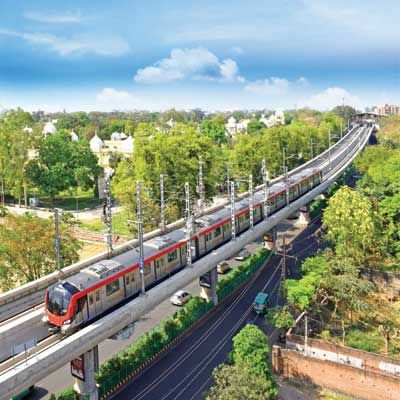
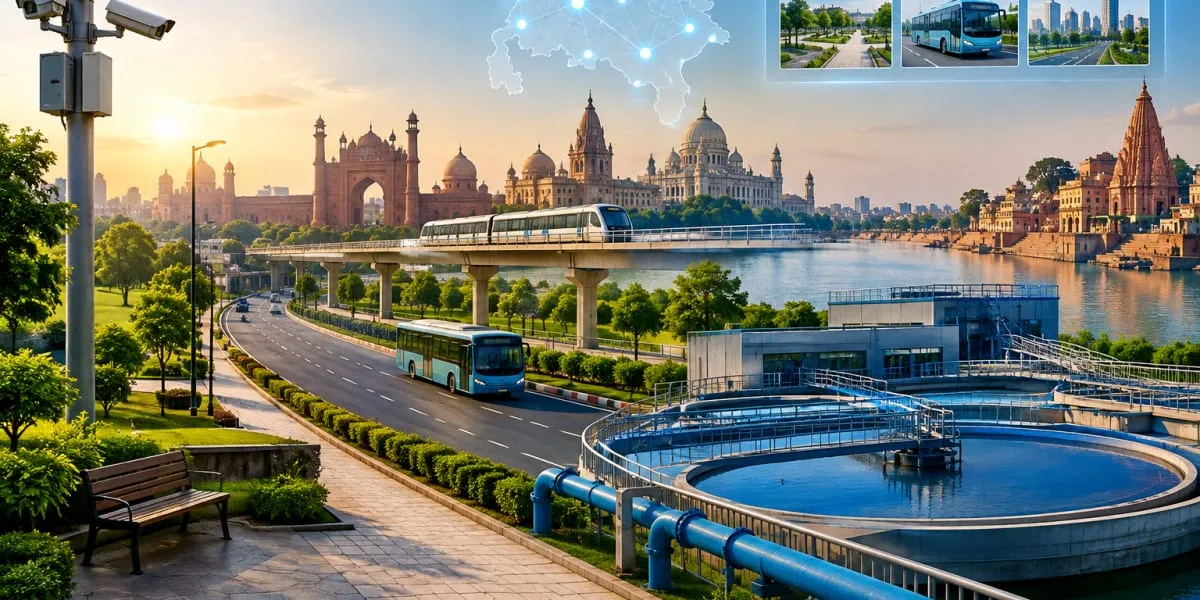
Uttar Pradesh has expanded its Smart Cities framework to 17 municipal corporation cities, combining the Central Smart Cities Mission with a state-led initiative. The programmes have created a substantial pipeline of roads, command centres, water networks, public spaces and mobility infrastructure, but their long-term value will depend on reliable operation, maintenance and equitable access.

Ten cities—Agra, Aligarh, Bareilly, Jhansi, Kanpur, Lucknow, Moradabad, Prayagraj, Saharanpur and Varanasi—were selected under the central mission. They had 893 projects valued at Rs. 211.61 bn, of which 889 projects worth Rs. 209.59 bn had been completed by March 31, 2026. The progress indicates strong implementation, although completion figures alone do not establish whether residents are receiving better services.

The state initiative covers Ayodhya, Firozabad, Ghaziabad, Gorakhpur, Mathura, Meerut and Shahjahanpur. Together, the two tracks address technology-enabled administration, traffic management, public amenities and basic services. However, command centres and digital monitoring must be supported by trained staff, operating budgets, sound engineering and effective grievance-redressal systems.

AMRUT 2.0, launched in October 2021, focuses more directly on household needs, including drinking water, sewerage, water conservation, water-body rejuvenation and green spaces. Uttar Pradesh has approved 637 projects with an estimated investment of Rs. 297.16 bn. By September 2026, 114 projects had been completed and 453 were under implementation, leaving service reliability, water quality and post-construction maintenance as important measures of progress.

The priorities differ across the state. Tourism and pilgrimage centres require dependable visitor infrastructure, while expanding industrial and commercial cities need stronger mobility, drainage and water systems. Smaller urban centres also depend on infrastructure to support surrounding rural economies. The programmes will therefore need to be assessed through operational indicators such as water-supply reliability, sewerage performance, road quality, public-space usability and the responsiveness of municipal administrations. Their success will ultimately depend on converting completed assets into maintained, inclusive and dependable urban services.

Uttar Pradesh has expanded its Smart Cities framework to 17 municipal corporation cities, combining the Central Smart Cities Mission with a state-led initiative. The programmes have created a substantial pipeline of roads, command centres, water networks, public spaces and mobility infrastructure, but their long-term value will depend on reliable operation, maintenance and equitable access. Ten cities—Agra, Aligarh, Bareilly, Jhansi, Kanpur, Lucknow, Moradabad, Prayagraj, Saharanpur and Varanasi—were selected under the central mission. They had 893 projects valued at Rs. 211.61 bn, of which 889 projects worth Rs. 209.59 bn had been completed by March 31, 2026. The progress indicates strong implementation, although completion figures alone do not establish whether residents are receiving better services. The state initiative covers Ayodhya, Firozabad, Ghaziabad, Gorakhpur, Mathura, Meerut and Shahjahanpur. Together, the two tracks address technology-enabled administration, traffic management, public amenities and basic services. However, command centres and digital monitoring must be supported by trained staff, operating budgets, sound engineering and effective grievance-redressal systems. AMRUT 2.0, launched in October 2021, focuses more directly on household needs, including drinking water, sewerage, water conservation, water-body rejuvenation and green spaces. Uttar Pradesh has approved 637 projects with an estimated investment of Rs. 297.16 bn. By September 2026, 114 projects had been completed and 453 were under implementation, leaving service reliability, water quality and post-construction maintenance as important measures of progress. The priorities differ across the state. Tourism and pilgrimage centres require dependable visitor infrastructure, while expanding industrial and commercial cities need stronger mobility, drainage and water systems. Smaller urban centres also depend on infrastructure to support surrounding rural economies. The programmes will therefore need to be assessed through operational indicators such as water-supply reliability, sewerage performance, road quality, public-space usability and the responsiveness of municipal administrations. Their success will ultimately depend on converting completed assets into maintained, inclusive and dependable urban services.

Related Stories

Gold Stories
Next Story
Infrastructure Urban

Jupiter Wagons Wins Rs. 3.24 bn ACT2 Wagon Orders from Private Firms

Jupiter Wagons has secured private-sector orders worth more than Rs. 3.24 bn from GATX India and Chetak International for its ACT2 automobile carrier wagons. The company announced the orders on 2 November 2026, saying the contracts would strengthen its business with private wagon-leasing and logistics operators. GATX India has issued a Letter of Intent (LOI) for the manufacture and supply of 10 rakes comprising 270 ACT2 wagons. The LOI is valued at Rs. 2.15 bn and covers the production and delivery of the company’s new-design automobile carrier platform. Chetak International has separately p..

Next Story
Infrastructure Urban

Tata Motors Takes Control of Iveco with 89.42 Per Cent Stake

Tata Motors has taken control of Italian commercial-vehicle maker Iveco after acquiring an 89.42 per cent stake for approximately €3.43 bn, or Rs. 363.87 bn. The transaction gives India’s largest commercial-vehicle manufacturer control of a European business with annual revenue of Rs. 1.42 tn, while shifting attention to integration, cash-flow generation and repayment of acquisition debt. TML CV Holdings B.V., Tata Motors’ indirect wholly owned subsidiary, acquired 238.16 mn common shares at €14.40 apiece. The holding represents 89.42 per cent of Iveco’s common share capital, excludi..

Next Story
Building Material

Ambuja Cements to Invest Rs. 145 bn to Raise Capacity by FY30

Ambuja Cements will invest Rs. 145 bn to expand its cement capacity to 155 mn tonnes per annum by fiscal 2030. The planned investment, equivalent to $1.53 bn, will increase production capacity from the company’s current level of 113.5 MTPA. The company expects capacity to reach 119 MTPA by March 2027, with the wider expansion programme adding facilities across several major cement markets. The investment is intended to support the company’s long-term growth and strengthen its manufacturing network in India. The new capacity will be developed across Assam, Bihar, Jharkhand, Gujarat, Maharas..

Advertisement

Subscribe to Our Newsletter

Get daily newsletters around different themes from Construction world.

STAY CONNECTED

Advertisement

SPECIAL OFFER
QR Code