Assam Stakeholders Urge Strict Implementation of New Waste Rules
WATER & WASTE

Assam Stakeholders Urge Strict Implementation of New Waste Rules

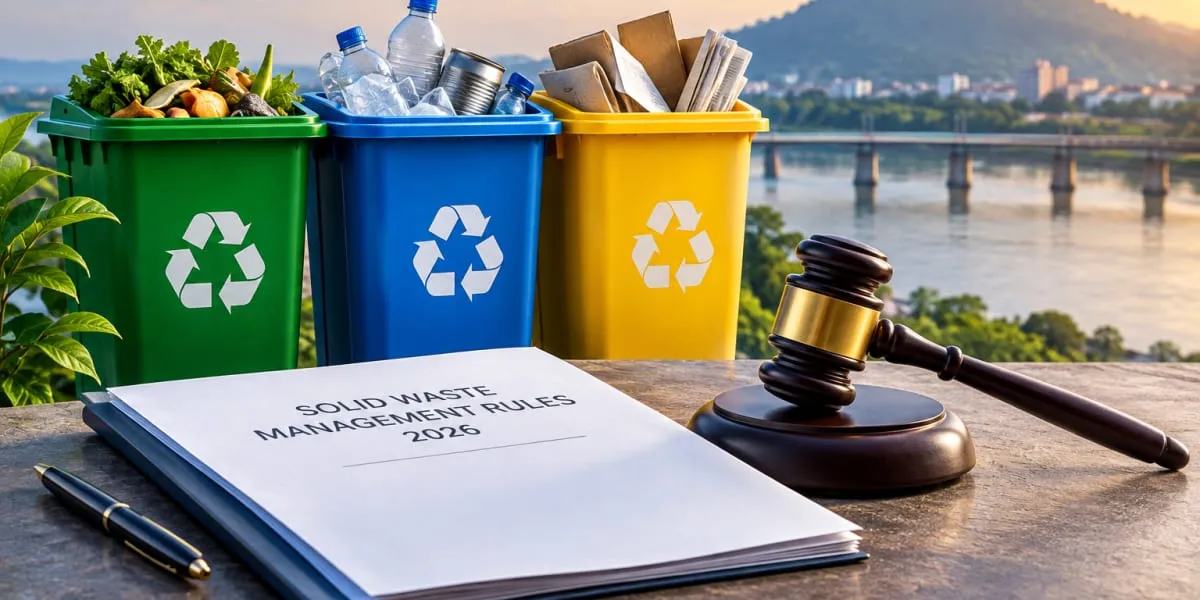
The Assam Pollution Control Board (APCB), in collaboration with the Press Information Bureau, Swachh Bharat Mission officials and urban and rural local bodies, held a regional press conference in Guwahati on September 28 to discuss the implementation of the Solid Waste Management (SWM) Rules, 2026. The meeting focused on improving compliance across Assam and increasing public awareness of waste segregation at source.

The SWM Rules, 2026, came into force on April 1, replacing the 2016 rules. Under the new framework, segregation at source is mandatory, with waste required to be separated into four categories: wet waste, dry waste, sanitary waste and special care waste.

APCB Chairman Arup Kumar Misra said the conference aimed to support implementation at every urban and rural local body in the state. He also highlighted the need for public participation, noting that household waste could be converted into useful resources when it was properly segregated and managed.

Implementation of the rules is being monitored by the Supreme Court through its proceedings in Bhopal Municipal Corporation v. Dr Subhash C. Pandey and Others, Civil Appeal No. 6174 of 2023. In an order dated February 19, the court directed that its instructions apply nationwide and assigned District Collectors responsibility for overseeing municipal solid waste systems in their jurisdictions.

The court also directed local bodies to set timelines for achieving 100 per cent compliance and conduct infrastructure audits. Pollution Control Boards were asked to expedite infrastructure for four-stream segregation and inform bulk waste generators about the rules, while legacy dumpsites were to be addressed through separate, time-bound action plans.

In a subsequent order dated August 18, the court reiterated that responsibility for solid waste management rests with all contributors. District Collectors were instructed to identify bulk waste generators and explain the consequences of non-compliance. The court further stressed the participation of elected representatives and accurate accounting of generated, processed and unaccounted waste. The APCB said its immediate priority was to implement the rules at the grassroots level across Assam.

The Assam Pollution Control Board (APCB), in collaboration with the Press Information Bureau, Swachh Bharat Mission officials and urban and rural local bodies, held a regional press conference in Guwahati on September 28 to discuss the implementation of the Solid Waste Management (SWM) Rules, 2026. The meeting focused on improving compliance across Assam and increasing public awareness of waste segregation at source. The SWM Rules, 2026, came into force on April 1, replacing the 2016 rules. Under the new framework, segregation at source is mandatory, with waste required to be separated into four categories: wet waste, dry waste, sanitary waste and special care waste. APCB Chairman Arup Kumar Misra said the conference aimed to support implementation at every urban and rural local body in the state. He also highlighted the need for public participation, noting that household waste could be converted into useful resources when it was properly segregated and managed. Implementation of the rules is being monitored by the Supreme Court through its proceedings in Bhopal Municipal Corporation v. Dr Subhash C. Pandey and Others, Civil Appeal No. 6174 of 2023. In an order dated February 19, the court directed that its instructions apply nationwide and assigned District Collectors responsibility for overseeing municipal solid waste systems in their jurisdictions. The court also directed local bodies to set timelines for achieving 100 per cent compliance and conduct infrastructure audits. Pollution Control Boards were asked to expedite infrastructure for four-stream segregation and inform bulk waste generators about the rules, while legacy dumpsites were to be addressed through separate, time-bound action plans. In a subsequent order dated August 18, the court reiterated that responsibility for solid waste management rests with all contributors. District Collectors were instructed to identify bulk waste generators and explain the consequences of non-compliance. The court further stressed the participation of elected representatives and accurate accounting of generated, processed and unaccounted waste. The APCB said its immediate priority was to implement the rules at the grassroots level across Assam.

Related Stories

Gold Stories

Next Story
Equipment

TIL Revenue Surges 143% to Rs 1.98 Billion in Q2 FY27

TIL Limited, a manufacturer of material handling and infrastructure equipment, has reported a 143 per cent year-on-year increase in consolidated revenue to Rs 1.98 billion for the second quarter of FY27, compared with Rs 814.5 million in the corresponding period last year. Consolidated EBITDA surged 433 per cent to Rs 173.7 million, while EBITDA margin improved to 8.8 per cent from 4 per cent.The performance was supported by equipment deliveries, defence contracts, aftermarket services and the contribution of Tulip Compression Private Limited (TCPL), which became a majority-owned subsidiary in..

Next Story
Infrastructure Transport

India to Develop Civil Aircraft Within Two Years, Build 100 Airports

India aims to develop its own civil aircraft within the next two years as it seeks to strengthen domestic aerospace capabilities and reduce dependence on foreign aircraft manufacturers, Civil Aviation Minister Ram Mohan Naidu said on November 12. He said the ambition extended beyond assembling aircraft to developing expertise in aircraft design and production. Speaking at the inaugural session of the Confederation of Indian Industry (CII) Partnership Summit 2026 in Visakhapatnam, Naidu said India wanted to establish itself as a major aerospace manufacturing hub. The government’s approach is ..

Next Story
Infrastructure Urban

Two Korean Firms to Invest Rs. 13.7 bn in Tamil Nadu

Two South Korean automotive component suppliers to Hyundai and Kia plan to invest a combined Rs. 13.7 bn in Tamil Nadu over the next five years, according to sources in the state industries department. The proposed investments come after a political dispute over the reported movement of some automotive investments to Andhra Pradesh. The state government has received letters of intent (LoIs) from Hwashin and Seoyon, while memorandums of understanding (MoUs) are expected to be signed shortly. Both companies communicated their investment plans in letters dated November 11, reaffirming their inten..

Advertisement

Subscribe to Our Newsletter

Get daily newsletters around different themes from Construction world.

STAY CONNECTED

Advertisement

SPECIAL OFFER
QR Code