Nagaland Proposes Integrated Zonal Waste Processing Centre at Xukiye
WATER & WASTE

Nagaland Proposes Integrated Zonal Waste Processing Centre at Xukiye

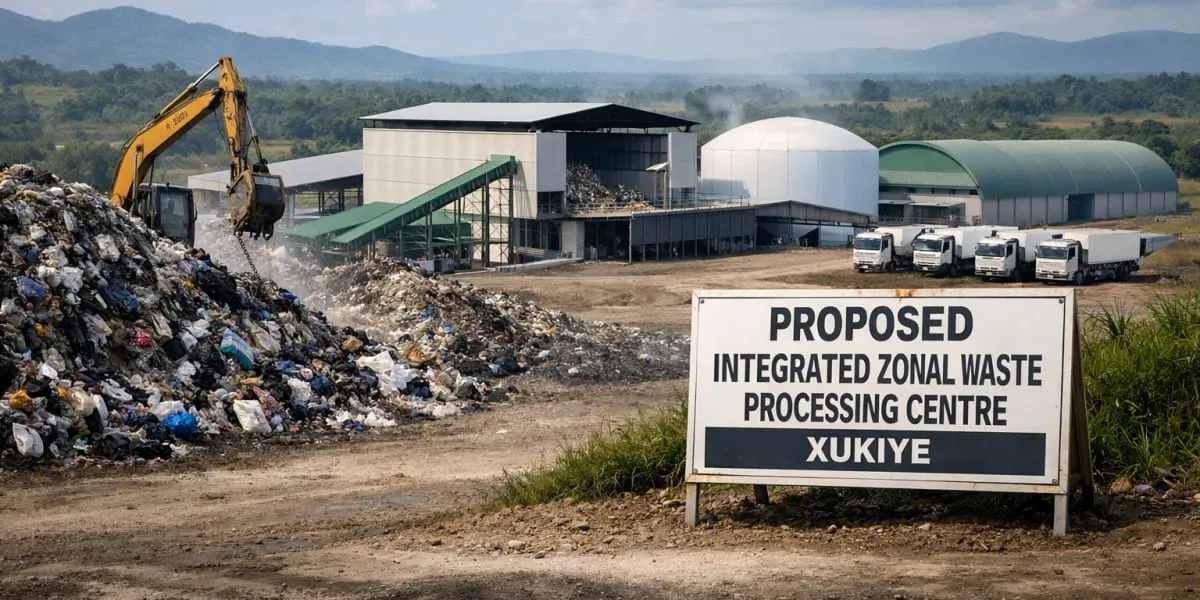
The Nagaland Government has told the National Green Tribunal (NGT) that it will acquire land at Xukiye village in Niuland district to establish an Integrated Zonal Waste Processing Centre serving Dimapur, Chümoukedima and Niuland. The submission formed part of an additional compliance report filed in the Sunrise Colony dumping area matter.

The decision follows failure to operationalise a previously acquired site at Dobagaon, where the state had bought 10.74 acres for a waste management site and landfill for the Dimapur Municipal Council. The council took possession in May 2026, but work could not start owing to strong local opposition and concerns that the site failed to meet Solid Waste Management Rules, 2016 criteria amid severe erosion by the Dhansiri River.

The Government has proposed acquiring 50 acres at Xukiye and conveyed approval to the Commissioner and Director of Land Revenue on July 27, 2026, while seeking a time extension to meet compliance timelines and aiming to make the site operational within eight months. The centre is intended to serve the Dimapur Municipal Council, East Dimapur, Chümoukedima and Niuland town councils, rural local bodies and peripheral settlements across the districts.

The August submission listed completed works at the Sunrise Colony dumpsite, including a green belt and buffer zone created in May 2024, linear drainage constructed in July 2026 and fencing completed by June 2, 2026. Six CCTV cameras were commissioned in August 2025, bio-remediation is reported at 60 to 100 metric tonne (t) per day and bio-mining is 80 per cent complete with expected completion within two years. Pending items include a weighbridge, a concrete slab for waste processing and an effluent treatment plant.

The NGT Eastern Zone Bench recorded the filing on August 7 and said its February 3, 2023 order remains unfulfilled, expressing strong displeasure and warning of possible heavy costs on officials if non-compliance continues. The Tribunal granted the Chief Secretary and the Municipal Commissioner an opportunity to file further compliance affidavits with specific undertakings and dates; the next hearing is listed for October 14, 2026.

The Nagaland Government has told the National Green Tribunal (NGT) that it will acquire land at Xukiye village in Niuland district to establish an Integrated Zonal Waste Processing Centre serving Dimapur, Chümoukedima and Niuland. The submission formed part of an additional compliance report filed in the Sunrise Colony dumping area matter. The decision follows failure to operationalise a previously acquired site at Dobagaon, where the state had bought 10.74 acres for a waste management site and landfill for the Dimapur Municipal Council. The council took possession in May 2026, but work could not start owing to strong local opposition and concerns that the site failed to meet Solid Waste Management Rules, 2016 criteria amid severe erosion by the Dhansiri River. The Government has proposed acquiring 50 acres at Xukiye and conveyed approval to the Commissioner and Director of Land Revenue on July 27, 2026, while seeking a time extension to meet compliance timelines and aiming to make the site operational within eight months. The centre is intended to serve the Dimapur Municipal Council, East Dimapur, Chümoukedima and Niuland town councils, rural local bodies and peripheral settlements across the districts. The August submission listed completed works at the Sunrise Colony dumpsite, including a green belt and buffer zone created in May 2024, linear drainage constructed in July 2026 and fencing completed by June 2, 2026. Six CCTV cameras were commissioned in August 2025, bio-remediation is reported at 60 to 100 metric tonne (t) per day and bio-mining is 80 per cent complete with expected completion within two years. Pending items include a weighbridge, a concrete slab for waste processing and an effluent treatment plant. The NGT Eastern Zone Bench recorded the filing on August 7 and said its February 3, 2023 order remains unfulfilled, expressing strong displeasure and warning of possible heavy costs on officials if non-compliance continues. The Tribunal granted the Chief Secretary and the Municipal Commissioner an opportunity to file further compliance affidavits with specific undertakings and dates; the next hearing is listed for October 14, 2026.

Related Stories

Gold Stories

Next Story
Infrastructure Urban

Bajaj Auto to Raise Monthly Electric 2W Capacity to 80,000 by March

Bajaj Auto plans to raise monthly production capacity for electric two-wheelers to around 80,000 units by the end of March, as demand for its Chetak electric scooter continues to exceed available output. The company currently has capacity for around 60,000 electric two-wheelers a month. Joint Managing Director Rakesh Sharma said production had returned to the existing full capacity after a supply chain disruption affected output. The issue had reduced recent production to around 40,000 units, resulting in a shortfall of 20,000 vehicles despite strong demand. The company expects to remove produ..

Next Story
Infrastructure Transport

India’s Domestic Air Passenger Traffic Falls 6.5% in September

India’s domestic air passenger traffic declined 6.49 per cent month on month to 11.8 mn in September, according to data released by the Directorate General of Civil Aviation (DGCA). IndiGo retained its leading position, carrying nearly two-thirds of domestic passengers, while the Air India Group remained the second-largest operator. IndiGo held a 65.4 per cent market share and transported 7.73 mn passengers during the month. The Air India Group accounted for 26.8 per cent of the market, carrying 3.165 mn passengers, based on data from the aviation regulator. Akasa Air ranked third with a 5.6..

Next Story
Infrastructure Urban

DPIIT Advances Trust-Based Governance Across India

The Department for Promotion of Industry and Internal Trade (DPIIT), under the Ministry of Commerce and Industry, is shifting India’s regulatory approach from permission-based administration to trust-based governance. The reforms seek to reduce business compliance, support startups, attract investment and simplify approvals across the country. According to an official statement, 47,957 compliance requirements have been reduced across Central Ministries and States and Union Territories. Of these, 22,290 have been digitised, 16,141 simplified, 5,255 decriminalised and 4,271 eliminated. The Jan..

Advertisement

Subscribe to Our Newsletter

Get daily newsletters around different themes from Construction world.

STAY CONNECTED

Advertisement

SPECIAL OFFER
QR Code