Technology-Focused Environmental Infrastructure For Sustainable Cities
ECONOMY & POLICY

Technology-Focused Environmental Infrastructure For Sustainable Cities

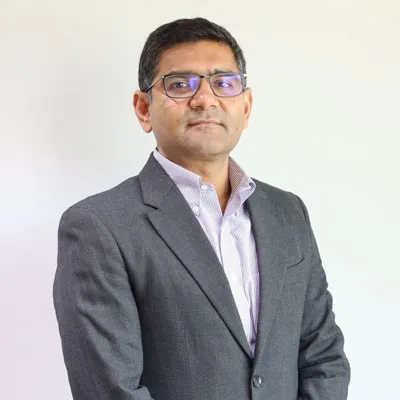
The lack of scalable, scientific solutions capable of handling legacy waste and complex urban waste streams led to the establishment of Blue Planet Environmental Solutions. In conversation with CW, Prashant Singh, Co-Founder & CEO, shares the company’s journey from a startup to a c...

The lack of scalable, scientific solutions capable of handling legacy waste and complex urban waste streams led to the establishment of Blue Planet Environmental Solutions. In conversation with CW, Prashant Singh, Co-Founder & CEO, shares the company’s journey from a startup to a city-scale environmental infrastructure player, detailing large municipal projects, decades-old legacy waste remediation, land recovery outcomes and its expanding circular economy footprint.How has the vision of Blue Planet Environmental Solutions evolved?Blue Planet was founded to address a fundamental gap in India’s waste management ecosystem. Historically, waste was treated as a downstream problem rather than an environmental and land-use challenge. Over time, our vision has evolved from providing operational waste solutions to building integrated, technology-led environmental infrastructure that enables cities to recover land, reduce emissions, and transition towards circular economies.Which project or milestone proved to be the inflection point in your journey from a startup to a large-scale solutions provider?Large municipal legacy waste remediation projects marked the inflection point for Blue Planet. Executing bio-mining at scale required us to demonstrate not just technical capability but governance alignment, regulatory compliance and long-term delivery confidence. These projects validated our ability to operate at city scale and positioned Blue Planet as a trusted partner for complex public-sector environmental infrastructure.Legacy waste remediation is now central to your portfolio. What key execution or scale-related learnings have recent municipal projects delivered?Three learnings stand out. First, scale demands rigorous process standardisation without compromising site-specific adaptability. Second, stakeholder coordination is as critical as engineering excellence, especially in dense urban settings. Third, measurable outcomes, land recovery, emissions reduction and regulatory compliance must be embedded from Day 1.These learnings have significantly strengthened our execution framework across projects.Can you share one representative project as a case study and explain the core technologies and processes deployed to achieve measurable outcomes?The Perungudi legacy waste bio-mining project in Chennai is a representative case. Decades of accumulated waste were scientifically processed using advanced bio-mining and bio-remediation techniques, supported by material recovery systems, environmental safeguards and continuous monitoring protocols. The outcome was large-scale waste reduction, land reclamation and the creation of a foundation for sustainable urban reuse, delivered in line with regulatory and environmental benchmarks.As project complexity and size have increased, how has Blue Planet strengthened its technology stack and operational capabilities?We have invested heavily in process automation, data-driven monitoring and performance analytics to ensure predictability at scale. Our technology stack integrates real-time project tracking, environmental compliance systems and reporting frameworks aligned with global best practices. Operationally, we have strengthened multidisciplinary teams across engineering, ESG, compliance and project management to support increasingly complex deployments.With diversification into e-waste and circular resource recovery, how do these verticals align with your long-term growth strategy?E-waste management and circular resource recovery are natural extensions of our core philosophy: turning environmental challenges into recoverable value streams. These verticals complement legacy waste remediation by closing material loops, reducing landfill dependency and enabling resource-efficiency. Together, they position Blue Planet as a full-spectrum circular economy solutions provider.What defines the next phase of Blue Planet’s journey in terms of scale, innovation and national impact?The next phase is defined by deeper national penetration, higher project complexity and stronger alignment with climate finance and policy frameworks. Our focus is on scaling proven models, integrating innovation across environmental infrastructure and supporting cities in meeting long-term sustainability and resilience goals. Blue Planet’s journey ahead is about institutionalising impact and building systems that endure.

Next Story
Equipment

Going Higher

The year 2026 got off to a sorry start for the elevator industry with a 31-year-old security guard crushed to death when a lift collapsed on him in a Mulund East (Mumbai) housing society, and two boys, aged 11, grievously injured by falling into a lift duct when the third floor lift door in their Goregaon (Mumbai) building gave way. Faulty door-lock wiring and poor maintenance by the vendor are most probably behind these tragic accidents.No month goes by without a fatal elevator accident in some city across India. CW asks why?Regulatory gaps For starters, “regulations should be lif..

Next Story
Infrastructure Transport

Amrit Kaal or Asphault Illusion

Massive spending, inflated metrics, systemic delays and deep-rooted corruption now threaten the credibility of India’s highway expansion, observes  LT GEN RAJEEV CHAUDHRY (Retd), former DG Border Roads.India is spending more on national highways than ever before. With Rs 2.72 lakh crore earmarked for FY 2025–26 and ambitious targets under the Amrit Kaal vision, the narrative is one of speed, scale and transformation. Yet, beneath the headline numbers lies an uncomfortable reality: highways that crack under monsoons, projects that spiral into delays and arbitration, and a system where ..

Next Story
Infrastructure Transport

Executing 37,000 Crore Road Projects With Speed And Accountability

With Rs.37,000 crore worth of road projects under execution across Maharashtra, Maharashtra State Infrastructure Development Corporation (MSIDC) is driving one of the state’s largest infrastructure programmes. Dr Brijesh Dixit, Managing Director, discusses the institutional reforms, execution frameworks, financing strategies and technology adoption enabling timely, high-quality delivery, in conversation with PRATAP PADODE, Editor-in-Chief, CW.With over Rs.37,000 crore worth of road projects underway across districts – many under tight timelines – what institutional and executio..

Advertisement

Subscribe to Our Newsletter

Get daily newsletters around different themes from Construction world.

STAY CONNECTED

Advertisement

Advertisement

Advertisement

Advertisement

Open In App