
Universal Safe Drinking Water Access By 2030
WATER & WASTE

Universal Safe Drinking Water Access By 2030

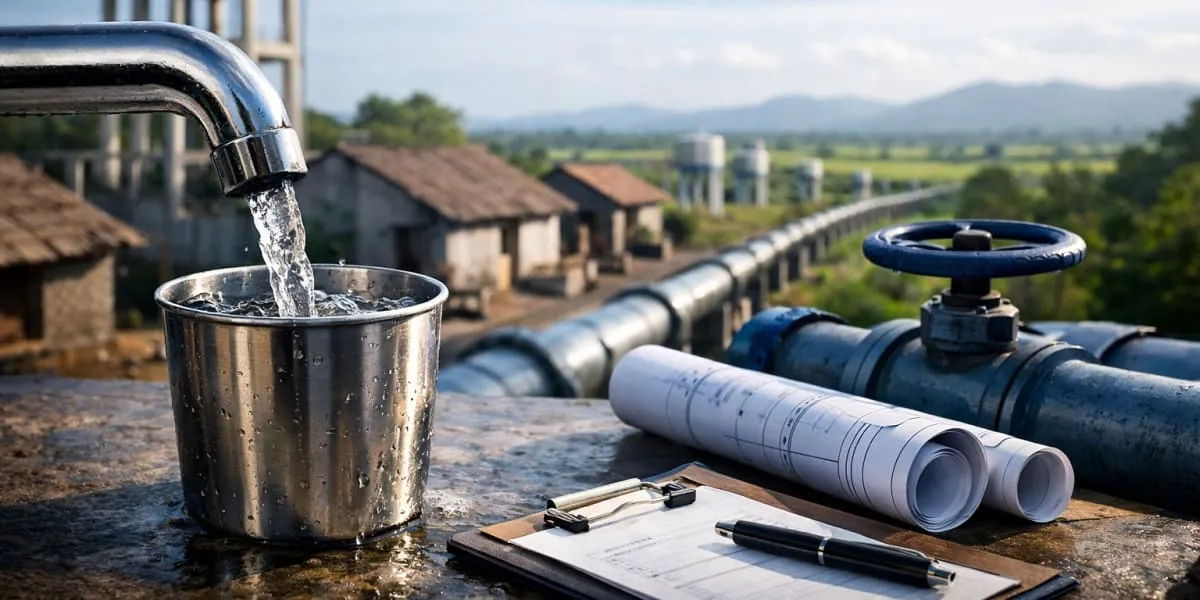
Government of India has committed to provide safe and potable tap water in adequate quantity and prescribed quality on a regular and long term basis to all rural households by 2030 under the Jal Jeevan Mission, implemented with the states since August 2019. Drinking water is a state subject and State and Union Territory governments retain responsibility for planning, implementation, operation and maintenance, while the central government provides technical and financial assistance.

At the start of the mission only 32.3 million (mn) rural households, representing 16.7 per cent, were reported to have tap water connections. As on three March 2026 the mission had enabled a further 125.8 mn rural households to be provided with tap water connections, bringing the total to around 193.6 mn rural households of which about 158.2 mn, or 81.71 per cent, are reported to have tap water supply in their homes.

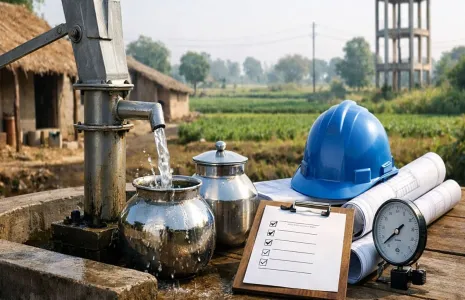
The Finance Minister announced an extension of the mission until 2028 in the budget speech for 2025–26. Priority in planning is given to habitations affected by chemical contaminants and states have been advised to deploy alternative safe water sources and to install community water purification plants to supply drinking and cooking needs of eight to 10 litres per capita per day until piped supply schemes compliant with mission standards are commissioned.

The Ministry of Housing and Urban Affairs has reported central financial and technical support to states through schemes such as the Atal Mission for Rejuvenation and Urban Transformation and AMRUT 2.0. Under AMRUT 1,403 water supply projects worth Rs 433.79 billion (bn) have been grounded and under AMRUT 2.0 some 3,531 projects worth Rs 1.20 trillion (tn) have been approved.

The information was provided by the Minister of State for Jal Shakti, V. Somanna, in a written reply to a question in the Rajya Sabha. The annexure records district wise details with a grand total of 11,488 quality affected habitations as reported.

Government of India has committed to provide safe and potable tap water in adequate quantity and prescribed quality on a regular and long term basis to all rural households by 2030 under the Jal Jeevan Mission, implemented with the states since August 2019. Drinking water is a state subject and State and Union Territory governments retain responsibility for planning, implementation, operation and maintenance, while the central government provides technical and financial assistance. At the start of the mission only 32.3 million (mn) rural households, representing 16.7 per cent, were reported to have tap water connections. As on three March 2026 the mission had enabled a further 125.8 mn rural households to be provided with tap water connections, bringing the total to around 193.6 mn rural households of which about 158.2 mn, or 81.71 per cent, are reported to have tap water supply in their homes. The Finance Minister announced an extension of the mission until 2028 in the budget speech for 2025–26. Priority in planning is given to habitations affected by chemical contaminants and states have been advised to deploy alternative safe water sources and to install community water purification plants to supply drinking and cooking needs of eight to 10 litres per capita per day until piped supply schemes compliant with mission standards are commissioned. The Ministry of Housing and Urban Affairs has reported central financial and technical support to states through schemes such as the Atal Mission for Rejuvenation and Urban Transformation and AMRUT 2.0. Under AMRUT 1,403 water supply projects worth Rs 433.79 billion (bn) have been grounded and under AMRUT 2.0 some 3,531 projects worth Rs 1.20 trillion (tn) have been approved. The information was provided by the Minister of State for Jal Shakti, V. Somanna, in a written reply to a question in the Rajya Sabha. The annexure records district wise details with a grand total of 11,488 quality affected habitations as reported.

Next Story
Infrastructure Transport

MMRDA Removes 1.14 lakh m of Metro Barricades

In a bid to ease congestion and improve urban mobility during monsoon, MMRDA has undertaken one of the largest coordinated barricade removal and monsoon preparedness drives across its ongoing metro and infrastructure projects.With substantial progress achieved in viaduct and structural works across multiple metro corridors, barricades from completed stretches beneath metro viaducts are being systematically removed, restoring maximum possible road space before the monsoon. Wider carriageways across key arterial roads are expected to improve traffic flow, reduce congestion, support better rainwa..

Next Story
Infrastructure Transport

Pune Division to Remove All Diamond Crossings by Year-End

The Pune railway division has announced plans to remove all 16 diamond crossings by the end of 2026 as part of a major yard remodelling project following the derailment of a Vande Bharat Express at Pune Junction on April 27. Railway authorities said the replacements aim to improve safety and streamline train operations across the busy station. The decision followed a Central Railway finding that the accident involved a non-standard diamond crossing and highlighted the need for replacement. Regular maintenance of existing crossings will continue until the replacement work is completed. Official..

Next Story
Infrastructure Urban

Goa Declares 80 Million Square Metres No Development Zone

The Goa state government has declared 80 million square metres (mn) of land a no development zone, designating the area as protected from new construction. The notification reclassifies tracts across the state under a no development category for planning and regulatory purposes. The declaration signals a formal halt to new building permits within the defined zone. Authorities indicated that maps will be issued to show broad boundaries while detailed surveys will refine precise limits. The move transfers responsibility for enforcement to local planning authorities and relevant departments, whic..

Advertisement

Subscribe to Our Newsletter

Get daily newsletters around different themes from Construction world.

STAY CONNECTED

Advertisement

Advertisement

Advertisement

-->