Execution control is non-negotiable – quality suffers the moment you outsource it
Real Estate

Execution control is non-negotiable – quality suffers the moment you outsource it

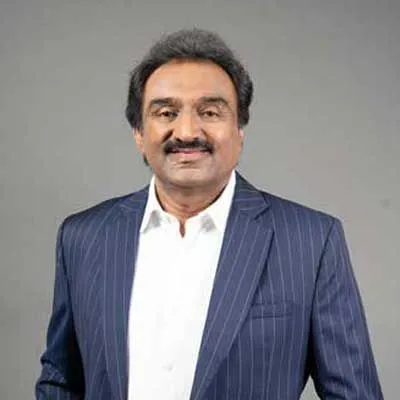
With over 25 years of experience spanning structural engineering and real-estate development, Mayur R Shah, Vice Chairman, Marathon Nextgen Realty, and former President, CREDAI-MCHI, brings a deeply technical and execution-driven perspective to urban development. Under his leadership, the group has expanded across townships, redevelopment and affordable housing, while retaining strong inhouse construction capabilities. In this interaction, Shah highlights how execution control, standardised systems and selective technology adoption drive quality and scalability, while addressing labour dynamics, redevelopment complexities and micro-market-led product strategies across Mumbai.

Across projects like Monte South, Nexzone and the Bhandup ‘Neo’ series, how are you structuring contracting models – item-rate, EPC or hybrid – and what drives that choice?

We largely operate with an inhouse execution model, with only labour being outsourced through contractors. All core construction activities – planning, engineering, procurement and execution – are handled internally. We have experimented with EPC in the past but found that quality often becomes inconsistent due to differing priorities...

To read the full article Click Here

With over 25 years of experience spanning structural engineering and real-estate development, Mayur R Shah, Vice Chairman, Marathon Nextgen Realty, and former President, CREDAI-MCHI, brings a deeply technical and execution-driven perspective to urban development. Under his leadership, the group has expanded across townships, redevelopment and affordable housing, while retaining strong inhouse construction capabilities. In this interaction, Shah highlights how execution control, standardised systems and selective technology adoption drive quality and scalability, while addressing labour dynamics, redevelopment complexities and micro-market-led product strategies across Mumbai.Across projects like Monte South, Nexzone and the Bhandup ‘Neo’ series, how are you structuring contracting models – item-rate, EPC or hybrid – and what drives that choice?We largely operate with an inhouse execution model, with only labour being outsourced through contractors. All core construction activities – planning, engineering, procurement and execution – are handled internally. We have experimented with EPC in the past but found that quality often becomes inconsistent due to differing priorities...To read the full article Click Here

Next Story
Infrastructure Transport

Contracts, Corridors and Cash Flows

India’s roads sector enters 2026 at a decisive junction, where the conversation is no longer about kilometres alone but contracts that allocate risk wisely, corridors that unlock economic value, and cash flows that remain credible over the long term. After more than a decade of relentless expansion, India’s road-building ecosystem is moving into a phase of maturity – where engineering complexity, financial discipline and institutional coordination matter more than sheer scale.Between 2014 and 2024, India built highways at a pace few nations have ever matched. National Highway length expa..

Next Story
Real Estate

The Walled Garden

I am not suggesting Indian architects are inadequate. The profession has produced extraordinary work – from Charles Correa's quiet humanism to Balkrishna Doshi's Nobel-recognised genius. However, the regulatory barriers meant to protect the profession are holding it back. It is time for an honest conversation about this.The Architects Act of 1972 established the Council of Architecture (COA) as the statutory body regulating architecture practice in India. Its founding logic was sound: to ensure those calling themselves architects meet a minimum standard of competence and to protect the publi..

Next Story
Real Estate

We completed a 1BHK home on a private island in 7 days!

Reimagining construction through a ‘War on Waste’, Circato founders T Paul Koshy, Sushma Joseph and Praveen Crasta speak to CW on turning single-use plastic into high-performance building systems – demonstrated at Bengaluru International Airport with a 16-ft wall installed in just 48 hours.What specific gap in the construction ecosystem led to the creation of Circato?Sushma Joseph: We felt the industry had normalised inefficiency. In construction, timelines, costs and outcomes often remain uncertain, yet that is widely accepted. We wanted to show that inefficiencies can be..

Advertisement

Subscribe to Our Newsletter

Get daily newsletters around different themes from Construction world.

STAY CONNECTED

Advertisement

Advertisement

Advertisement