RBI’s reduced interest rate to impact HAM project developers
The National Highways Authority of India (NHAI) is the nodal agency for development of highways in India, and currently manages 2 per cent of the road network transporting 40 per cent of the traffic.
The authority has embarked a large Capex plan under the current leadership of Union Minister Nitin Gadkari. It has unveiled the Bharatmala Pariyojna with a Capex budget of Rs 5.4 trillion. NHAI has awarded majority of the projects under the Engineering, Procurement, Construction (EPC) or Hybrid Annuity Model (HAM) since 2014. This has increased financial burden on NHAI. The last three years debt rated by ICRA is as under:
|
Instrument rated |
Previous
rated amount (Rs Billion) |
Current
rated Amount (Rs Billion) |
Rating
action |
|
Long
Term Borrowing Programme for 2018-19 |
620 |
612.17 |
[ICRA]AAA
(Stable); Reaffirmed |
|
Long
Term Borrowing Programme for 2017-18 |
590 |
505.33 |
[ICRA]AAA
(Stable); Reaffirmed |
|
Long
Term Borrowing Programme for 2016-17 |
331.18 |
331.18 |
[ICRA]AAA
(Stable); Reaffirmed |
|
Tax
Free Bonds 2015-16 |
190 |
190 |
[ICRA]AAA
(Stable); Reaffirmed |
|
Fund
Based Overdraft |
50 |
20 |
[ICRA]A+;
Reaffirmed |
|
Total |
1,781.18 |
1,658.68 |
|
It is estimated in the report that in FY2020, NHAI’s expenditure is expected to be funded through Rs 160.91 billion of cess fund, Rs 106 billion of plough back from consolidated fund of India, Rs 100 billion of asset monetisation through the TOT mode, and Rs 750 billion though market borrowings. Thus overall borrowing at the end of FY2020 will be approximately Rs 2,410 billion. As per the same report, the average cost of borrowing in recent years is around 8.11- 8.55 per cent. However, for tax free bonds, the interest rate is 5.75 per cent, and for Masala Bonds the interest rate is 7.11 per cent.

HAM projects
Due to the poor response to BOT projects and its impact on financials of developers, NHAI did not receive a favourable response on BOT projects under the tolling mode. Hence, the authority shifted to EPC, where 100 per cent project cost is funded by NHAI. Alternatively, it has come up with a new hybrid funding model, where project developers invest 60 per cent of the project cost and NHAI funds 40 per cent of the project cost as grant. The authority pays the RBI a bank rate of linked interest rate on 60 per cent of the project cost every six months. The interest is calculated as RBI bank rate plus 3 per cent spread. For example, if the bank rate is 6 per cent, then the developer will get 9 per cent interest rate from NHAI.
Thus, the developer was protected from the interest rate movement. NHAI has assumed that banks will follow the RBI rate, and accordingly, reset their interest rates. In case interest rates go down, the developers’ borrowing cost will also come down and vice versa. This was a good model in theory.
Under this model, the developer is protected from toll collection shortfall. Hence, it was considered to be a safer model from the developer’s perspective.
Banks MCLR has not reduced according to bank rate reduction
The table below gives the movement of RBI repo rates and SBI MCLR and HDFC MCLR rates:
|
Updated
on |
RBI repo rate (%) |
SBI MCLR (1 year) (%) |
HDFC MCLR (1 year) (%) |
|
March
28, 2020 |
4.40 |
Not changed |
8.15 |
|
October
4, 2019 |
5.15 |
8.05 |
8.35 |
|
August
7, 2019 |
5.40 |
8.10 |
8.60 |
|
June
6, 2019 |
5.75 |
8.30 |
8.70 |
|
April
4, 2019 |
6.00 |
8.35 |
8.70 |
|
February
7, 2019 |
6.25 |
8.55 |
8.75 |
|
August
1, 2018 |
6.50 |
8.25 |
8.40 |
|
June
6, 2018 |
6.25 |
8.25 |
8.40 |
It is seen from the above table that the RBI has reduced repo rate from 6.50 per cent to 4.40 per cent in the last two years, amounting to a rate cut of 2.10 per cent. However, the SBI MCLR rate has reduced from 8.55 per cent to 8.05 per cent with reduction of 0.50 per cent only, and HDFC MCLR has reduced from 8.75 per cent to 8.15 per cent with reduction of 0.60 per cent during this period. Hence, banks have not passed on the benefit of repo rate reduction to their customers.
HAM developers in a soup
HAM developers are facing financial crunch at this moment. Most banks have put EPC companies under the negative list. Most of the banks are reluctant to do financial closure. About 35 projects have faced delays in financial closure due to banks’ cautious approach. Most of the banks are putting stringent conditions such as upfront equity investment, disbursement post 30 per cent of physical progress. Hence, most of the HAM developers are facing financial difficulties in arranging funding for HAM projects.
Further, most of the banks are charging interest between 9.50 per cent to 11 per cent during construction and 9 per cent to 10.5 per cent during the operations period. However, now NHAI will pay them an interest at 7.40 per cent (4.40 + 3 per cent) only. Hence, there will be a deficit of 1.60 per cent to 3.10 per cent for most developers. This deficit needs to be funded by developers only. As per the terms of Concession Agreement, this will not fall under the change of law, since NHAI interest payment is linked to the bank rate. The additional funding requirement will put additional pressure on the developers’ balance sheet.
In the recent past, there has been various HAM acquisition deals announced, where Cube Highways agreed to buy HAM assets from KNR Construction and Dilip Buildcon. These deals will also require renegotiation in view of the decrease on the RBI repo rate.
NHAI – the real beneficiary
Due to the reduction in interest rates, NHAI will be the biggest beneficiary. NHAI’s borrowing cost under HAM will be 7.40 per cent only. The average borrowing cost of NHAI is around 8.11 per cent to 8.55 per cent. Thus, NHAI will save around 0.60 per cent to 1.15 per cent by borrowing from developers under HAM. This will be a big windfall gain for NHAI.
About the Author:
Vijay Agarwal, Executive Director, Equirus Capital, heads the firm’s Real Estate practice. He advises clients in fundraising by way of private equity, structured finance and debt and capital markets like IPO, QIP, PIPE, and is active in the M&A space and is working with clients in the real estate, infrastructure, e-commerce, pharma, retail, manufacturing and other sectors. He was
one of the guest panel speakers in Construction World’s first webinar on “National InfrastructurePipeline: The Rs. 102 trillion Opportunity.”
Related Stories

Gold Stories



LML Realty Sells Out Jhirka Valley Industrial Park in Haryana
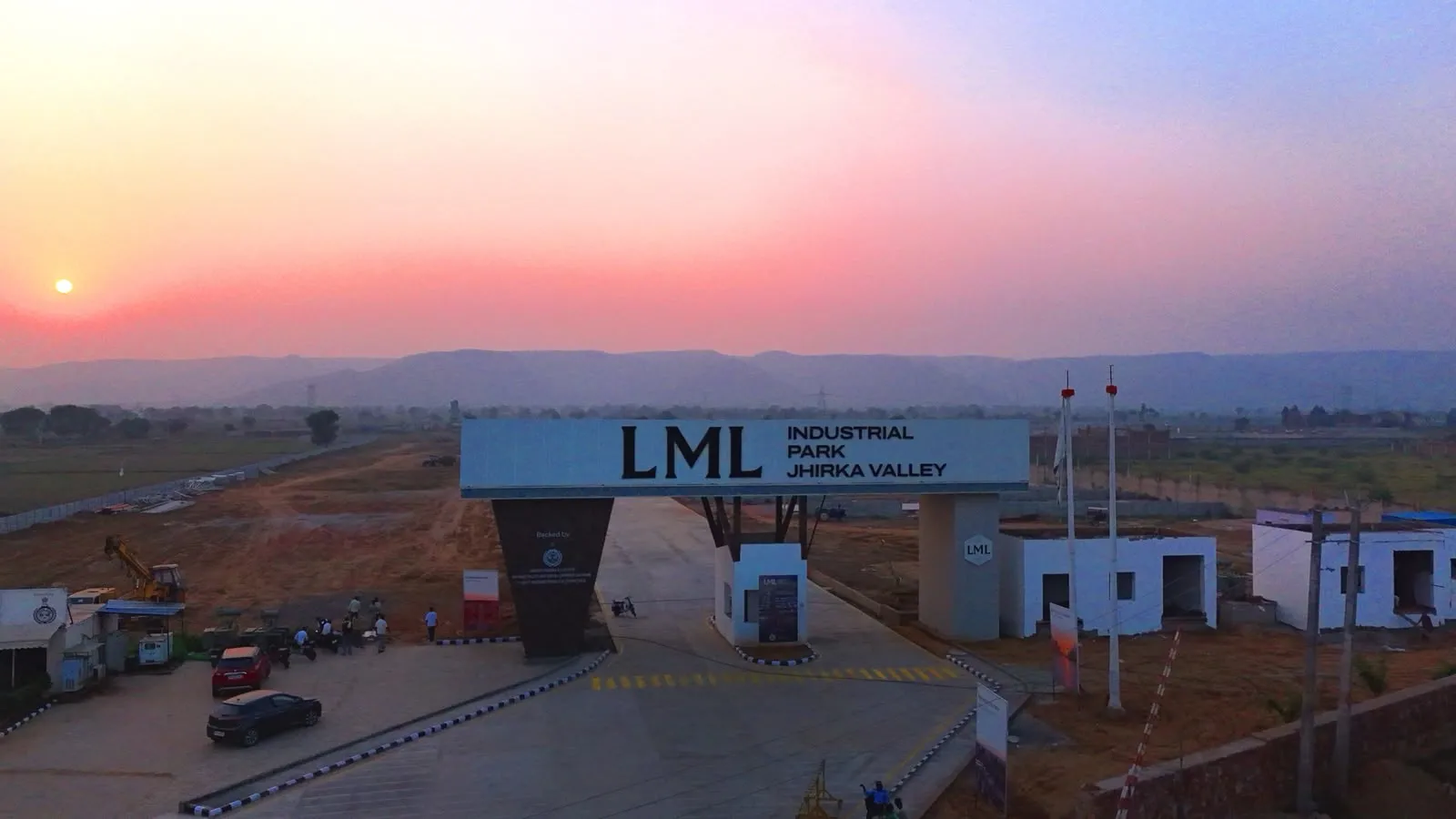
LML Realty, the real estate arm of LML Group, recently announced the complete sell-out of its Jhirka Valley Industrial Park in Haryana, with over 1.17 million sq ft of industrial space acquired by more than 50 companies. With utilities and internal infrastructure in place, the company has commenced plot handovers, enabling buyers to begin construction and establish their operations.The industrial park has attracted companies across diverse sectors, including chemicals, metals and alloys, textiles, electrical equipment, energy, logistics, construction, polymers and engineering. Key buyers inclu..

WSB Real Estate Partners Exits Six Housing Investments
WSB Real Estate Partners recently announced the successful exit of six residential investments across Bengaluru, Mumbai Metropolitan Region (MMR) and National Capital Region (NCR), delivering an average internal rate of return (IRR) of 19–21 per cent and an overall investment return of 1.4 times.The real estate-focused investment firm invested approximately Rs 7 billion across six mid-affordable housing projects over the past four years. All six investments were fully repaid between April and November 2026, several months ahead of their original investment tenures.WSB collaborated with sever..

Aluminium Industry Seeks Policy Support for Rs 4 Trillion Investment
The Aluminium Association of India (AAI) has recently urged the government to introduce supportive policy measures to safeguard the sector’s proposed Rs 4 trillion investment pipeline. The association highlighted the need for a predictable policy framework to strengthen domestic manufacturing, expand production capacity and reduce import dependence.AAI submitted its recommendations for the Union Budget 2027-28 to the Ministries of Finance, Commerce and Industry, and Mines, along with the Department for Promotion of Industry and Internal Trade (DPIIT).India’s aluminium demand is projected t..
Related Articles
Latest Updates