The L1 Trap
ROADS & HIGHWAYS

The L1 Trap

If global shocks explain the pressure on India’s infrastructure sector, negative bidding explains its fragility. India’s public procurement system continues to rely heavily on the L1 (lowest bidder) model, where contracts are awarded primarily on the basis of the lowest cost. In theory, this ...

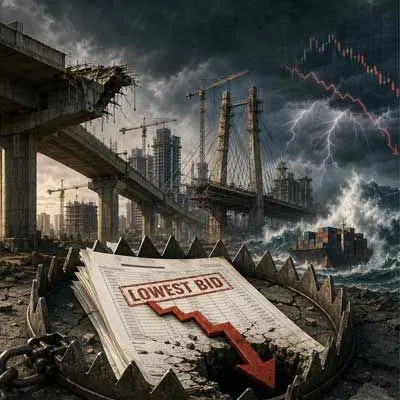
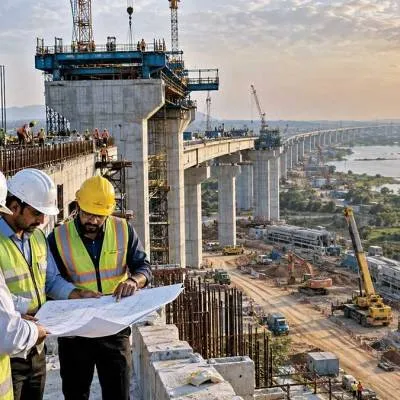
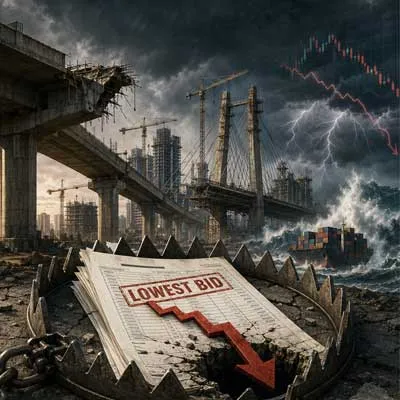
If global shocks explain the pressure on India’s infrastructure sector, negative bidding explains its fragility. India’s public procurement system continues to rely heavily on the L1 (lowest bidder) model, where contracts are awarded primarily on the basis of the lowest cost. In theory, this approach promotes transparency and cost-efficiency. In practice, however, it often distorts pricing and undermines project viability.What is negative bidding?Negative bidding refers to contractors quoting 15-30 per cent below project estimates to secure contracts. Why do contractors resort to it?The reasons are structural rather than irrational. Negative bidding is frequently driven by survival-led market behaviour shaped by:Intense competitionIdle construction capacityPressure to maintain order booksWeak scrutiny of bid viability.For many contractors, aggressive pricing is less a commercial strategy and more an operational necessity. What happens after award?The challenge begins once execution starts and market realities intervene.Material prices riseFuel costs increaseLogistics disruptions occurA contractor already operating on thin – or even negative – margins quickly faces a financial squeeze. The predictable outcomeThe consequences are neither isolated nor unexpected. They typically follow a familiar pattern:Slower executionCompromised qualityFrequent variation and change requestsEscalation claimsArbitration and contractual disputes. Case reflectionConsider a highway project awarded at 25 per cent below estimated cost. What appears commercially viable at the bidding stage can rapidly become unsustainable when bitumen and diesel prices rise during execution.The contractor slows work, seeks compensation through claims and project timelines stretch by two to three years. Eventually, the anticipated savings disappear.The result:Government expenditure risesAsset quality may deteriorate•Public value diminishes The core insightExternal shocks are stress multipliers. Negative bidding is a stress amplifier. Together, they create a system where risk is underestimated during bidding and realised only during execution. When external shocks meet internal weakness – a compounding crisisThe real risk confronting India’s infrastructure sector lies neither solely in geopolitical instability nor exclusively in domestic procurement inefficiencies. It lies in the intersection of the two.  When a global shock – such as instability in West Asia – pushes up oil prices, freight charges and material costs, a well-structured project should ideally absorb such fluctuations through built-in safeguards.However, when that same project has been awarded at an unrealistically low price, the system lacks shock absorbers. Instead, it fractures. The compounding effectThe cycle is predictable and systemic:External shocks increase input costsNegative bidding weakens financial resilienceContractor cash flows tightenProject execution slowsDisputes escalate.The result is not merely delay – it is systemic inefficiency. The hidden cost of delayPolicy debates often assess infrastructure overruns primarily in budgetary terms. Yet delayed infrastructure imposes economic costs far beyond project balance sheets.These include:Lost productivityDelayed connectivityHigher logistics costs across the economyReduced investor confidence.Time overruns, therefore, translate into broader national inefficiency. Expert perspectiveAs one multilateral infrastructure assessment notes: “The lowest initial cost often leads to the highest lifecycle cost when procurement systems fail to account for execution risks.” The observation carries particular relevance for India, where infrastructure scale magnifies both opportunity and execution risk. Moving beyond the lowest bidGlobal best practices: Infrastructure procurement worldwide has evolved considerably over the past two decades. Leading economies have steadily moved away from a singular focus on cost towards value-based procurement frameworks. Quality and Cost Based Selection (QCBS): Across Europe and Asia, QCBS models increasingly evaluate technical capability, past performance and financial bid. Cost remains important – but not decisive in isolation. Abnormally low bid safeguards: Many jurisdictions mandate automatic flagging of bids 10-15 per cent below estimates, mandatory bidder justification and rejection where commercial viability is not established. Such safeguards prevent financially unsustainable contracts from entering execution. Robust price variation mechanisms: Advanced contracting systems increasingly include indexed price-adjustment clauses; automatic escalation triggers for critical inputs, and shared-risk frameworks between client and contractor. These mechanisms ensure that external shocks do not destabilise projects. Contractor prequalification and rating: Leading economies also place greater emphasis on technical capability assessment, financial strength verification and performance history tracking. Contracts are awarded to capable executors, not merely aggressive bidders. India’s opportunityIndia does not need to reinvent procurement. It needs to adapt and scale proven frameworks.The transition required is not merely procedural; it is philosophical – from cost minimisation to value maximisation. India stands at a critical juncture. With one of the world’s largest infrastructure pipelines – spanning highways, railways, urban transit and logistics corridors – the country’s growth trajectory depends as much on execution quality as on investment scale. The lessons from recent global disruptions are clear:External shocks are inevitableInternal resilience is optional – but essential. A reform blueprintTo future-proof the infrastructure sector, India must act across multiple fronts.1. Procurement reformTransition progressively from L1 to QCBS modelsIntroduce stricter scrutiny of abnormally low bidsStandardise bid evaluation frameworks.2. Contract designStrengthen price-variation clausesEmbed risk-sharing mechanismsReduce ambiguity in contractual terms.3. Financial ecosystem strengtheningEnsure timely paymentsImprove access to working capitalReduce financing stress on contractors.4. Institutional capacityDevelop contractor rating systemsEnhance project monitoring frameworksStrengthen dispute-resolution mechanisms.5. Strategic resilienceDiversify crude oil sourcingExpand strategic petroleum reservesImprove logistics efficiencyPromote energy-efficient construction technologies. The strategic insightInfrastructure is not merely about building assets; it is about building national capability. A system that rewards unrealistic pricing while penalising execution discipline cannot sustain long-term growth. India’s infrastructure story is no longer defined by ambition alone – it is increasingly judged by execution credibility. The question is not whether India can build at scale. It already does.The more pressing question is whether India can build on time, within realistic cost structures and with durable quality. Final wordIn an era of global uncertainty, the strength of national infrastructure lies not merely in scale but in resilience and execution discipline. The West Asia crisis is a reminder of external vulnerability and negative bidding is a reminder of internal weakness. India does not need the lowest bidder to build its future. It needs the most reliable builder of national capability.About the author Lt Gen Rajeev Chaudhry (Retd), former DG Border Roads, doubled the pace of work to meet stringent targets post the Galwan clash and worked to get an incremental budget allocation of 160 per cent for GS roads during his tenure. He infused at least 18 new technologies to enhance speed and quality of projects. He brought transparency in expenditure through increased use of GeM and ensured timely payments to the firms for which BRO was awarded the Gold Certificate for two consecutive years. He also ensured desired dignity, social security and visibility to the unsung BRO Karmayogis.CW LensIndia’s infrastructure challenge is no longer about ambition alone; it is about execution discipline. Global shocks may trigger stress, but procurement systems determine whether that stress becomes disruption. The persistence of aggressive underbidding raises a larger industry question: Can execution quality survive in a framework that prioritises the lowest cost over lifecycle value?

Next Story
Real Estate

Is RERA a Toothless Tiger?

RERA promised timely possession, financial discipline, transparency and faster redress. A decade later, it has changed how Indian real estate operates—projects are registered, disclosures are public, and developers work under greater scrutiny.But visibility is not the same as relief. RERA’s real test now lies in execution: whether orders are enforced, funds remain protected, projects are completed, and buyers receive justice without another long fight.One law, many state realitiesIndia has one central RERA Act, but its implementation depends heavily on state machinery. MoHUA’s September ..

Next Story
Real Estate

India’s Real Estate Cycle Needs More Than Capital. It Needs Predictability

India's real-estate cycle is in a moment most analysts describe as once in a generation. Capital is moving. Launches are accelerating. Institutional appetite – domestic and cross-border – has rarely been stronger. The pipeline is real. The ambition is genuine. And for the first time in years, all the conditions for a sustained growth phase appear to be in place.Yet capital alone has never built a project. Land alone has never delivered an outcome. The developers who will define this cycle are not those with the deepest pockets – they are the ones who have built the systems to execute on ..

Next Story
Equipment

Wanted: Missing Inputs

Facing cost headwinds, India’s material handling equipment industry is looking to localise a long list of components.Geopolitical turbulence in the Middle East has created tangible cost headwinds for the material handling equipment industry, compelling players to recalibrate their operations and take a long, hard look at design, with an eye on ushering in manufacturing and supply chain efficiencies, by means of greater localisation, supply chain adjustments or otherwise. Construction World’s analysis of the cost impact and remedial measures throws up ample opportunities for component maker..

Advertisement

Subscribe to Our Newsletter

Get daily newsletters around different themes from Construction world.

STAY CONNECTED

Advertisement

Advertisement

Advertisement

-->