Vietnam Approves $67 Billion High-Speed Railway Project
RAILWAYS & METRO RAIL

Vietnam Approves $67 Billion High-Speed Railway Project

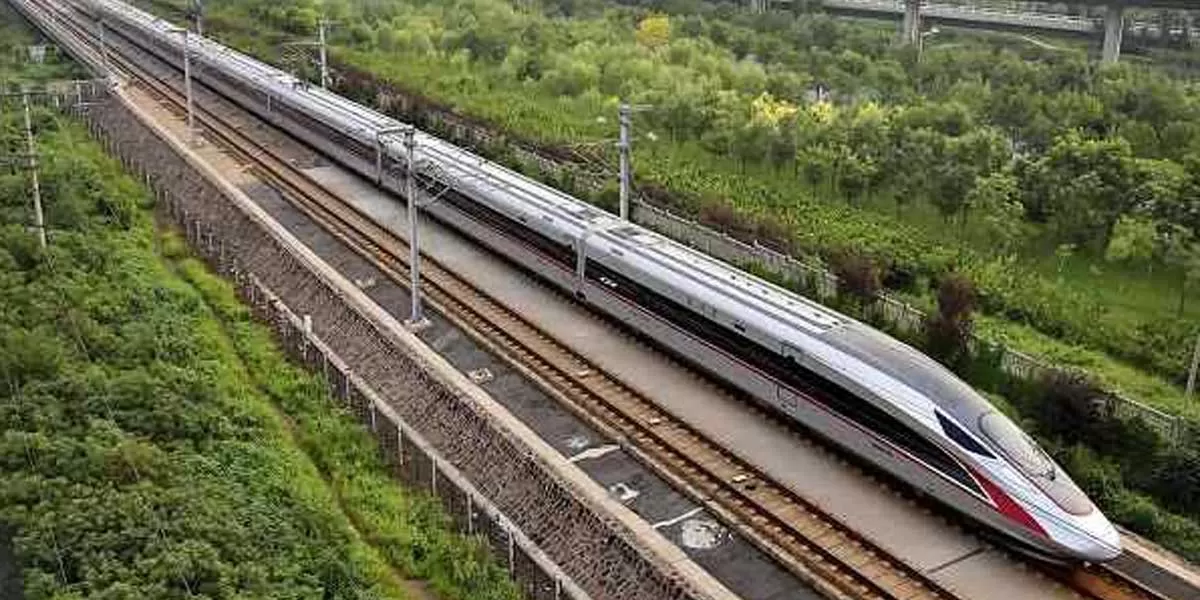
Vietnam’s National Assembly has approved a $67 billion high-speed railway project connecting Hanoi, the capital, to Ho Chi Minh City, the economic centre in the south. Announced on November 30, 2024, the ambitious project aims to revolutionise travel and trade along the 1,541-kilometer (957-mile) route.

The railway will enable trains to reach speeds of up to 350 km/h (217 mph), reducing travel time from the current 30 hours to just five. Construction is set to start in 2027, with operations planned for 2035. The project will pass through 20 provinces and cities and feature 23 passenger stations and five freight stations.

Deputy Transport Minister Nguyen Danh Huy emphasised the importance of this project for meeting transportation demands along the north-south corridor. “This project is pivotal for restructuring transport shares and serves as a cornerstone for Vietnam’s leap into a new era of growth,” he stated.

While the Vietnamese government plans to fund most of the project domestically, it may seek international loans under favourable conditions. Major challenges include relocating 120,000 residents and removing parts of protected forests and rice fields.

Vietnam has struggled for years with low-density roadways, making transportation costly and inefficient. As the country aims to position itself as a viable alternative to China for foreign investment, improving infrastructure has become a strategic priority. Dan Martin, an International Business Advisor at Dezan Shira & Associates, called the project a “game-changer” that would bolster production and integrate Vietnam further into global supply chains.

Vietnam’s pursuit of a high-speed rail system has faced obstacles for nearly two decades, including financial constraints and economic feasibility concerns. The initial 2010 proposal for a $56 billion high-speed network was rejected over fears it would be unsustainable and unaffordable for many citizens. Critics argued that the funds should be redirected to essential areas like agriculture and education.

Vietnam’s infrastructure limitations, compared to China’s extensive high-speed rail network, also raised doubts about its capacity to undertake such a project. However, Martin noted the growing momentum for high-speed rail in Southeast Asia, citing recent projects in Laos and Indonesia. “For Vietnam, it’s about becoming a stronger player in a region rapidly adopting high-speed rail,” he said.

With project approval, competition between China and Japan for a role in the development is expected to intensify. Both countries have long sought to expand their influence in Southeast Asia’s high-speed rail sector.

China’s expertise in high-speed rail construction and its cost efficiency make its companies strong contenders. An industry insider in Vietnam said, “We have been following this proposed project for a long time… Chinese companies stand a chance, particularly in areas like telecommunications, signaling, and electrical systems.”

However, relations between China and Vietnam remain complex due to territorial disputes in the South China Sea and Vietnam’s military ties with the United States and Japan.

Japan, Vietnam’s largest donor of Official Development Assistance (ODA), has also expressed strong interest. Japan has committed approximately $17 billion in aid from 1992 to 2021, representing about 30% of Vietnam’s international aid. The Japanese government, including former Finance Minister Shunichi Suzuki and Ambassador to Vietnam Ito Naoki, has reaffirmed support for Vietnam’s high-speed rail project.

Vietnam’s decision on whether to partner with China or Japan will significantly influence not only its infrastructure landscape but also its geopolitical positioning in Southeast Asia.

(eurasiantimes)

Vietnam’s National Assembly has approved a $67 billion high-speed railway project connecting Hanoi, the capital, to Ho Chi Minh City, the economic centre in the south. Announced on November 30, 2024, the ambitious project aims to revolutionise travel and trade along the 1,541-kilometer (957-mile) route. The railway will enable trains to reach speeds of up to 350 km/h (217 mph), reducing travel time from the current 30 hours to just five. Construction is set to start in 2027, with operations planned for 2035. The project will pass through 20 provinces and cities and feature 23 passenger stations and five freight stations. Deputy Transport Minister Nguyen Danh Huy emphasised the importance of this project for meeting transportation demands along the north-south corridor. “This project is pivotal for restructuring transport shares and serves as a cornerstone for Vietnam’s leap into a new era of growth,” he stated. While the Vietnamese government plans to fund most of the project domestically, it may seek international loans under favourable conditions. Major challenges include relocating 120,000 residents and removing parts of protected forests and rice fields. Vietnam has struggled for years with low-density roadways, making transportation costly and inefficient. As the country aims to position itself as a viable alternative to China for foreign investment, improving infrastructure has become a strategic priority. Dan Martin, an International Business Advisor at Dezan Shira & Associates, called the project a “game-changer” that would bolster production and integrate Vietnam further into global supply chains. Vietnam’s pursuit of a high-speed rail system has faced obstacles for nearly two decades, including financial constraints and economic feasibility concerns. The initial 2010 proposal for a $56 billion high-speed network was rejected over fears it would be unsustainable and unaffordable for many citizens. Critics argued that the funds should be redirected to essential areas like agriculture and education. Vietnam’s infrastructure limitations, compared to China’s extensive high-speed rail network, also raised doubts about its capacity to undertake such a project. However, Martin noted the growing momentum for high-speed rail in Southeast Asia, citing recent projects in Laos and Indonesia. “For Vietnam, it’s about becoming a stronger player in a region rapidly adopting high-speed rail,” he said. With project approval, competition between China and Japan for a role in the development is expected to intensify. Both countries have long sought to expand their influence in Southeast Asia’s high-speed rail sector. China’s expertise in high-speed rail construction and its cost efficiency make its companies strong contenders. An industry insider in Vietnam said, “We have been following this proposed project for a long time… Chinese companies stand a chance, particularly in areas like telecommunications, signaling, and electrical systems.” However, relations between China and Vietnam remain complex due to territorial disputes in the South China Sea and Vietnam’s military ties with the United States and Japan. Japan, Vietnam’s largest donor of Official Development Assistance (ODA), has also expressed strong interest. Japan has committed approximately $17 billion in aid from 1992 to 2021, representing about 30% of Vietnam’s international aid. The Japanese government, including former Finance Minister Shunichi Suzuki and Ambassador to Vietnam Ito Naoki, has reaffirmed support for Vietnam’s high-speed rail project. Vietnam’s decision on whether to partner with China or Japan will significantly influence not only its infrastructure landscape but also its geopolitical positioning in Southeast Asia. (eurasiantimes)

Next Story
Building Material

Suraj Estate Wins Euromoney Award for India’s Best Residential Developer

"Suraj Estate Developers Limited has received the Euromoney Real Estate Award 2025 for ‘India’s Best Residential Developer’, positioning the company among globally benchmarked leaders in the sector. The recognition reflects its four-decade legacy in delivering high-quality residential and redevelopment-led projects across South Central Mumbai. The Euromoney Real Estate Awards, presented by the London-based Euromoney magazine, are widely regarded as one of the most credible global assessments of performance in real estate, banking and finance. Winners are selected through surveys of inte..

Next Story
Building Material

Lloyds Metals, Tata Steel Sign MoU to Explore Strategic Collaboration

"Lloyds Metals and Energy Limited has signed a non-binding Memorandum of Understanding with Tata Steel Limited to evaluate potential areas of strategic cooperation across mining, logistics, pelletisation and steelmaking. The MoU was signed by B Prabhakaran, Managing Director of Lloyds Metals, and Mr T V Narendran, CEO and Managing Director of Tata Steel. The partnership framework aims to leverage the natural operational synergies between both companies and assess opportunities in greenfield steel projects, iron ore mining, slurry pipeline infrastructure, pellet manufacturing in iron ore–ric..

Next Story
Building Material

IndiaAI, Gujarat Govt Host Regional Conclave Ahead of 2026 AI Summit

The IndiaAI Mission under the Ministry of Electronics and Information Technology, along with the Government of Gujarat and IIT Gandhinagar, convened a Regional Pre-Summit Event at Mahatma Mandir, Gandhinagar. The initiative is part of the build-up to the India–AI Impact Summit 2026, scheduled for 15–20 February 2026 at Bharat Mandapam, New Delhi. The conclave brought together senior policymakers, technology leaders, researchers and industry practitioners to examine how AI can accelerate economic, digital and social transformation across sectors. The programme focused on the overarching th..

Advertisement

Subscribe to Our Newsletter

Get daily newsletters around different themes from Construction world.

STAY CONNECTED

Advertisement

Advertisement

Advertisement

Advertisement

Open In App