No Plan to Raise Ethanol Blending Beyond 20 Per Cent: Puri
OIL & GAS

No Plan to Raise Ethanol Blending Beyond 20 Per Cent: Puri

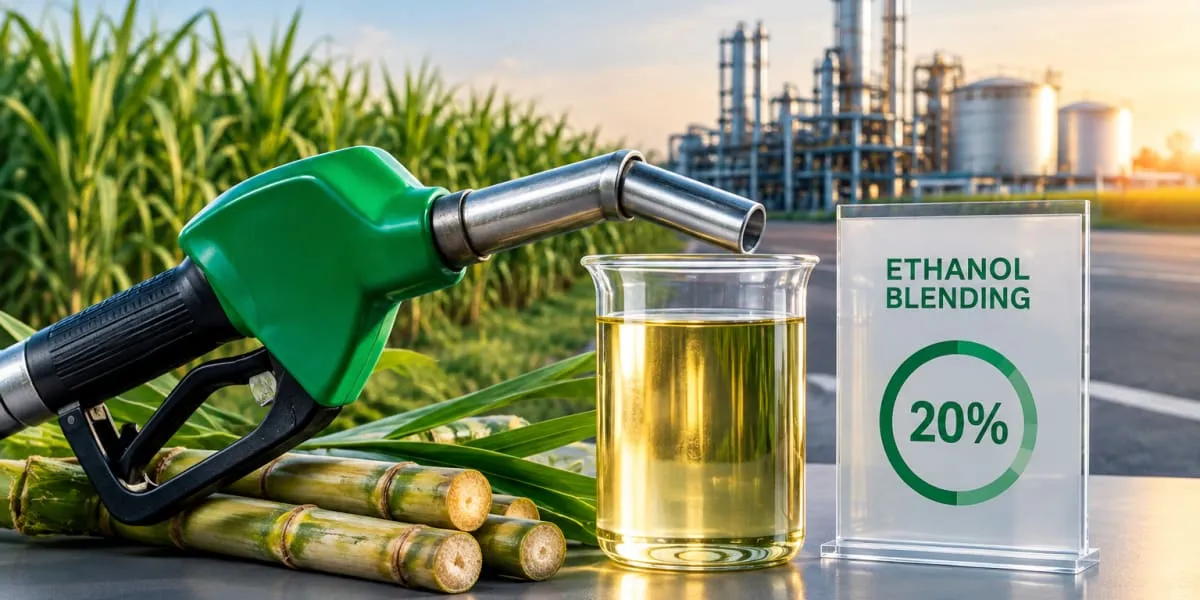
Union Minister for Petroleum and Natural Gas Hardeep Singh Puri said on Tuesday that the government had no immediate plan to raise ethanol blending in petrol beyond the current 20 per cent. Speaking at the inauguration of the 29th Energy Technology and Innovation Meet in South Goa, he said 20 per cent remained the government’s target for now.

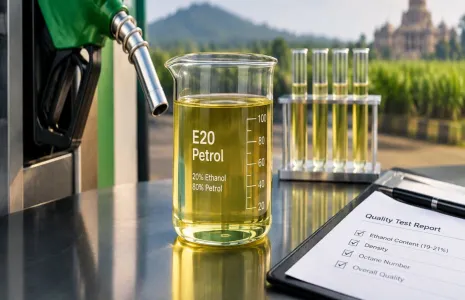
The government has promoted ethanol-blended petrol to reduce dependence on imported crude oil, which is a major contributor to the country’s current account deficit. India has rolled out E20 fuel, comprising 20 per cent ethanol and 80 per cent petrol, for compatible vehicles.

Puri said misinformation about E20 was being circulated, including claims on social media that vehicles had stopped or suffered breakdowns because the government had halted sales of the blended fuel. He said vehicles compliant with the applicable standards were designed to use E20, while older vehicles manufactured before 2003 had encountered some problems.

The minister also attributed some reported difficulties to the transportation of blended fuel, saying tankers used for the product had also been used to transport other materials. He said the introduction of E20 had helped the Union government save Rs. 1.6 tn, of which Rs. 1.4 tn had been returned to farmers. He said the policy had expanded the role of farmers from food producers to contributors to the energy supply.

Separately, the Road Transport Ministry notified changes to the Central Motor Vehicles Rules, 1989, allowing flex-fuel vehicles capable of running on blends up to E100, or nearly pure ethanol. Such vehicles can use higher blends including E85, which contains 85 per cent ethanol and 15 per cent petrol, as well as E100.

Major automakers, including Toyota Motor Corporation, Tata Motors and Hyundai Motor Company, are developing flex-fuel vehicles for the Indian market. Policymakers are supporting the technology as part of efforts to reduce the country’s fossil fuel import bill. Puri also cited daily traffic of 60 mn vehicles at dispensing stations while rejecting claims of widespread engine damage.

Union Minister for Petroleum and Natural Gas Hardeep Singh Puri said on Tuesday that the government had no immediate plan to raise ethanol blending in petrol beyond the current 20 per cent. Speaking at the inauguration of the 29th Energy Technology and Innovation Meet in South Goa, he said 20 per cent remained the government’s target for now. The government has promoted ethanol-blended petrol to reduce dependence on imported crude oil, which is a major contributor to the country’s current account deficit. India has rolled out E20 fuel, comprising 20 per cent ethanol and 80 per cent petrol, for compatible vehicles. Puri said misinformation about E20 was being circulated, including claims on social media that vehicles had stopped or suffered breakdowns because the government had halted sales of the blended fuel. He said vehicles compliant with the applicable standards were designed to use E20, while older vehicles manufactured before 2003 had encountered some problems. The minister also attributed some reported difficulties to the transportation of blended fuel, saying tankers used for the product had also been used to transport other materials. He said the introduction of E20 had helped the Union government save Rs. 1.6 tn, of which Rs. 1.4 tn had been returned to farmers. He said the policy had expanded the role of farmers from food producers to contributors to the energy supply. Separately, the Road Transport Ministry notified changes to the Central Motor Vehicles Rules, 1989, allowing flex-fuel vehicles capable of running on blends up to E100, or nearly pure ethanol. Such vehicles can use higher blends including E85, which contains 85 per cent ethanol and 15 per cent petrol, as well as E100. Major automakers, including Toyota Motor Corporation, Tata Motors and Hyundai Motor Company, are developing flex-fuel vehicles for the Indian market. Policymakers are supporting the technology as part of efforts to reduce the country’s fossil fuel import bill. Puri also cited daily traffic of 60 mn vehicles at dispensing stations while rejecting claims of widespread engine damage.

Related Stories

Gold Stories
Next Story
Building Material

PureSil Paints Develops Mineral Coatings from Industrial Waste

PureSil Paints, a brand of Relic Coatings LLP, has developed an indigenous mineral-based coating technology aimed at reducing dependence on petrochemical-derived raw materials in the paints and coatings industry. Its proprietary Silicification Technology uses agricultural and industrial by-products to manufacture architectural coatings as an alternative to conventional acrylic paints.Developed in-house by Dr Nikhil Dhote, Founder and Chief Technologist, Relic Coatings LLP, the technology uses silicate binders derived from upcycled rice husk ash and industrial coal fly ash. The formulation is d..
Next Story
Infrastructure Energy

Vedanta Eyes AI to Accelerate Mineral Exploration

Vedanta Group is exploring the use of artificial intelligence (AI) to significantly improve efficiency in mineral exploration, geological analysis and resource modelling. The company aims to reduce exploration processes that traditionally take three to four months to just six to seven days through AI-driven technologies.The proposed approach involves AI-led geological analysis and mineral block modelling to accelerate mineral resource assessment and support faster, more cost-efficient development of domestic mineral reserves. The initiative aligns with India's growing focus on critical mineral..

Next Story
Technology

NXP Launches Unified Robotics Platform for Physical AI

NXP Semiconductors has launched a unified robotics platform designed to accelerate the development and deployment of trusted physical artificial intelligence (AI) systems. Built on the company's neural axis architecture, the platform integrates AI processing, connectivity, motor control, security and energy management within a common hardware and software ecosystem.The platform combines an open-source, modular software development kit (SDK) with pre-validated reference designs, enabling developers to build robotic systems more efficiently. It supports development ranging from individual subsys..

Advertisement

Subscribe to Our Newsletter

Get daily newsletters around different themes from Construction world.

STAY CONNECTED

Advertisement

SPECIAL OFFER
QR Code