Brookfield raise $15 bn for Brookfield Global Transition Fund
POWER & RENEWABLE ENERGY

Brookfield raise $15 bn for Brookfield Global Transition Fund

Brookfield Asset Management, a global alternative asset investor, announced that the first net zero-focused impact fund, the Brookfield Global Transition Fund, has reached its final closure with $15 billion in funding.

The fund raised more than its $12.5 billion hard caps, which were greatly surpassed by high demand, making it the largest private equity fund launched to date with a focus on accelerating the transition to a net-zero carbon economy.

The fund, jointly led by Brookfield Vice Chair and Head of Transition Investing Mark Carney, the UN Special Envoy on Climate Action and Finance, and Connor Teskey, CEO of Brookfield Renewables, aims to deliver strong risk-adjusted returns while making investments in the transformation of carbon-intensive industries and the advancement and accessibility of clean energy sources.

Reducing greenhouse gas (GHG) emissions and energy consumption, expanding low-carbon energy capacity, and sustainable solutions are some of the key areas of concentration for the fund.

The fund has invested about $2.5 billion so far, and some of its investments include buying German and American solar power and battery companies, investing in a carbon capture and storage company, and forming a collaboration with a British battery storage company.

The announcement comes as big private equity investors invest billions of dollars in prospects for net-zero transition. Both the private equity firms Apollo and Blackstone recently stated that they see the potential to spend $100 billion in energy transition and climate change solutions over the following ten years. Additionally, both companies recently introduced platforms devoted to the energy transition.

Earlier this month, BlackRock announced the launch of a new infrastructure investment strategy motivated by the step-change in opportunities created by the transition to a green economy.

Carlyle and Temasek have also recently launched investment platforms focused on the energy transition and decarbonisation.

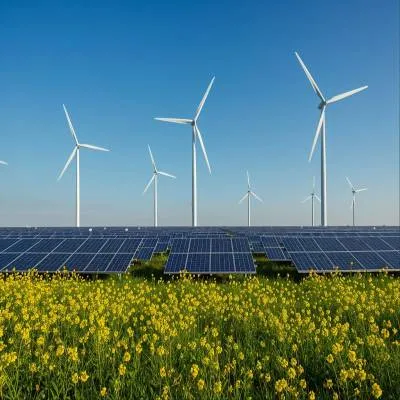
Image Source

Also read: Reliance looks for new technologies to make cheaper green hydrogen

Brookfield Asset Management, a global alternative asset investor, announced that the first net zero-focused impact fund, the Brookfield Global Transition Fund, has reached its final closure with $15 billion in funding. The fund raised more than its $12.5 billion hard caps, which were greatly surpassed by high demand, making it the largest private equity fund launched to date with a focus on accelerating the transition to a net-zero carbon economy. The fund, jointly led by Brookfield Vice Chair and Head of Transition Investing Mark Carney, the UN Special Envoy on Climate Action and Finance, and Connor Teskey, CEO of Brookfield Renewables, aims to deliver strong risk-adjusted returns while making investments in the transformation of carbon-intensive industries and the advancement and accessibility of clean energy sources. Reducing greenhouse gas (GHG) emissions and energy consumption, expanding low-carbon energy capacity, and sustainable solutions are some of the key areas of concentration for the fund. The fund has invested about $2.5 billion so far, and some of its investments include buying German and American solar power and battery companies, investing in a carbon capture and storage company, and forming a collaboration with a British battery storage company. The announcement comes as big private equity investors invest billions of dollars in prospects for net-zero transition. Both the private equity firms Apollo and Blackstone recently stated that they see the potential to spend $100 billion in energy transition and climate change solutions over the following ten years. Additionally, both companies recently introduced platforms devoted to the energy transition. Earlier this month, BlackRock announced the launch of a new infrastructure investment strategy motivated by the step-change in opportunities created by the transition to a green economy. Carlyle and Temasek have also recently launched investment platforms focused on the energy transition and decarbonisation. Image Source Also read: Reliance looks for new technologies to make cheaper green hydrogen

Next Story
Infrastructure Transport

Kavach 4.0 Commissioned on Delhi–Mumbai and Delhi–Howrah

"Kavach version four has been commissioned on 1,452 route km, covering the high density Delhi–Mumbai and Delhi–Howrah corridors. The rollout included laying 8,570 km of optical fibre, installation of 1,100 telecom towers, deployment of trackside equipment over 6,776 RKm and establishment of 767 station data centres. Trackside implementation has been taken up on 24,427 RKm covering Golden Quadrilateral, Golden Diagonal and High Density Network sections. The programme aims to strengthen signalling and train protection on key routes.Kavach is an indigenously developed automatic train protecti..

Next Story
Infrastructure Transport

Railways Advance Kalyan–Murbad Line And Mumbai Capacity Expansion

"Indian Railways is advancing multiple rail infrastructure projects in Maharashtra, including the sanctioned Kalyan–Murbad new line and sizable investments under the Mumbai Urban Transport Project and the Mumbai–Ahmedabad High Speed Rail project. The Kalyan–Murbad 28 km new line has been sanctioned at Rs 8.36 billion (bn) on a 50:50 cost-sharing basis with the Government of Maharashtra and has been declared a Special Railway Project for land acquisition; proposals covering 214 hectares are at various stages of acquisition. Budgetary outlay for projects falling fully or partly in Maharash..

Next Story
Infrastructure Urban

Parliamentary Panel Flags Funding Gaps in Heavy Industries

"The Department-Related Parliamentary Standing Committee on Industry (Rajya Sabha) presented its 332nd report on the Demands for Grants 2026-27 of the Ministry of Heavy Industries (MHI). Figures converted from crore and lakh are expressed in million (mn). The Budget Estimates 2026-27 for the Ministry stand at Rs 79,399 mn against a projected requirement of Rs 94,843.2 mn, a shortfall of about 16 per cent, with revenue at Rs 79,370.8 mn and capital compressed to Rs 28.2 mn from Rs 5,020 mn.The committee flagged recurring BE-to-RE compression and declining revised estimate utilisation, and calle..

Advertisement

Subscribe to Our Newsletter

Get daily newsletters around different themes from Construction world.

STAY CONNECTED

Advertisement

Advertisement

Advertisement